REVIEW · POMPEII
Pompeii Small Group with an Archaeologist and Skip The Line
Book on Viator →Operated by ELIANA SANDRETTI · Bookable on Viator
Pompeii can feel like a maze. This small-group tour helps you move fast with skip-the-line entry and an archaeologist guide who explains what you’re actually looking at. You’ll also cover the big hits without trying to do everything on your own.
What I love most is the small-group size (a relaxed pace, questions welcome) and the way the route hits the most meaningful areas in just a couple of hours. The admission tickets are included, so you’re not juggling extra logistics while you’re already inside.
One thing to consider: this is built for highlights, not a slow, deep study. If you want to linger for long photo sessions in every courtyard and doorway, you may feel a little rushed during the short stop times.
In This Review
- Key Highlights You’ll Actually Feel
- Skip-the-Line Tickets That Buy You Real Pompeii Time
- Small-Group Touring With an Archaeologist Guide (Not a Script)
- Your 2-Hour Walk Through Pompeii’s Must-See Stops
- The Small Theater and Teatro Grande: Where Performance Defined Public Life
- Granai del Foro: The Forum’s Barns and the Casts of 79 AD
- Stabian Baths: Frescoes, Color, and a Very Human Routine
- Foro di Pompei and the Basilica: Politics, Justice, and City Power
- Temple of Jupiter: Faith With Vesuvius in the Backdrop
- Quadriporticus of the Theatres and the Gladiator Barracks
- Lupanar: The Old Red Light District (and Why It Matters)
- Temple of Venus and Casa del Fauno: City Religion and Luxurious Living
- Price and Value: When $217.69 Feels Reasonable
- Meeting Point, Timing, and What to Do Before You Go
- Who Should Book This Pompeii Small-Group Tour
- The Main Watch-Outs (Based on Real-World Scenarios)
- Should You Book It? My Practical Decision Guide
- FAQ
- How long is the Pompeii tour?
- Is admission included?
- What language is the tour in?
- How big is the group?
- Where do we meet for the tour?
- Is transportation or food included?
- Can I use a mobile ticket?
- Is there free cancellation?
Key Highlights You’ll Actually Feel
- Skip-the-line entry so you spend time in ruins, not standing in a bottleneck
- Archaeologist-led explanations that connect buildings to daily life in Pompeii
- A tight route that prioritizes the forum, baths, theaters, and signature houses
- Stops with included admission, meaning less ticket hassle once you’re there
- Small group up to 10, which usually makes it easier to ask questions and stay together
Skip-the-Line Tickets That Buy You Real Pompeii Time
Pompeii’s biggest problem isn’t the ruins. It’s the time you lose getting into the park and finding your footing once you’re there. This tour solves the first part by starting with fast-track skip-the-line tickets, already handled for you. That means you’re more likely to hit the ground running.
Inside the site, you also get structure. Even if you’ve read a bit about Pompeii, the park is huge and it’s easy to wander into the wrong area, or skip something important because it doesn’t look like a “headline” from a map. Here, the route is designed so you see the city’s major public areas and the places that tell the most human stories.
The practical upside? A good two hours in Pompeii can feel like a lot more than it sounds, especially if you’ve only got a short visit. The reviews also point to guides keeping groups moving at a pace that feels manageable, even when plans shift.
You can also read our reviews of more tours and experiences in Pompeii.



Small-Group Touring With an Archaeologist Guide (Not a Script)
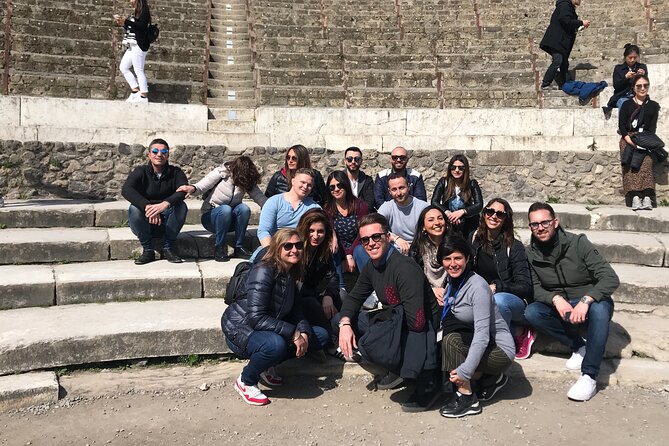
The tour is built around a group size of up to 10 people, and that changes the whole vibe. In a smaller group, you can hear explanations better, and you’re less likely to get stuck behind a wall of tourists while someone tries to talk through the noise.
This is also an archaeologist-led experience. The operator, Eliana Sandretti, is specifically mentioned as working as an archaeologist at Pompeii, and her approach shows up in the way people describe the tour: not just dates and facts, but details that make the city feel lived-in. You’ll get help spotting what matters in the architecture and what the spaces were for.
You should also know that guide assignments can vary. People mention Eliana Sandretti, plus other guides like Dario, Francisco, Francesco, and Anna. The common thread in feedback is that the guide is prepared, answers questions, and keeps the tour moving without turning it into a rushed checklist.
If you’re the type who likes to ask why something was built the way it was, or what daily life might have looked like, this format supports that. Several comments also mention humor and clear explanations, and one person even highlighted that the guide gave non-recycled talking points.
Your 2-Hour Walk Through Pompeii’s Must-See Stops
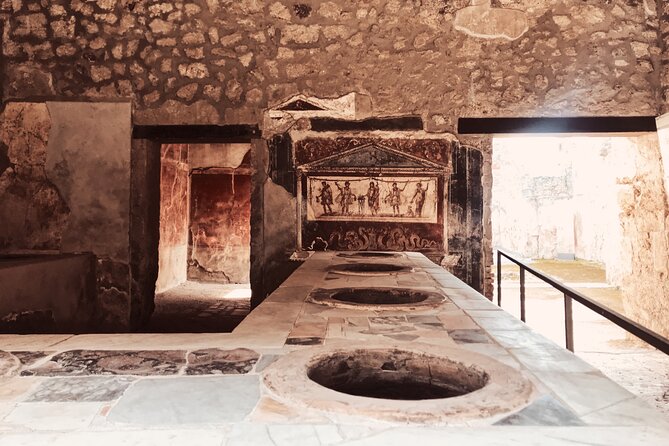
This tour is designed like a focused city stroll. You won’t cover every street, but you’ll hit the places that help you understand Pompeii as a whole: entertainment, commerce and storage, sudden tragedy, bathing culture, government, religion, and household life.
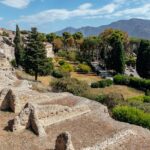
You’ll also get a realistic feel for how Pompeii is laid out—public squares and buildings first, then the theater district and neighborhoods, ending near some of the city’s most famous residences.
The Small Theater and Teatro Grande: Where Performance Defined Public Life
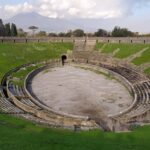
You start with the small theater, the designated place for musical and singing performances. Even if you’re not into Roman entertainment, this stop is a great setup because it reminds you Pompeii wasn’t only temples and big statues. It also had daily culture—songs, performances, and public gatherings.
Next comes Teatro Grande, where Greek-Roman comedies and tragedies were performed. This is one of those Pompeii stops where the guide’s role really matters. Standing in the space, it’s easier to understand scale if someone explains how Roman theater worked and what kinds of performances these venues hosted. You also get a quick breath in the schedule—about a quarter hour here.
Granai del Foro: The Forum’s Barns and the Casts of 79 AD
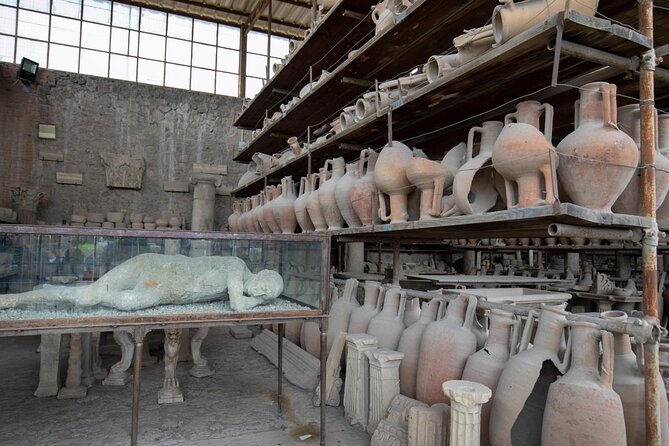
Then you move to Granai del Foro, the forum’s barns. This is where Pompeii turns emotional. The barns are known for the casts of victims who died during the eruption of 79 AD.
This isn’t a “light” stop, but it’s one of the most important. You’re seeing how people were caught in a working city, not an abstract tragedy from a textbook. The guide’s job here is to keep the focus respectful and clear: what you’re looking at, why the casts are preserved, and how that ties to what happened during the eruption.



Stabian Baths: Frescoes, Color, and a Very Human Routine
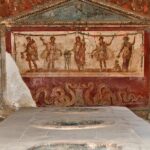
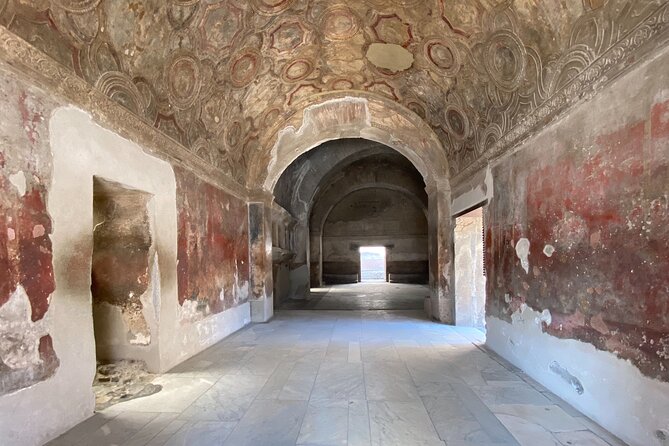
From storage and tragedy, you shift to routine and comfort at the Stabian Baths (Terme Stabiane). The headline here is the colorful frescoes, and this is one of the best places to break up the mental intensity of Pompeii’s darker moments.
The value of a guided stop is that you won’t just see walls—you’ll start to understand how bath culture fit into social life. Bathing wasn’t only about cleanliness. It was about meeting people, lingering, and having conversations.
The stop is short (about 15 minutes), so don’t expect a long self-guided gallery experience. Instead, use it to pick a few specific fresco details to focus on while the guide gives context.
Foro di Pompei and the Basilica: Politics, Justice, and City Power
Next is Foro di Pompei, the ancient forum—the main square where city life clustered. Even when you know what a forum is, it’s still impressive to see how central this kind of space was to everyday decisions.
Right after, you visit Pompei la Basilica, the seat of the court where justice was administered. If you’ve ever wondered how “government” worked in ancient cities beyond temples and monuments, this is where it becomes clearer. You’re seeing a civic building tied directly to law and public order.
This area is also a great place to ask questions. With the guide nearby, you can connect the building’s layout to the idea of public hearings and civic activity, rather than just staring at stone and guessing.
Temple of Jupiter: Faith With Vesuvius in the Backdrop
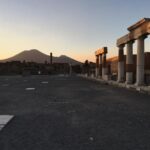
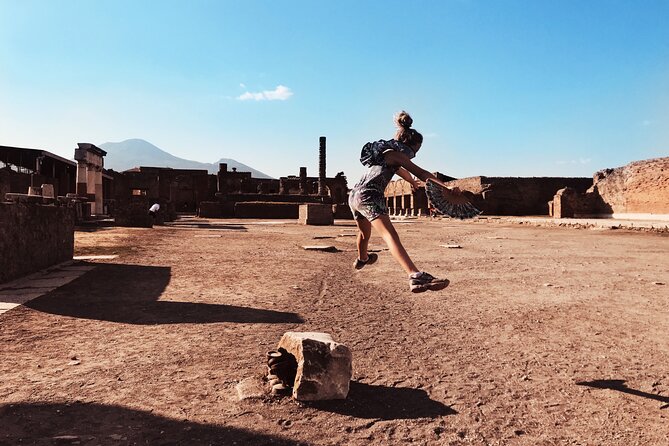
Then the route includes the Temple of Jupiter, with Vesuvius as a dramatic backdrop. It’s one of those Pompeii moments where the guide’s phrasing helps your brain place the city in its landscape—because you’re not only looking at ruins, you’re looking at the volcano that changed everything.
Even on a short stop, this kind of pairing—temple plus Vesuvius—gives you a stronger “whole picture” feeling.
Quadriporticus of the Theatres and the Gladiator Barracks
Now you head into the theater complex area again via the Quadriporticus of the theatres, and then you’ll see the Gladiator Barracks. The tour focuses on the barracks and their apartments—basically where gladiators trained and lived.
This is a smart move for a highlights route. It adds context to what you just saw at the theater: entertainment in Pompeii wasn’t only staged onstage. It was powered by people preparing behind the scenes. This stop helps you connect the city’s performers—actors and fighters—into one cultural system.
Lupanar: The Old Red Light District (and Why It Matters)
Then comes Lupanar, the old Red Light District. This stop is famous for a reason, but the tour benefit is that it’s framed as part of city life, not as shock value.
For your brain, it helps to think of Pompeii as a real town with commerce, services, and neighborhoods. A guided walk here can make the details more meaningful and less confusing, especially if you’re seeing the layout for the first time.
Temple of Venus and Casa del Fauno: City Religion and Luxurious Living
Finally, you visit the Temple of Venus, where the city’s divinity was venerated. This rounds out the tour by bringing you back to belief systems and public identity.
Then you end with Casa del Fauno, one of Pompeii’s richest and most luxurious residences. The guide’s explanation is what makes this feel special. You’ll learn how wealthy households differed from simpler homes, and you’ll understand the residence as a status statement as much as a home.
Casa del Fauno is also a place where you can feel the depth of Pompeii’s preservation. Frescoes and room details can be stunning even in short time windows.
Price and Value: When $217.69 Feels Reasonable
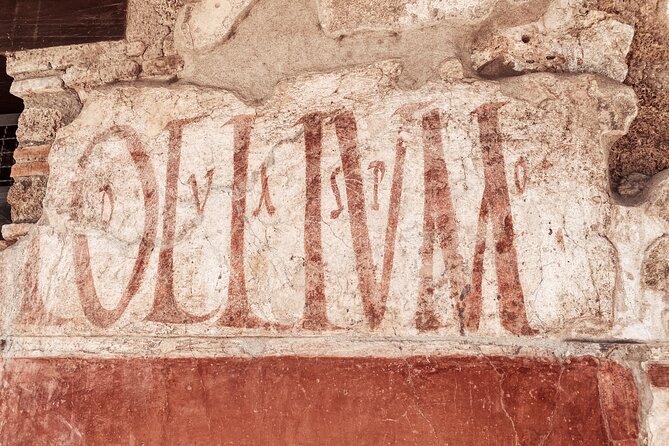
At $217.69 per person for about 2 hours, the price can look steep if you compare it to a basic entry ticket. But this tour is not just admission. You’re paying for three things that reduce your stress and boost your learning:
- Skip-the-line access (time is often the real cost in Pompeii)
- An archaeologist guide (specialized explanations change what you notice)
- A curated route with multiple included admissions across major areas
Where the math tends to work best is when you have limited time, you want the “top Pompeii” route without second-guessing, or you prefer hearing interpretations instead of piecing everything together yourself.
Also, the tour is limited to 10 people, which can justify the price compared with bigger bus-style groups. Several guests specifically praised the chance to ask questions and to stay together without feeling swallowed by crowds.
Meeting Point, Timing, and What to Do Before You Go
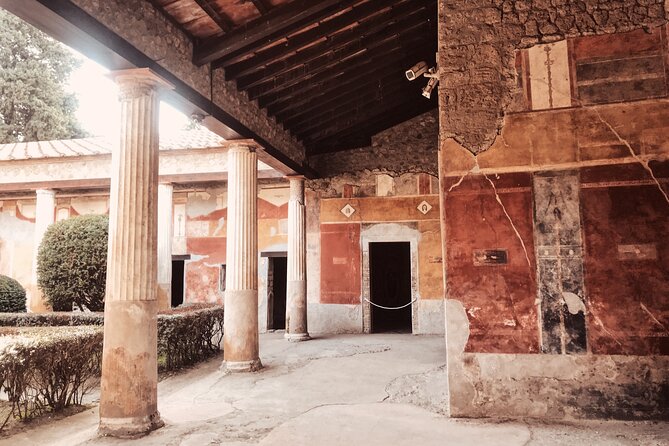
The meeting point is at Ristorante SuissePiazza, Piazza Esedra 10/13, 80045 Pompeii. The tour ends back at the same place, so you’re not left figuring out a new rendezvous spot after your walk.
Because this tour depends on a good weather window, plan around sunlight and heat. People mention it can be very hot, and that you should come prepared with water, sunscreen, and a hat or umbrella.
A tip that came up clearly: if you have extra time in your Pompeii day, consider going later when things may be quieter. One guest described a later start (4 pm) as noticeably less busy, which can make small-group touring feel even calmer.
Finally, keep your phone ready for the mobile ticket.
Who Should Book This Pompeii Small-Group Tour
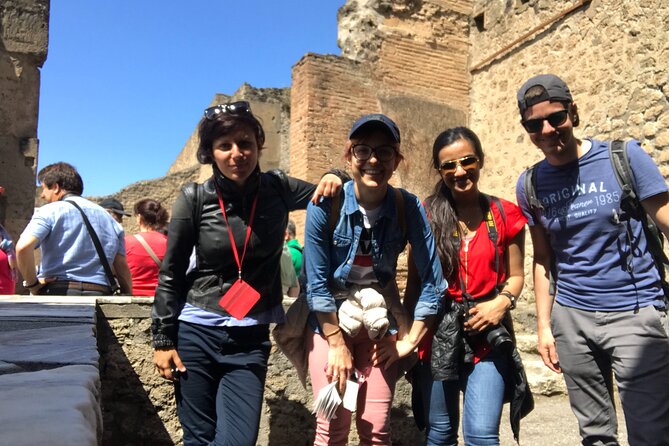
This tour is a strong fit if:
- you want the major Pompeii highlights in a short visit
- you care about understanding what you see, not just photographing it
- you prefer small-group pacing over big crowds
- you like asking questions and getting answers on the spot
It may be less ideal if:
- you want a slow, self-directed museum-style experience
- you need long stops for photography in every single section
- you’re only interested in one tiny corner of Pompeii
The Main Watch-Outs (Based on Real-World Scenarios)
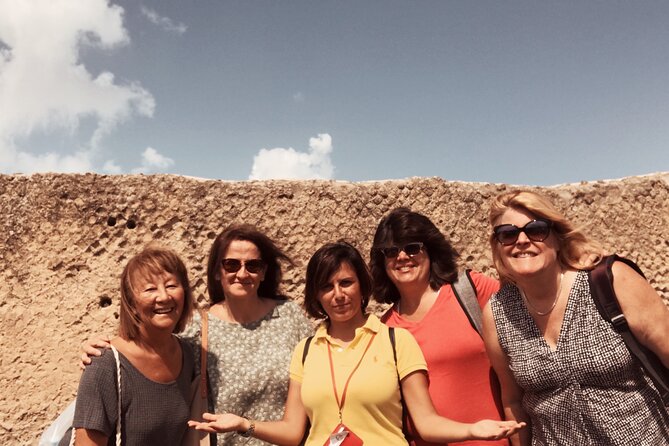
Most issues people run into aren’t about the ruins. They’re about group logistics and timing.
One downside to know is that the experience has a minimum number of travelers. If that minimum isn’t met, the operator may offer an alternative date/experience or a full refund. In at least one situation, a booking encountered a plan shift that involved private-tour pricing, and the guest chose to cancel instead. So if you’re traveling on a quieter day and you’re a couple or small party, it’s smart to be flexible.
Noise can also be an issue outdoors. Some guests note it can be hard to hear when you’re farther away from the guide. The small-group size helps, but bring realistic expectations: Pompeii can be loud and windy.
Should You Book It? My Practical Decision Guide
Yes, I think you should book this tour if you want Pompeii to make sense quickly. The combination of skip-the-line entry, archaeologist-led context, and a route that hits theaters, baths, the forum area, civic power, and Casa del Fauno is exactly what helps a short visit feel complete.
I’d skip it only if your goal is pure freedom and unlimited time. For that, you’d do better with self-guided wandering. But if you want your two hours to count—and you like the idea of asking questions while walking through the city—this is the kind of Pompeii tour that makes the ruins feel human.
FAQ
How long is the Pompeii tour?
It runs for about 2 hours.
Is admission included?
Yes. Admission tickets are included for the stops on the route.
What language is the tour in?
The tour is offered in English.
How big is the group?
The group is limited to a maximum of 10 travelers.
Where do we meet for the tour?
The meeting point is at Ristorante SuissePiazza, Piazza Esedra 10/13, 80045 Pompei NA, Italy.
Is transportation or food included?
No. Food and drinks are not included, and transport is not included.
Can I use a mobile ticket?
Yes. The tour provides a mobile ticket.
Is there free cancellation?
Yes. You can cancel for a full refund up to 24 hours before the experience starts. If it’s canceled due to poor weather, you’re offered a different date or a full refund.