REVIEW · POMPEII
Private Day Tour of Pompeii, Sorrento and Positano with Pick Up
Book on Viator →Operated by A DRIVE INTO THE BLUE · Bookable on Viator
Pompeii and the Amalfi Coast in one day. This private tour is built for an easy, door-to-door experience, with pickup offered from hotels, ports, and train stations, plus round-trip transport. You also get the comfort of a dedicated driver while you wind your way down the Amalfi Coast.
I especially like how the Pompeii part is structured: you’re not just dropped into a big site. You’ll hit major moments like the Forum and the Casa dei Vettii, with quick stops that make each ruin feel like a place where people lived and worked.
One thing to keep in mind: Pompeii is huge, so you’re seeing the highlights in a limited window. Also, Pompeii admission is not included (it’s €18 per person), so you’ll want to plan that extra cost.
In This Review
- Key things you’ll notice on this tour
- Private Pompeii + Amalfi Coast: why this day works
- Pickup that actually matters (especially if you’re on a cruise)
- Pompeii Archaeological Park: how to use your main time well
- The Pompeii route: from gates to baths to the theatre
- Hotel Vittoria gate: a strong first “wow” moment
- The Foro de Pompeya (Civil Forum): where daily life happened
- Thermopolium VI: a real clue about street food
- Casa del Fauno and Casa dei Vettii: homes that show wealth and status
- Stabian Baths (Terme Stabiane): heat, cold, and social time
- Lupanar: the brothel stop you won’t forget
- Teatro Grande and Anfiteatro Romano: public spectacle, Roman style
- Positano time on the Amalfi Coast: views plus just enough wandering
- Sorrento in the afternoon: Piazza Tasso and Via San Cesareo
- Driver and timing: the real value of going private
- Cost and value: is $181.41 per person a fair deal?
- Who should book this Pompeii, Positano and Sorrento private tour?
- My booking verdict: should you choose this one?
- FAQ
- Is the Pompeii entrance fee included?
- What’s included in the tour price besides transport?
- Do I get pickup if I’m staying in a hotel?
- Is this tour private or shared?
- How long does the tour take?
- What language is the tour offered in?
- Is food included?
- Does the tour run daily?
- What if the weather is bad?
Key things you’ll notice on this tour
- Door-to-door pickup from hotels, ports, train stations, and airports in the wider Campania area
- A private setup means you move at your group’s pace, not a bus schedule
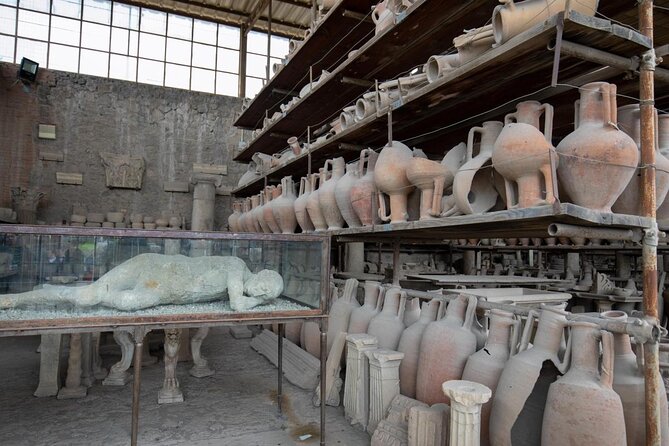
- Pompeii highlights in sequence: Forum, Basilica, baths, theatre, amphitheatre, and more
- Short, photo-friendly coast stops on the UNESCO Amalfi Coast drive
- Real time in Positano and Sorrento so you can actually look around, not just pass through
Private Pompeii + Amalfi Coast: why this day works
This is one of those days that sounds almost too good: ancient Pompeii in the morning, then sea views and pastel towns by afternoon. The trick is that the day is organized to keep you moving without feeling rushed in every single moment. A private driver helps a lot here, especially when roads are busy and parking is not your friend.
I also like that the tour is designed for “value per hour.” You’re not paying just for transport. You’re paying for a full day rhythm: guided Pompeii time (with an option for a professional guide at the ruins) plus dedicated town time in Positano and Sorrento.
The downside of any one-day combo is the same: it’s a taste, not a slow, full immersion. Pompeii alone deserves far more than a half day, so go in expecting highlights.
You can also read our reviews of more tours and experiences in Pompeii.



Pickup that actually matters (especially if you’re on a cruise)
The logistics are handled in a way that makes life easier. You can arrange pickup from your hotel, the port, the train station, or even the airport area, depending on where you’re starting. If you’re on a cruise, you’ll need to share details like your ship name and docking and re-boarding times so the timing can match your day.
What you get with a private setup is fewer headaches:
- You don’t have to coordinate public transit across multiple changes.
- You don’t have to play Find the crowd at the pier.
- You can request a different drop-off point in the excursion area, if needed.
One more practical note: this tour runs daily, but you’ll still want to book early if your dates are set. It’s commonly booked about 135 days in advance, which usually means popular departure windows and limited availability as summer and peak cruise weeks approach.
Pompeii Archaeological Park: how to use your main time well
You’ll spend about 2 hours at the Pompeii Archaeological Park portion, and the admission ticket is not included. At €18 per person, it’s not a small add-on, so I’d treat it as part of the budgeting rather than an afterthought.
Because admission isn’t included, you’ll want to be ready before your guide starts moving you through Pompeii. A good strategy is simple: don’t wait until you’re standing at the entrance to sort out tickets. When you’re on a guided, time-managed route, that little delay can eat into your viewing window.
Also, Pompeii is hot, uneven, and full of steps. Dress casually (that’s the stated dress code), wear shoes you trust, and expect you’ll do some walking even if stops are relatively short. If you’re sensitive to heat, plan your day so you’re not saving everything for the hottest part of the afternoon.
The Pompeii route: from gates to baths to the theatre
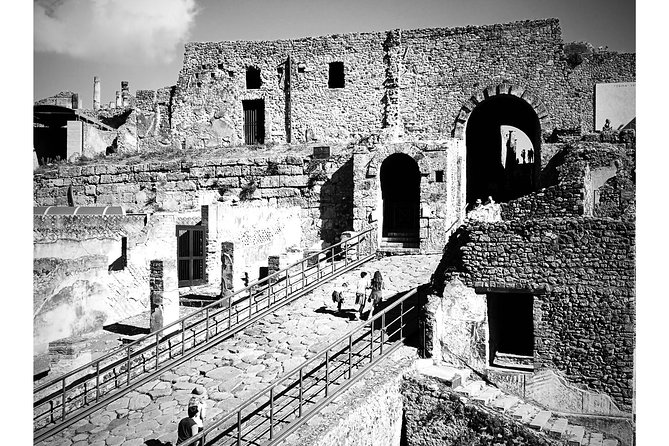
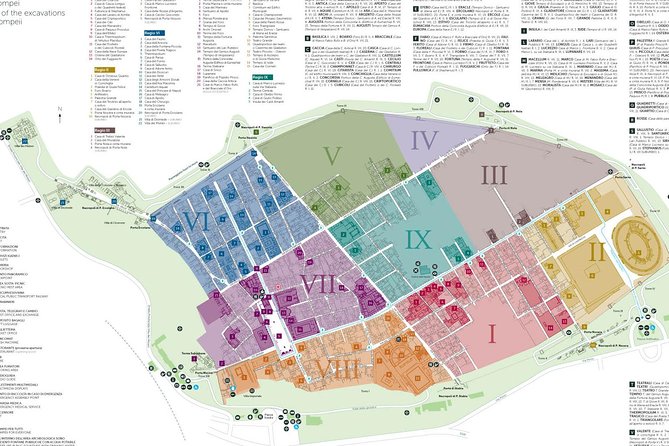
After your main Pompeii time, the day keeps you moving through a series of signature stops—most of them quick, which is exactly how you cover a big site without burning the whole day.
Hotel Vittoria gate: a strong first “wow” moment
You’ll pass the Hotel Vittoria gate, one of the seven gates of Pompeii. It’s described as the most impressive among them and is a good anchor point because it quickly gives you a sense of how the city was entered and defended. Even if you only spend minutes here, it helps your brain map what you’re about to see.






The Foro de Pompeya (Civil Forum): where daily life happened
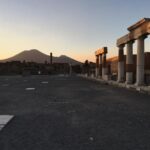
Next comes the heart of public life. The Civil Forum is where administration, justice, business, trade markets, and citizen worship all intersected. The practical value is that it frames Pompeii beyond stone walls. Once you understand the Forum as a center of movement and decision-making, the rest of the site feels less random.
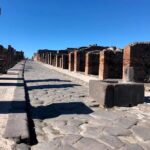
You’ll also see the Basilica shortly after. This building was used for business and justice and is accessed from the Forum through multiple entrances separated by tuff pillars. Those pillars matter because they’re a reminder that Pompeii’s “open spaces” still had structure, function, and flow.
Thermopolium VI: a real clue about street food
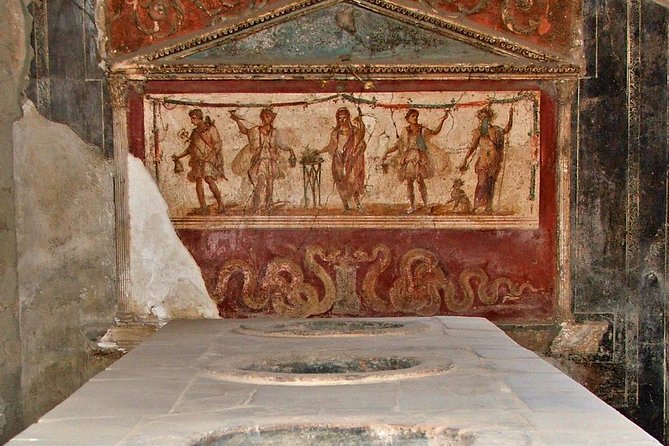
Then you get a very human stop: Thermopolium VI, a small hot-food shop. It’s the kind of detail that makes the past feel less like a museum and more like daily routine. A quick look here helps you remember that people ate, drank, bought snacks, and planned errands the way we do.
Casa del Fauno and Casa dei Vettii: homes that show wealth and status
You’ll see two standout houses:
- Casa del Fauno, described as one of the larger homes, covering a whole block of about 3,000 sqm and dating (in its original layout) back to the 2nd century BC.
- Casa dei Vettii, one of the richest homes in Pompeii, with a symbolic “prosperity” theme tied to Priapus, plus named owners connected to trade.
This is where you’ll notice the value of having a guide if you select that option. Houses like these can be confusing if you just look at walls and floors. With the right explanations, you start seeing how wealth, family identity, and daily living show up in architecture.
Stabian Baths (Terme Stabiane): heat, cold, and social time
The Stabian Baths are a big step from private houses back into public life. The tour explains the layout clearly—pool left, colonnade right, and a route through the dressing room and bathing rooms, from cold to medium to hot baths.
Even in a short stop, baths teach you something useful: Pompeii wasn’t only about homes and markets. It was also about leisure, hygiene, and social mixing in shared spaces.
Lupanar: the brothel stop you won’t forget
Next is the Lupanar, the brothel. It’s described in detail: it had two floors, rooms with built-in beds on the ground level, curtains closing off rooms, and a corridor with small erotic wall paintings that indicated what customers could expect.
This stop isn’t for everyone, but it is part of what makes Pompeii feel like a full city rather than a filtered one. If you prefer to keep things more family-friendly, consider how you want to handle adult topics inside a ruin.
Teatro Grande and Anfiteatro Romano: public spectacle, Roman style
Finally, you’ll reach two major entertainment venues:
- Teatro Grande (Grand Theatre), built into the natural slope for the auditorium, with a structured layout of corridors and sectors.
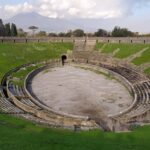
- Anfiteatro Romano (Roman Amphitheatre), built in 70 BC and described as the oldest known Roman amphitheatre.
These are high-impact stops because they connect Pompeii to the wider Roman world. If you want your day to end with a sense of scale, these are the places that do it.
Positano time on the Amalfi Coast: views plus just enough wandering
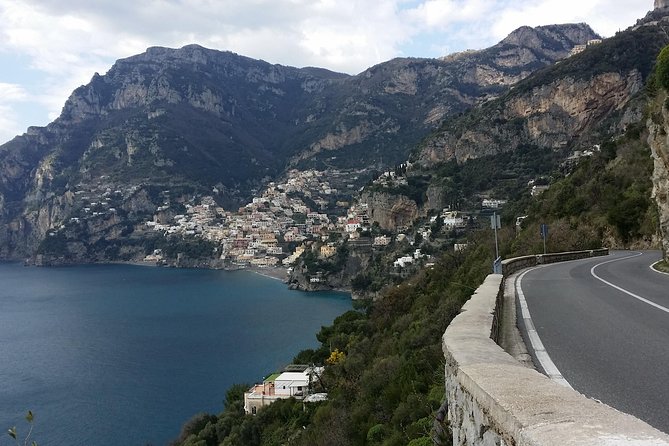
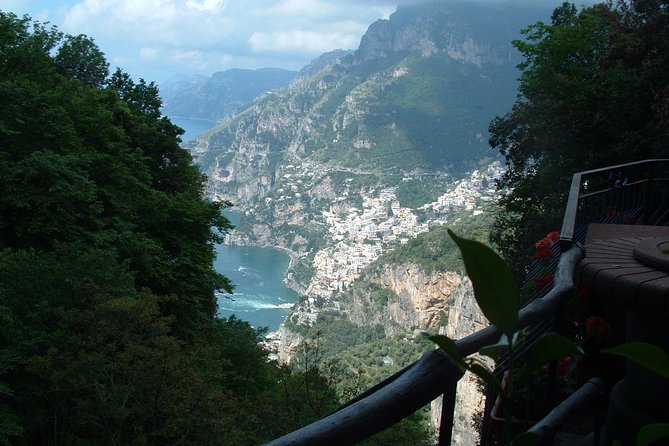
After Pompeii, you’ll drive along the UNESCO-listed Amalfi Coast. The day includes time in Positano, and it’s laid out to give you viewpoints and then a quick walk through the town.
You’ll spend about 1 hour 20 minutes in Positano area, with key stops including:
- Chiesa di Santa Maria Assunta, known for a majolica-tiled dome and a 13th-century Byzantine icon of a black Madonna.
- Spiaggia di Positano Marina Grande, the main beach area, with time built in for views and photos.
This part works well because Positano isn’t just a photo stop. You get enough time to feel the town rhythm—even if your route is short.
Also, note a practical warning from real-world experience: the drive can involve twisty roads, and if you’re prone to motion sickness, it’s worth being prepared (and bringing what helps you).
Sorrento in the afternoon: Piazza Tasso and Via San Cesareo
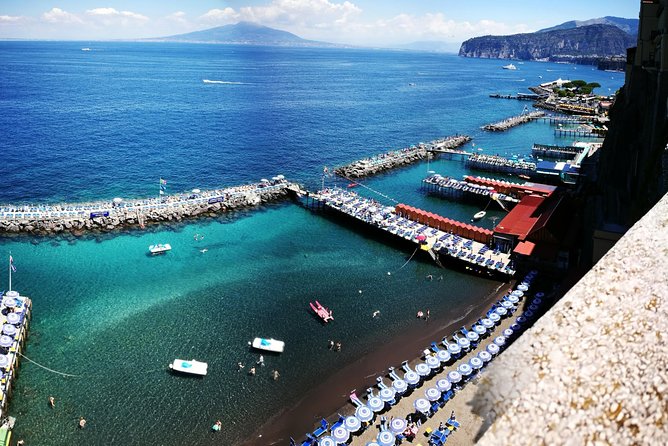
You’ll also have 1 hour 40 minutes in Sorrento, which is a much more easygoing pace than trying to do another big site. The main focus points include Piazza Tasso, the town’s lively central area, and Via San Cesareo, the shopping street.
This is a good time for practical choices:
- If you want souvenirs, this is the slot.
- If you want a coffee break without rushing, this is your window.
- If you want to pick up snacks for later, there’s time.
I like that the tour gives you town time without forcing you into a single predetermined activity. You can decide how much you wander and how often you stop for photos.
Driver and timing: the real value of going private
A private car isn’t just convenience. It’s how you avoid the slow parts of a day tour: waiting for buses, crowding into elevators of timing, and losing minutes to unclear meeting points.
In practice, the day is built around maintaining a schedule while still allowing for real picture moments. Several guides are praised for flexible routing and for explaining what’s ahead so you don’t just walk through rooms—you understand what you’re seeing.
One hot-weather advantage shows up in comments too: a comfortable car with air conditioning can make a big difference once you’re off the ruins and back on the road. That matters because it’s not only the walking; it’s also the heat while waiting in sun between stops.
And if your group has teens or mixed ages, the private format tends to help. The day is long, so having explanations paced to keep people engaged is a real quality-of-life feature.
Cost and value: is $181.41 per person a fair deal?
At $181.41 per person, you’re paying for a private day with pickup, round-trip transport, bottled water, and a driver. That alone is often the biggest cost in the region—especially when you’re not driving yourself.
But the value also depends on the Pompeii entry ticket. The Pompeii Archaeological Park fee is €18 per person and is not included, so treat the final cost as “ticket plus tour.”
Here’s how I’d judge value for you:
- If you want door-to-door comfort plus a guide at the ruins (if that option is selected), you’re getting more than just transport.
- If you don’t care about town time and only want to “see the ruins,” this might feel like a lot of moving around.
- If you’re traveling with a group that can share a vehicle, private often becomes a smart math decision compared to separate transport tickets and taxis.
One more note: there’s an option that requires a minimum of 4 participants for the Car+driver setup. If you’re traveling as a smaller group, confirm which option you’re actually booked into so you don’t hit a surprise.
Who should book this Pompeii, Positano and Sorrento private tour?
This tour is a strong fit for you if:
- You want Pompeii highlights without the logistical headache of getting there and coordinating transport.
- You want the Amalfi Coast drive plus time in Positano and Sorrento in one day.
- You value a private setup where the pace can match your group.
It may not be the best fit if:
- You’re the type who wants to spend half a day in one museum-like location.
- You get motion sick on winding roads and don’t plan for it.
- You’re hoping food is included. Food and drinks are not included, so you’ll need to budget for lunch and snacks.
The tour is described as suitable for most people, with a casual dress code and service animals allowed, so it’s not aimed at extreme adventure travelers. Still, bring comfortable shoes because Pompeii involves walking on uneven surfaces.
My booking verdict: should you choose this one?
If your goal is a stress-free day that hits Pompeii plus the coast towns without DIY planning, I think this is an easy yes. The private pickup, driver support, and Pompeii route through recognizable anchors like the Forum, baths, and amphitheatre make it efficient without turning into a “blink and you miss it” sprint.
Book it especially if you’ll select the professional guide at the ruins option—because Pompeii is exactly the kind of place where context turns stones into stories. Just budget the Pompeii entry fee, and don’t expect to see everything. This is built for highlights, not for endless wandering.
FAQ
Is the Pompeii entrance fee included?
No. Pompeii Archaeological Park admission is not included, and the fee is listed as €18.00 per person.
What’s included in the tour price besides transport?
You get a private tour, round-trip transport, bottled water, and a driver. There’s also an option for a professional guide at the ruins if selected.
Do I get pickup if I’m staying in a hotel?
Yes. Pickup is offered from hotels, ports, the train station, and the airport area in the Campania region.
Is this tour private or shared?
It’s private. Only your group participates.
How long does the tour take?
It’s approximately 8 to 9 hours.
What language is the tour offered in?
The tour is offered in English.
Is food included?
No. Food and drinks are not included.
Does the tour run daily?
Yes, it runs daily.
What if the weather is bad?
This experience requires good weather. If it’s canceled due to poor weather, you’ll be offered a different date or a full refund.