REVIEW · POMPEII
Pompeii 3 Hours Walking Tour Led by an Archaeologist
Book on Viator →Operated by Askos Tours · Bookable on Viator
Pompeii hits different with a real archaeologist. I like the private, customizable pace, and I especially like that the itinerary is built around big, readable places—Forum spaces, baths, and theaters—so you get the story without wasting steps. One drawback: Pompeii is vast and exposed with minimal shade, so you’ll want sunscreen and a hat from the start.
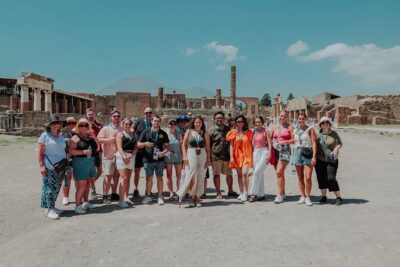
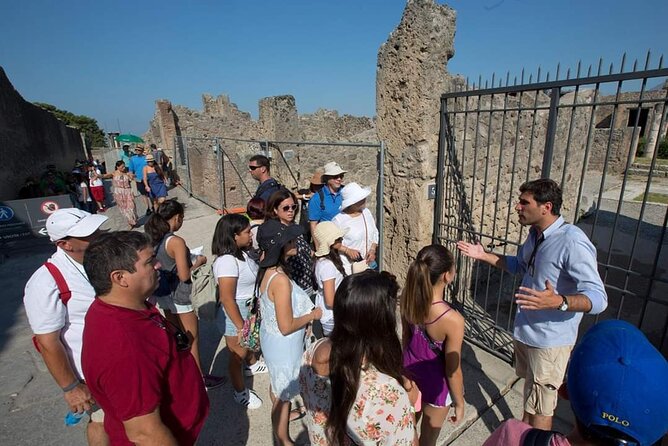
This Askos Tours experience is a 3-hour walking tour in English, rain or shine. You meet at the Via Villa dei Misteri address, then the guide connects you at Porta Marina Superiore (holding an Askos Tours sign), and you end back at the same place with help figuring out how to get to your accommodation or the nearest train station.
In This Review
- Key things you’ll feel on the walk
- Entering Pompeii With an Archaeologist at Your Side
- Meeting at Via Villa dei Misteri and Getting Unstuck Fast
- Basilica and the Forum: Reading Roman street life
- Granaries of the Forum: Fountains, marble tables, and casts
- House of Menander and the Stabian Baths: Houses and health
- Lupanar and the House of the Faun: Social life and big domestic space
- Odeon (Teatro Piccolo) to Teatro Grande: The entertainment circuit
- Price and value of a $256.99 private archaeologist walk
- Best timing, sun reality, and how to get the most out of 3 hours
- Book it or skip it: My call for your Pompeii day
- FAQ
- How long is the Pompeii 3-hour walking tour?
- Is this tour private?
- What language is the tour offered in?
- Where do we meet the guide?
- Do I need to buy admission tickets?
- What sites will we see?
- Does transportation to and from Pompeii include with the tour?
- Is there luggage storage at the meeting point?
- Does the tour run in bad weather?
- Can I cancel for a full refund?
Key things you’ll feel on the walk
- An archaeologist guide (not just someone with a script), plus deep technical explanation at the sites
- Admission included where you stop, so you’re not budgeting entrances mid-tour
- Private means your questions get answered without the usual herd effect
- The route centers on daily Roman life: commerce, baths, entertainment, and domestic spaces
- Shade is limited, so planning for sun matters more than usual
- Free luggage storage at the meeting point keeps your hands free for photos and walking
Entering Pompeii With an Archaeologist at Your Side
Pompeii is easy to get lost in. This tour helps you avoid the classic problem: seeing a lot of stones without understanding why they mattered.
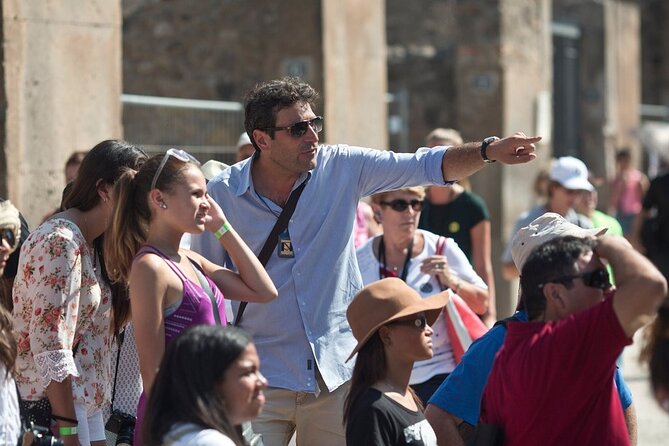
The biggest win is the guide. This experience includes a professional archaeologist guide, and the credentials that come up in the guide bios you’ll see around this tour are serious. Names like Daniela Mantice (art historian) and Monica (with a PhD in archaeology) pop up in the provided information, and that matters because Pompeii rewards technical observation—materials, layout, and how spaces were used.
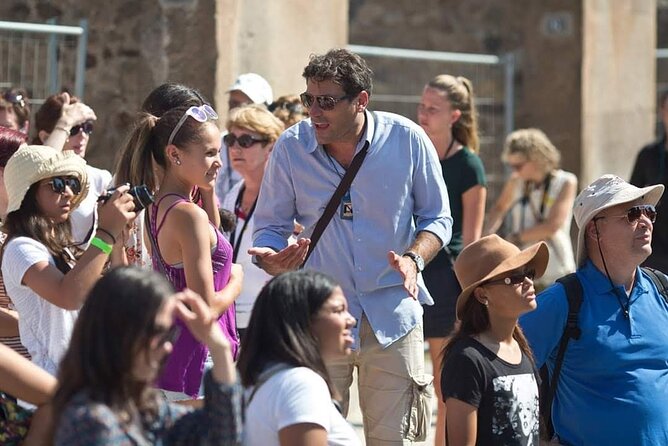
You’ll also notice the tone. The tour is built to make sites feel practical, not museum-dusty. You walk past places like the Basilica portico, public forum areas, thermal baths, and theaters, and the guide helps you connect what you’re standing in to how people lived, worked, shopped, and spent time before the eruption of Vesuvius.
You can also read our reviews of more tours and experiences in Pompeii.



Meeting at Via Villa dei Misteri and Getting Unstuck Fast
You start at Via Villa dei Misteri, 1, 80045 Pompei NA, Italy. The meeting is easy to find because the guide is there with an Askos Tours sign at the main entrance area, Porta Marina Superiore.
A small detail with big payoff: there’s a free luggage store at the meeting place. If you’re arriving by train or carrying bags from your hotel, dropping luggage first makes the next three hours feel lighter.
You also finish at the same Via Villa dei Misteri address. The guide will help you with useful directions on how to get back to your accommodation or the closest train station. That’s one less thing for you to figure out while your legs are already doing the loud complaining part.
Basilica and the Forum: Reading Roman street life
The tour starts inside the Pompeii Archaeological Park, with the entrance ticket included. From the first stop, the strategy is clear: walk into the spaces that shaped daily interaction.
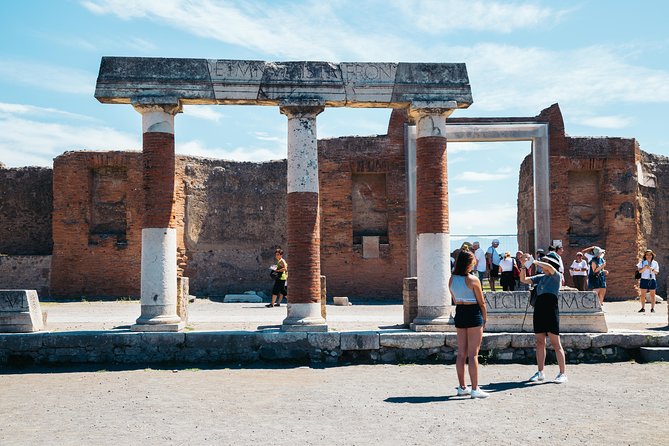
Next up is the Basilica. Here you’re looking at an open portico that gave shelter for merchants and other activities. It’s not just an architectural stop—it’s a clue to the rhythm of the city. You’ll get a feel for how public space worked as a kind of covered meeting point when the weather or sun got annoying.
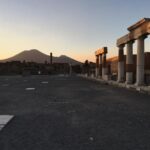
Then you move to the Foro de Pompeya, the ancient main square. This is where the city energy concentrates. Your guide frames it so the square doesn’t feel like empty pavement. You learn to scan layout and think in terms of movement and gathering.
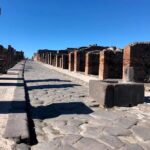
There’s also a short walk through the main street. That’s smart, because Pompeii can feel fragmented if you only bounce between standout ruins. A street walk gives you the “how people passed through this place” view, not just a “look at this corner” view.
Granaries of the Forum: Fountains, marble tables, and casts
One of the most memorable parts of this route is the Granaries of the Forum stop. In this area you’ll see marble tables and baths that were used for fountains. That entrance detail is the kind of thing most visitors miss, because it’s easy to get stuck at the biggest buildings only.
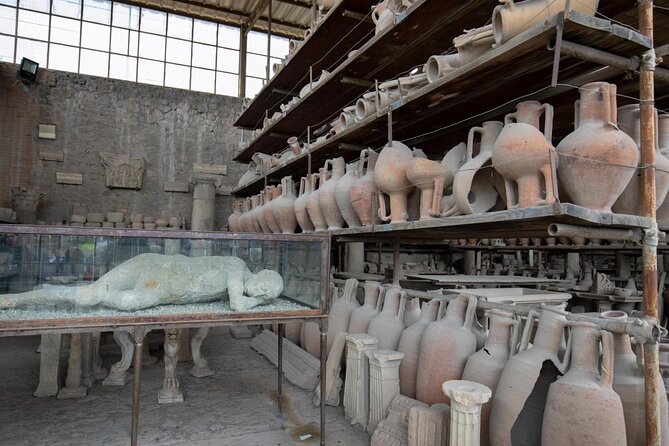
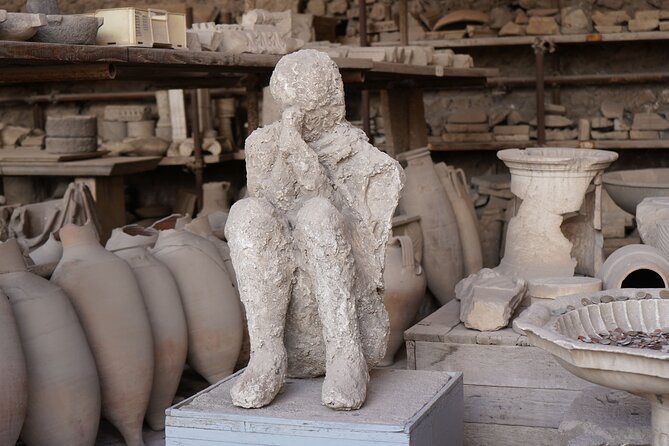
This stop also connects to one of Pompeii’s most moving features: casts of victims of the eruption. The information included for this tour specifically notes casts as well as a dog and a tree. Your guide’s job here is to keep you focused on what you’re actually seeing and why it’s preserved in this form.
The practical tip for you: don’t rush this moment. It’s emotionally dense, and if you sprint through it you lose the impact. At the same time, the tour pacing keeps it from turning into a long pause that breaks your momentum for the rest of the walk.
House of Menander and the Stabian Baths: Houses and health
Next you’ll visit the House of Menander, described as one of the richest and most magnificent houses in Pompeii in terms of architecture, decoration, and contents. Even if you don’t care about the details of every room, this is a high-value stop because it helps you compare public spaces (square, commerce, entertainment) with private ones.
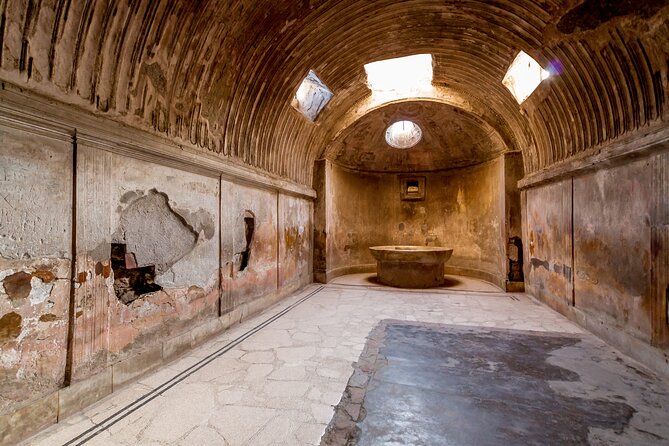
Then comes the Stabian Baths (Terme Stabiane). This thermal complex is noted as the oldest thermal complex in the city, and it occupies a vast area between key crossroads and lanes. Baths are more than a single room in Pompeii. They’re a whole system of space, so your guide helps you understand how it functioned as part of everyday life.
If you’re the type who likes “how did they do that?” architecture, this is your section. Baths tell you a lot about planning, routine, and the way the city designed for comfort and social time—without needing you to be an expert before you arrive.





Lupanar and the House of the Faun: Social life and big domestic space
The tour doesn’t avoid the harder or more controversial parts of Pompeii’s story. You’ll see the Lupanar, described as the most famous brothel in the ruined Roman city of Pompeii. Whether you find it fascinating or uncomfortable, it’s historically useful because it shows that Pompeii wasn’t only temples and markets. It had a real social underbelly too.
After that, you head into domestic space with the House of the Faun. This is noted as one of the largest and most impressive private residences in Pompeii. Again, it’s a place where your guide’s framing matters. You want to see it as more than a big building. You’re learning how private life could contrast with the public pulse of the Forum and the practical functions of places like the baths.
This pairing works well because it gives you two “worlds” inside one walk: public order and private life. One feels like the city’s front stage. The other feels like what people kept inside their walls.
Odeon (Teatro Piccolo) to Teatro Grande: The entertainment circuit
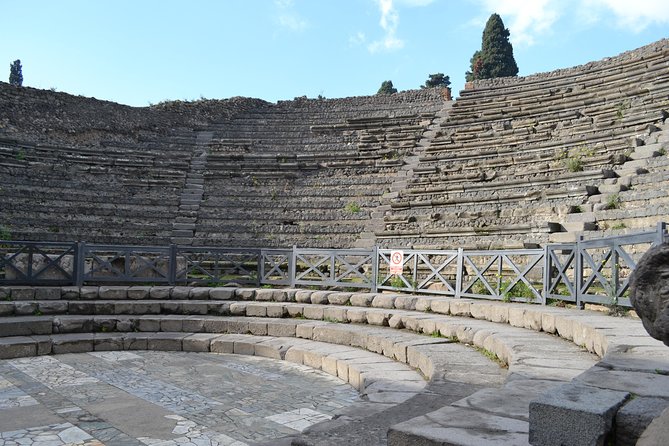
You’ll also hit Pompeii’s entertainment sites: Odeon – Teatro Piccolo and then Teatro Grande.
Teatro Piccolo is a shorter stop (about five minutes), so don’t expect a deep slow-study moment. Treat it like a warm-up: get oriented to the idea of performance space in Pompeii before you focus on the bigger theater.
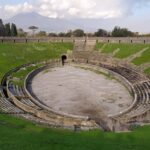
Then you’ll visit Teatro Grande, described as the most important theater in Pompeii, with about twenty minutes set aside for it. This is one of the biggest “pause and look around” spots on the route. A theater layout is a communication device. Your guide helps you connect the geometry of seating and stage to how gatherings worked.
Price and value of a $256.99 private archaeologist walk
At $256.99 per person for about three hours, this isn’t a budget stroll. The value comes from two things you can’t always buy separately in Pompeii: an archaeologist guide and admission ticket fees included for the stops.
So the real question for you is not just cost. It’s whether you want someone to guide your attention through the city’s structure. Pompeii is spread out, and without guidance you can end up “collecting sights” instead of understanding patterns—public vs private, commerce vs leisure, baths vs entertainment.
If you’re going with a small group and you like your travel experiences to be question-friendly, a private format is where this price starts to make sense. The included admissions also reduce decision fatigue. You don’t have to stop mid-walk to figure out which entrance costs extra.
Best timing, sun reality, and how to get the most out of 3 hours
This is a fast tour. Three hours goes quickly in Pompeii, especially once you factor in walking time across a vast site.
Shade is limited. The tour information is blunt about it: Pompeii is exposed with minimal shade. So take their advice seriously. Sunscreen and a hat aren’t optional here. If you’re the type who burns easily, plan for that before you even arrive.
The tour runs rain or shine. That’s good because you won’t have your day thrown off by weather. Still, go in aware that wet stone floors and crowded surfaces can change your pace.
Finally, the experience is for most people who want to participate. The walking is the point, and it’s a private group, so you’re not stuck waiting behind strangers who need extra time to catch up.
Book it or skip it: My call for your Pompeii day
I’d book this if you want your Pompeii visit to feel like a guided lesson, not a scavenger hunt. The route is built around big, interpretable places—Basilica and Forum for public life, baths and domestic houses for routine, Lupanar for social reality, and theaters for entertainment. And the included archaeologist guide turns those stops into explanations you can actually carry with you as you walk.
I’d hesitate if you want long, slow wandering with lots of solo time. This tour is structured and time-boxed, and it moves. Also, if you’re sensitive to sun and don’t want to deal with exposure, you’ll need a stronger plan than you might use at other European ruins.
FAQ
How long is the Pompeii 3-hour walking tour?
It runs for about 3 hours.
Is this tour private?
Yes. Only your group participates.
What language is the tour offered in?
The tour is offered in English.
Where do we meet the guide?
You meet at Via Villa dei Misteri, 1, 80045 Pompei NA, Italy. The guide will meet you at the main entrance (Porta Marina Superiore) holding an Askos Tours sign.
Do I need to buy admission tickets?
Admission ticket fees are included. Some stops are listed as including tickets and others as free, but the tour package includes admission as part of what you pay for.
What sites will we see?
You’ll visit key Pompeii sites including the Basilica, Foro de Pompeya, Granaries of the Forum, House of Menander, Stabian Baths, Lupanar, House of the Faun, Odeon (Teatro Piccolo), and Teatro Grande.
Does transportation to and from Pompeii include with the tour?
No. Transportation to/from attractions is not included.
Is there luggage storage at the meeting point?
Yes. There is a safe luggage store for free at the meeting location.
Does the tour run in bad weather?
Yes. The tour takes place rain or shine.
Can I cancel for a full refund?
Yes, you can cancel up to 24 hours in advance for a full refund. If you cancel within 24 hours of the start time, the amount you paid is not refunded.