REVIEW · GENOA
Genoa: Historic Guided Tour of Christopher Columbus’ House
Book on GetYourGuide →Operated by C-WAY Srl Unipersonale · Bookable on GetYourGuide
Columbus in a real Genoese house. In just a short visit near Porta Soprana, you get a guided look at Casa di Colombo and then step out to see why this corner of Genoa still feels medieval with the Cloister of Sant’Andrea and Porta Soprana.
What I like is how efficient it is: the tour keeps a small group (up to 6), so you actually hear the guide instead of playing catch-up. I also like the focus on structure and reconstruction—guides work from the evidence tied to the house’s layout and how the area was rebuilt for visitors, not just generic Columbus talk. Names you might hear along the way include Luisa and Georgia, both praised for careful, detail-driven explanations.
One heads-up: this tour is not suitable for mobility impairments or wheelchair users, and the meeting point is inside the venue (not outside), so don’t plan to “hunt around” for the guide.
In This Review
- Key things you’ll notice on this Genoa tour
- Casa di Colombo: where the early life story starts
- The house interior: workshop on the ground floor, private rooms above
- Cloister of Sant’Andrea: walking the medieval heart behind the scenes
- Porta Soprana: the gateway that puts your Genoa map back in place
- The guides: why small group + sharp storytelling makes it work
- Timing and what to plan: short inside, flexible outside
- Price and value: why $12 can be a good deal here
- Who should book, and who should skip
- Should you book the Genoa Casa di Colombo tour?
- FAQ
- How long is the Casa di Colombo guided tour?
- Where do I meet the guide?
- What does the ticket include?
- Is there a small-group limit?
- What languages is the tour offered in?
- Is the price only for entry, or is it a guided tour too?
- Does it skip the ticket line?
- Is the ticket valid for any date or only the date booked?
- Is this tour suitable for wheelchair users or people with mobility impairments?
Key things you’ll notice on this Genoa tour
- Small group size (max 6) makes the short time feel like it lands
- 15/20 minutes inside Casa di Colombo plus extra time at the cloister and Porta Soprana
- The house layout matters: workshop on the ground floor, private rooms upstairs
- Chiostro di Sant’Andrea is part of the story, rebuilt to show the medieval setting behind the house
- Italian and English guiding means you can follow every step without guessing
- Skip the ticket line so you spend less time waiting and more time seeing
Casa di Colombo: where the early life story starts
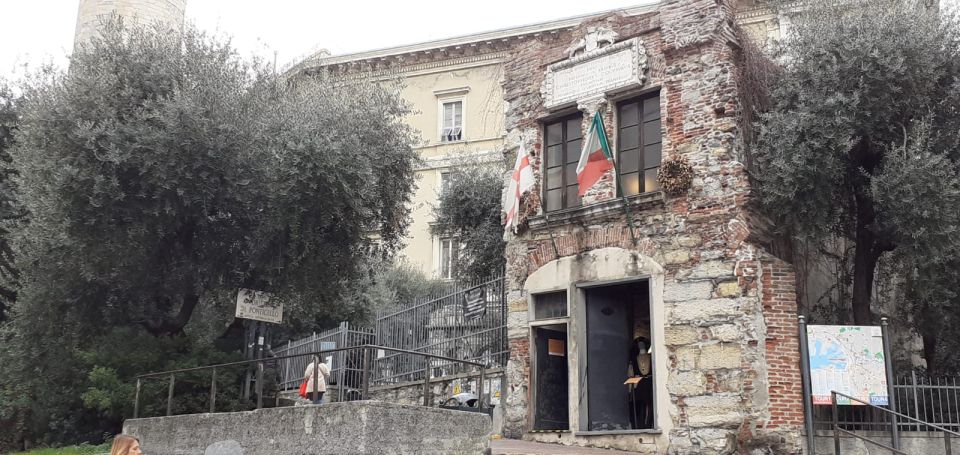
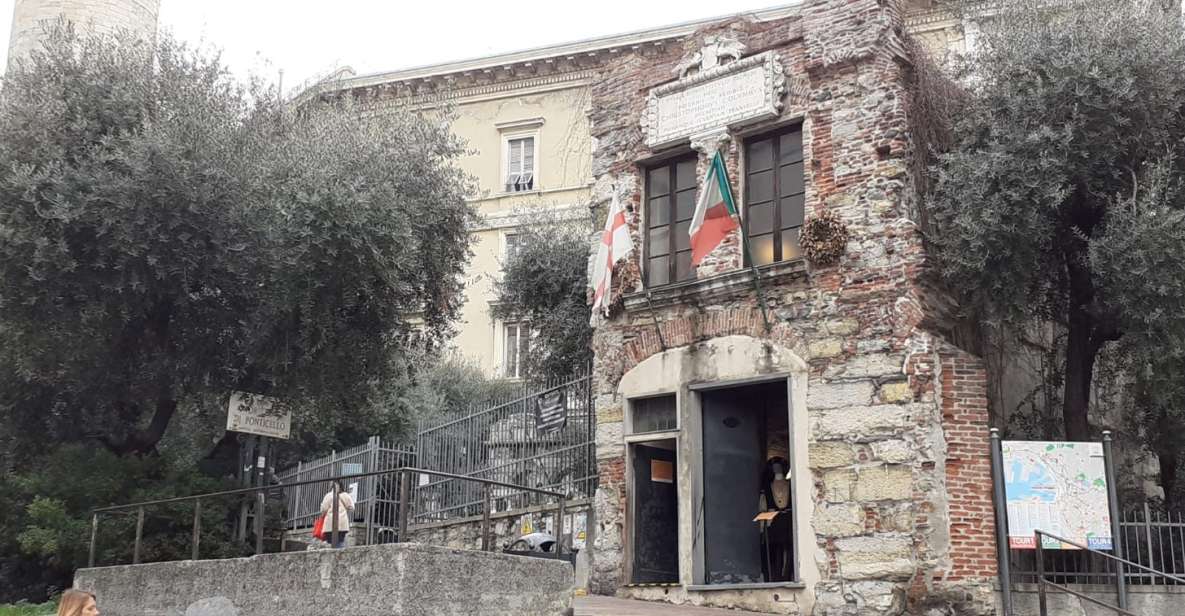
Casa di Colombo is one of those stops that works best when you treat it like a place, not a museum. It sits in the historic area just outside the medieval walls, close to Porta Soprana, which is exactly why the tour doesn’t stop at the door.
The big anchor is simple: according to archival documents, Domenico Colombo (Christopher’s father) moved here in 1455, when Christopher was four years old. That family timeline is your thread through the visit. Instead of focusing only on voyages across the ocean, you’re guided through the house as a snapshot of daily life—rooms, floors, and how the space was actually used.
And because the tour is planned around the immediate neighborhood (not just the interior), you finish with a better sense of where this youth story sits inside Genoa’s old city fabric. You see the medieval heart of the area rather than leaving right after the ticketed part.
You can also read our reviews of more tours and experiences in Genoa.


The house interior: workshop on the ground floor, private rooms above
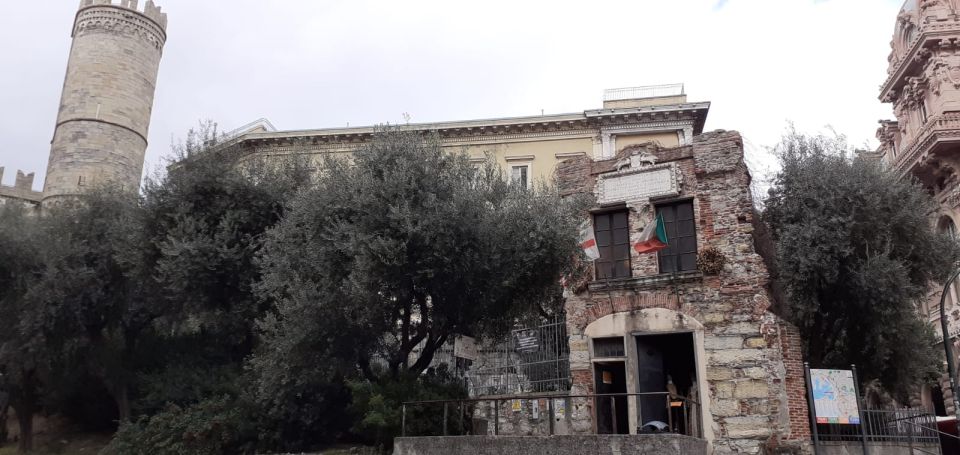
Inside, the tour is designed to be fast but not shallow. You spend about 15/20 minutes inside Casa Colombo, guided in Italian or English, and you’ll get oriented quickly to how the building is organized.
Here’s what you should expect to hear and look for:
- The ground floor was used as a workshop.
- An attic with wooden beams separates the lower level from the upper floor.
- The upper level held the more private rooms of the household.
That split is more than architectural trivia. It helps you understand how work and family life could coexist in a single structure—something that’s easy to miss when you’re staring at a preserved display case. The guide also explains features tied to the building and its reconstruction, which matters because this isn’t just a generic outline of a famous surname. You’re being taught how the space tells its own story.
If you like historical details that connect to real physical spaces—stairs, beams, room functions—this is the kind of tour where those details stay in your head. The pacing is short enough that you won’t feel stuck in a long lecture, but it’s long enough for the guide to point out what’s worth seeing.
Cloister of Sant’Andrea: walking the medieval heart behind the scenes
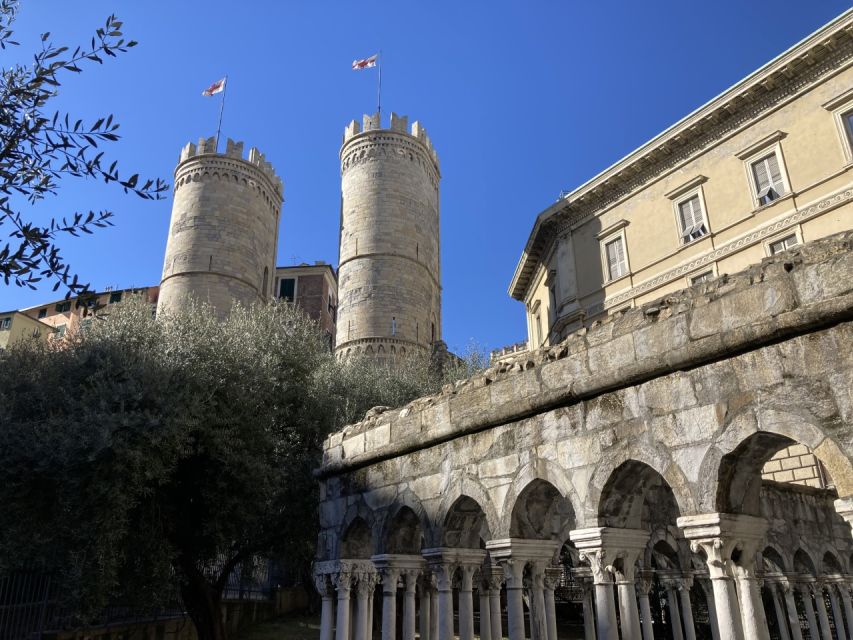
After the house, the tour shifts to a nearby stop that changes the whole experience: the Cloister of Sant’Andrea.
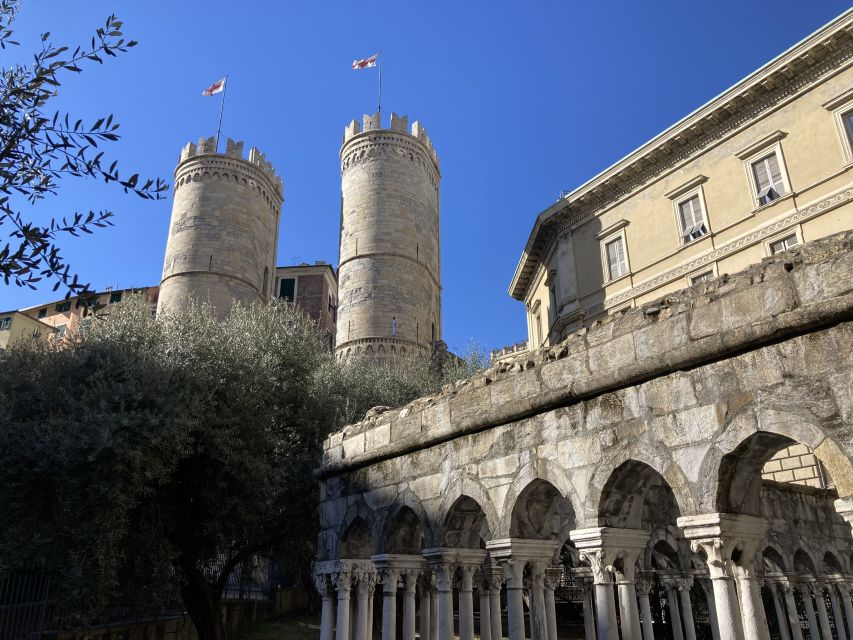
The key idea is that this cloister was rebuilt behind the House and Porta Soprana so visitors can grasp the area as a complete picture—again, not just Columbus-branded walls. This is your bridge from one preserved structure to a living-feeling medieval context. You’re meant to connect the house to the surrounding civic and religious layout of the neighborhood.
When you’re standing in the cloister area, listen for how the guide ties it back to the medieval heart of Genoa. Even if you’re not an architecture person, cloisters tend to do one thing well: they give you a sense of how space was shaped for community life, work rhythms, and movement between public and semi-public areas. And with a small group, you can ask direct questions without losing the thread.
This is also where the tour tends to feel especially valuable for people who want more than a quick photo stop. The guide can point out small features in the cloister you might otherwise miss in a self-guided wander.
Porta Soprana: the gateway that puts your Genoa map back in place
The final element of the guided circuit is Porta Soprana. It’s not just a dramatic old gate; it’s a location tool.
Because the tour begins at the house area just outside the walls and then includes both the cloister and Porta Soprana, you leave with better spatial understanding. You can look at the old walls and gates and actually connect them to what you just saw inside Casa di Colombo and in the cloister space.
This matters in Genoa, where streets can twist and layers of time stack quickly. A good stop at Porta Soprana helps you build an internal “map logic,” so your next walk through the medieval center feels less like following arrows and more like you’re reading the city.
The guides: why small group + sharp storytelling makes it work
This tour’s biggest quality lever is the guide and the group size. It’s limited to 6 participants, and that small number changes everything in a short experience. You’re not in a crowded line where you hear only fragments. The guide can slow down when someone needs a clarification.
In the feedback you’ll hear from guides like Luisa and Georgia, there’s a recurring theme: they’re tuned to evidence and structure. One guide description highlights a scientific, archaeological angle and a careful approach to interpreting what the building and area tell us. Another emphasizes that the guide can deliver a concise history and still find the details that make it feel real.
If you’re traveling with kids, this format can work well because it’s short. If you’re traveling alone, it still feels like a conversation you can join rather than a performance you have to endure.
Just know that meeting the guide the right way matters. The instructions are clear: meet the guide inside the venue. Don’t wait outside, and don’t expect the guide to appear at the nearest street corner like a generic city tour.



Timing and what to plan: short inside, flexible outside
The duration is listed as 20 minutes, but the visit isn’t only one fixed block in every case. The tour description specifies that the guided portion inside Casa Colombo is around 15/20 minutes, with additional time tied to the cloister and Porta Soprana.
So what should you plan for in real life?
- Expect a short interior window that focuses on key facts and building layout.
- Expect the outdoor or semi-outdoor stops to add a bit of walking time and picture-taking time.
- If your group asks questions, the timing can stretch.
Practically, this is a great “slot” tour. It fits between museum visits, before or after lunch, or as a quick cultural anchor early in the day. Because it’s designed around specific stops in a compact area, you won’t need to rearrange your whole day to make it work.
Also, this tour is dated: the ticket is valid only on the date booked, so don’t treat it as a flexible pass you can use later.
Price and value: why $12 can be a good deal here
At about $12 per person, this tour is priced low for what you get: a guided ticketed visit plus more than one stop in the immediate neighborhood.
Here’s where the value comes from:
- You’re paying for an escorted tour (not just admission).
- You’re getting multiple locations tied to one theme: Casa di Colombo, Cloister of Sant’Andrea, and Porta Soprana.
- You get skip-the-ticket-line access, which matters in busy seasons and when you’re on a tight schedule.
- The group is small, which effectively upgrades the “tour experience” without upgrading your ticket cost much.
The biggest part of the value equation is time. If your day is packed, this is exactly the kind of short, focused tour that keeps you moving while still learning something real. And because the guide explains how the house was used—like the ground-floor workshop and private upstairs areas—you’re not just collecting general facts. You’re understanding why the building matters.
Who should book, and who should skip
This is a strong fit if you:
- want short, guided history instead of an hour-long museum slog
- care about architecture and how spaces were used (workshop vs private rooms)
- like tours that connect a single famous name to the local medieval setting
- prefer small groups where you can actually hear the guide
It’s a less good fit if you:
- use a wheelchair or need mobility accommodations (the tour is listed as not suitable for mobility impairments and wheelchair users)
- want a self-paced visit where you can wander without a guide steering the order and focus
Should you book the Genoa Casa di Colombo tour?
If you’re even mildly interested in Genoa’s medieval layers and you want Columbus placed in a real place—close to Porta Soprana—this tour is worth booking. The price is approachable, the group is small, and the route gives you more context than a simple house-entry ticket.
Book it especially if you like guides who explain the building logic: how the ground floor functioned, how the upper rooms differed, and why the cloister area is included to complete the picture. The timing is also friendly: it’s short enough to fit into a sightseeing plan without derailing your day.
If you need accessibility support, plan on a different approach. Otherwise, this is one of those Genoa activities that helps you understand the neighborhood faster than wandering on your own.
FAQ
How long is the Casa di Colombo guided tour?
The tour is listed as about 20 minutes. The guided portion inside Casa Colombo is described as 15/20 minutes, with time also included for the Cloister of Sant’Andrea and Porta Soprana.
Where do I meet the guide?
Meet the guide inside the venue. Do not wait outside or in a nearby area.
What does the ticket include?
The ticket includes an escorted visit to Casa di Colombo, plus the Cloister of Sant’Andrea and Porta Soprana. It includes the guided tour in Italian and English.
Is there a small-group limit?
Yes. The group is limited to 6 participants.
What languages is the tour offered in?
The live guide offers the tour in Italian and English.
Is the price only for entry, or is it a guided tour too?
It’s for an escorted guided tour. The ticket includes entry and a live guide.
Does it skip the ticket line?
Yes, the experience includes skip-the-ticket-line access.
Is the ticket valid for any date or only the date booked?
It’s valid only on the specific date you booked.
Is this tour suitable for wheelchair users or people with mobility impairments?
No. It is listed as not suitable for people with mobility impairments or wheelchair users.