REVIEW · GENOA
Genoa Must-See Attractions Walking Tour
Book on GetYourGuide →Operated by Guydeez Tours · Bookable on GetYourGuide
Genoa rewards a good walking route. This 2-hour tour strings together the city’s biggest landmarks with a local guide, so you don’t just see sights—you understand why they matter. You’ll move from Christopher Columbus’ House to Cattedrale di San Lorenzo, plus key plazas and Genoa’s historic gate and walls.
I love how the guide-led pacing keeps things clear without feeling rushed. Two standout wins for me: the explanations tie monuments and art together in plain language, and guides like Giulio and Fulvio also share smart, practical tips for where to go next—sometimes including typical food stops.
One thing to consider: it’s still a walking tour, so plan on comfortable shoes and weather-appropriate clothing. Also, there’s no food included, so if you get hungry, you’ll need to pick up a snack on your own before or after.
In This Review
- Key Things I’d Remember Before You Go
- Genoa in Two Hours, Without the Guesswork
- Starting at Piazza Giacomo Matteotti: Where You Actually Find the Group
- Columbus’ House: A Quick First Hit of Big Genoese Story
- From Doge’s Palace to Power in Stone
- Piazza San Giorgio: Where You Learn to Read the City
- Piazza Banchi: The Social Side of Genoa
- Porta Soprana: The City Wall Gate Moment
- Castello Area Stop: Small Time, Good Perspective
- Cattedrale di San Lorenzo: The Cathedral Stop That Earns Its Time
- Piazza Raffaele de Ferrari: Ending Where You Can Keep Going
- What the Best Guides Add: Stories, Art Talk, and Street Leads
- Price, Pace, and Who This Tour Fits Best
- Should You Book This Genoa Walking Tour?
- FAQ
- How long is the Genoa Must-See Attractions Walking Tour?
- What does the tour cost?
- Where does the tour start?
- Which key sights are included on the walk?
- Is the tour walking only?
- Are food and drinks included?
- What languages are available for the live guide?
- Is the tour wheelchair accessible?
- Is there an option for private groups?
- Is there free cancellation?
Key Things I’d Remember Before You Go
- English, Spanish, Italian, and French guide options so you can choose your comfort zone.
- Museum stop energy at Doge’s Palace, not just an exterior photo.
- A mix of famous squares and named city-wall history, including Porta Soprana.
- A guided flow that ends in the main piazza area, making it easy to keep exploring.
- Guides who don’t stop at architecture; you may also get leads to local places to eat and smaller streets.
Genoa in Two Hours, Without the Guesswork
If you only have a short window in Genoa, this tour does a valuable job: it gives you a curated walk that lands on the city’s signature stops and key wayfinding points. For $41 per person, the value is in the guide time—2 hours of live interpretation—plus the fact that you’re not sorting out routes and meanings on your own.
The format is simple: you meet in a central piazza, then the guide takes you from stop to stop with photo stops and short guided visits. You get a tight overview of major landmarks plus a few places that feel less obvious than the headline sites.
A practical note: since food and drinks aren’t included, treat this as your “see and learn first” block. Then you can use your newfound context to pick a meal that matches what you liked during the walk.
You can also read our reviews of more tours and experiences in Genoa.
Starting at Piazza Giacomo Matteotti: Where You Actually Find the Group
You begin at Piazza Giacomo Matteotti, 60. That choice matters more than it sounds. A central piazza with cafes and shops is ideal because you can orient fast, grab water, and reduce stress before you start walking.
Also, this is a tour designed for a smooth handoff into the rest of your day. The end point is another major square, so you’re not stuck wondering where to go after the guide leaves you.
If you’re arriving on foot, this kind of meeting point is a big deal. Genoa’s streets can be twisty, and a fixed address helps you avoid that moment where everyone is searching for the same person in the same crowd.
Columbus’ House: A Quick First Hit of Big Genoese Story
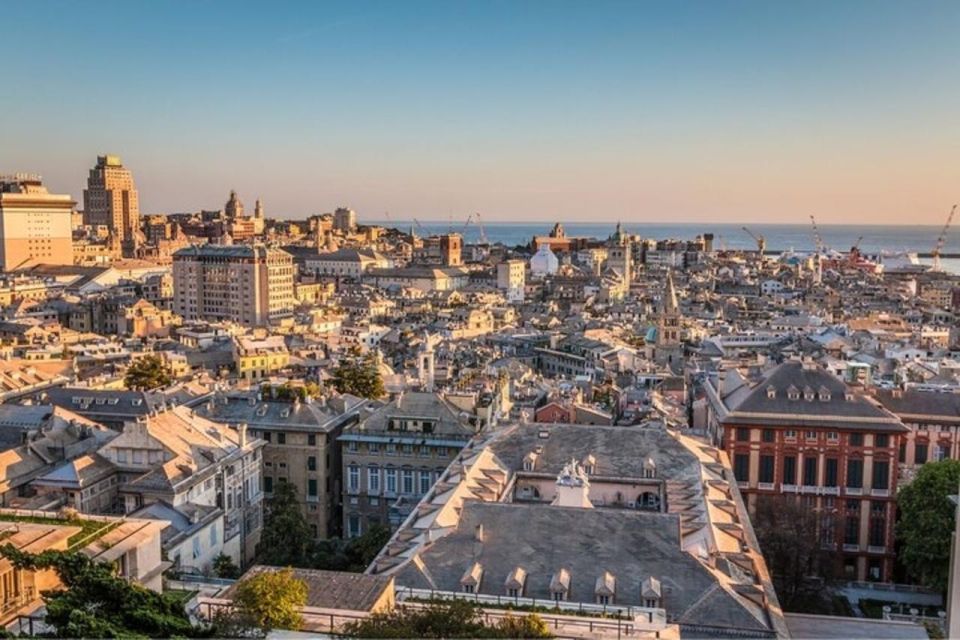
Your first stop is Christopher Columbus’ House, with a photo stop, a visit, and guided sightseeing. This is a smart opener because the site gives your walk an anchor story early, so later landmarks don’t feel random.
Even if you don’t consider yourself a “history person,” starting here helps you recognize the pattern of Genoa’s identity—people, power, and places linked through centuries. The guide’s job is to make that connection without making it feel like a lecture.
What I like about this early pacing: you’re not yet tired from walking. You’re still fresh enough to ask questions, and the guide can adjust the explanation to what you seem most interested in.
From Doge’s Palace to Power in Stone
Next comes Doge’s Palace, Genoa. Expect another photo stop and guided tour time, with sightseeing as you move through. The key point here is that this isn’t only an iconic building—it’s described as a museum and a center for cultural events today.
That means you’re not just looking at something old. You’re seeing a historical site that still functions as a public space. For me, that’s one of the quiet advantages of doing a guided walk: you get the “why this place is important now” angle alongside the “what it was” angle.
A small drawback to know: this is a popular kind of stop, so if you’re someone who hates crowds, you’ll still be in a public sightseeing zone. The tour helps because you’re moving at guided intervals, not waiting around with no plan.
Piazza San Giorgio: Where You Learn to Read the City
Then you head to Piazza San Giorgio, again with a photo stop, visit, guided tour, and sightseeing during the walk. This is one of those moments where the tour becomes more than a list of places. Squares are the city’s breathing space, and your guide can help you notice how the architecture and layout work together.
I find plazas like this useful because they also act as mental rest points. Your brain can re-map the city while you’re sitting or standing nearby. After that, moving to the next stop feels easier because you’ve already “read” one part of the city.
If you’re traveling with someone who wants photos but also likes explanations, squares are a good compromise.


Piazza Banchi: The Social Side of Genoa
Piazza Banchi is next, with the same rhythm: photo stop, guided visit, and short sightseeing time. This piazza lands in the category of places that feel lively even when you’re not looking for crowds. You’re not just passing through; you’re getting guided context for why this kind of public space matters.
This stop also helps you understand Genoa as a place where people gather in named squares, not just a museum-like city. After a couple of structured landmark visits, you start to appreciate how the city organizes daily life around these big open areas.
One practical tip: use this time to check your phone camera settings and get any “I want one good wide shot” photos. With multiple stops in different styles, you’ll thank yourself later.
Porta Soprana: The City Wall Gate Moment
Now you reach Porta Soprana, described as the towered gate of Genoa’s 12th-century city walls. This is one of the more historically specific stops in the walk, and it helps you shift from palaces and museums to the urban defensive side of the story.
Because it’s a gate, it also gives you a natural sense of movement: you’re walking along a route that feels connected to how people entered and left the city in earlier times. Your guide’s explanations here can turn a wall segment and a towered gate into something more meaningful than stone.
This is also a good moment to slow down your photos. Gates are tall, and angles matter. If you rush, your pictures will show less and miss the vertical scale you’re seeing in person.
Castello Area Stop: Small Time, Good Perspective
The tour includes a photo stop and guided sightseeing at Castello (the description lists it as Castello, Venice). I’m flagging that label because it may be a quirky naming mix, but the practical takeaway is the same: you get a brief look at another distinct part of the city during the walk.
Even when this stop is short, it can help you build a “mental map” of Genoa. Tours like this work best when they give you more than one type of scene—palace, cathedral, gate, squares—so you can remember what the city feels like in different neighborhoods.
If you’re the type who loves street-level atmosphere, this is usually where you start noticing the tiny turns and textures that bigger landmarks can hide.
Cattedrale di San Lorenzo: The Cathedral Stop That Earns Its Time
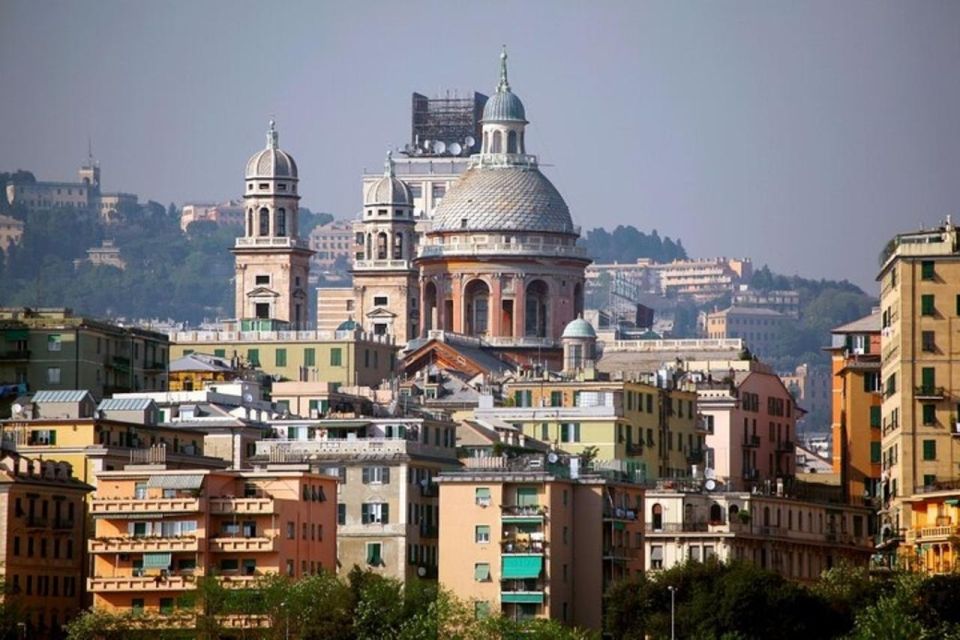
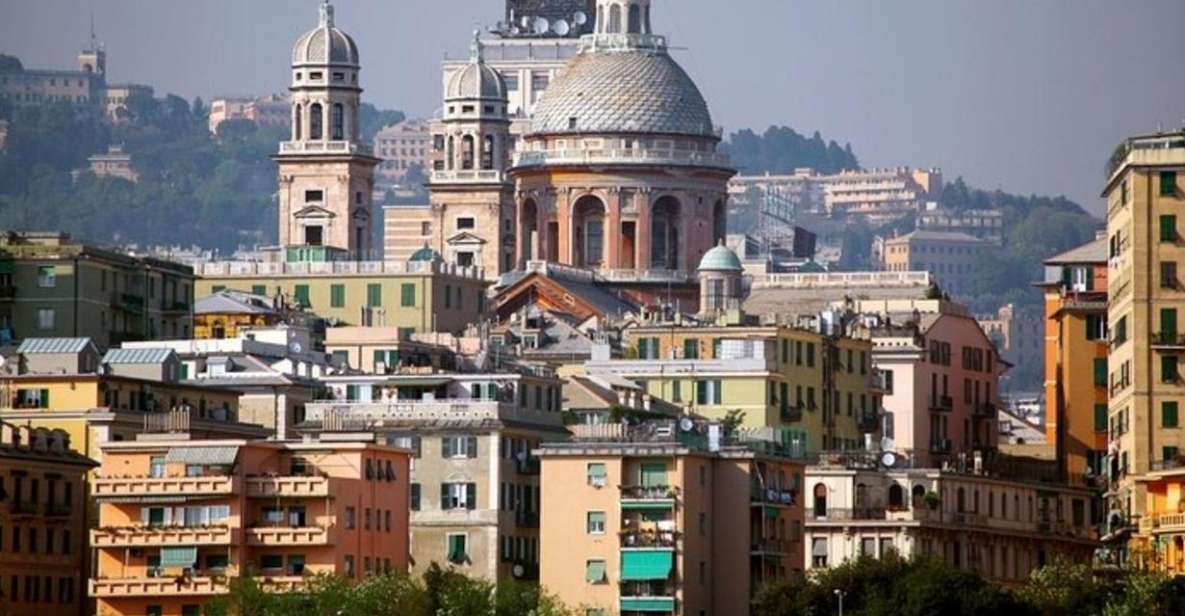
Next is Genoa Cathedral, known as Cattedrale di San Lorenzo. This is highlighted as a must-see attraction, and for good reason: cathedrals are often the most visually complex stops on a short walking tour.
You’ll get a photo stop, guided tour time, and sightseeing. The value here is that a guide can help you notice architectural choices without you needing to be an art historian. The goal isn’t to overwhelm you with facts; it’s to help you look better while you’re standing there.
One drawback to keep in mind: if you’re expecting lots of time to wander independently inside or around every corner, a 2-hour walking schedule is still a schedule. Treat this stop as a focused introduction, not a full day at the cathedral.
That said, even a short guided visit to a major site can make a big difference. You’re leaving with a stronger appreciation, not just a photo.
Piazza Raffaele de Ferrari: Ending Where You Can Keep Going
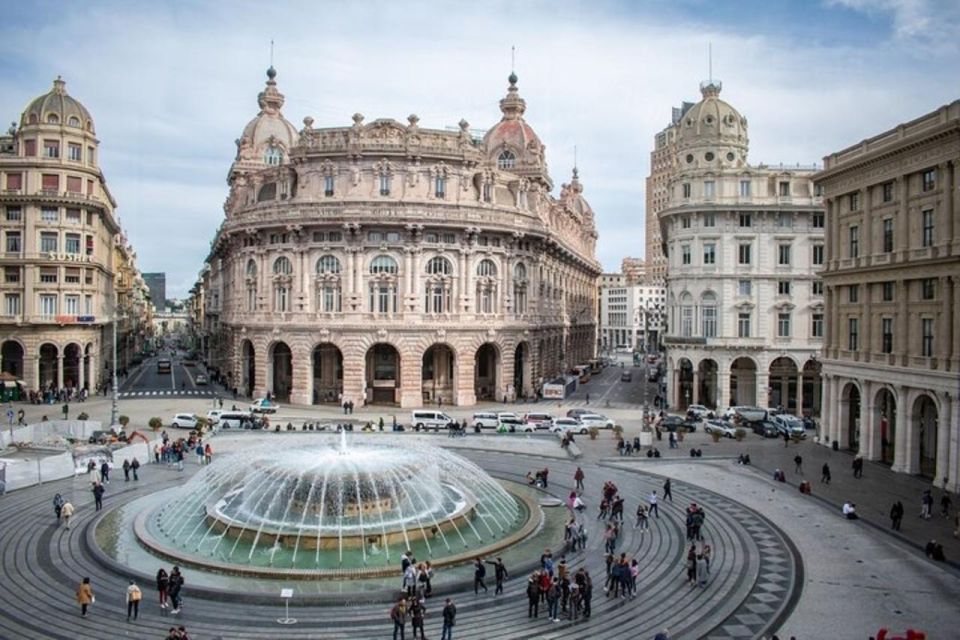
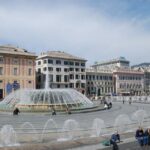
The tour wraps at Piazza Raffaele de Ferrari, described as the city’s main square and a perfect place to continue exploring on your own. I like ending on a major piazza because it keeps your options open. You can branch off in multiple directions without needing to solve navigation right away.
This is where your guide’s hints can pay off. If you picked up leads on streets, neighborhoods, or food spots during the tour, you’ll be able to act on them immediately while you still have the tour context fresh in your head.
It’s also a smart landing spot for a break. After walking, sitting somewhere central can feel like a reward instead of a pause you have to hunt for.
What the Best Guides Add: Stories, Art Talk, and Street Leads
The guide is the heart of this experience. The review highlights are consistent: the guides are friendly, speak multiple languages, and bring history and art into the conversation in ways that are easy to follow.
In particular, names like Giulio and Fulvio come up for strong explanations and good energy. Giulio is described as speaking excellent English and French and connecting monument history and art with clear commentary. Fulvio is noted for showing secret streets, which is exactly what makes a walking tour feel like more than sightseeing.
Here’s the practical part for you: if you like to travel smart, use the tour to ask a simple question like what neighborhood to explore next based on what you’re enjoying. Since the walk includes major architectural anchors, your guide can recommend where that vibe continues—often including typical food places that you might miss on your own.
Price, Pace, and Who This Tour Fits Best
Let’s talk about the $41 price tag. For a 2-hour, guided walk that covers multiple named landmarks with photo stops and guided visits, it’s fairly good value if you want structure and meaning. You’re paying for time with a local guide and for not having to design your own route through the center.
This tour is a strong fit if:
- you want a short, high-impact introduction to Genoa
- you like architecture and want help looking at it
- you want insider direction after the tour ends
It may be less ideal if:
- you need long museum-style pacing at each site
- you prefer fully independent travel with no guide commentary
- you’re hoping for food included (it isn’t)
In terms of pace, you’ll be moving from stop to stop with compact time windows. That’s good for seeing more, but it means you should bring patience and comfy shoes. Genoa’s streets can be a bit unforgiving underfoot.
Should You Book This Genoa Walking Tour?
Yes, I think you should book it if you want the best “first walk” version of Genoa. The route is built around the city’s key landmarks—Columbus’ House, Doge’s Palace, major piazzas, Porta Soprana, and Cattedrale di San Lorenzo—and the guide experience is clearly the quality driver.
If you’re the kind of traveler who likes to understand what you’re looking at and then use that understanding to explore more afterward, this format is a great match. You’ll finish in the main square with a clearer sense of where you are and what to chase next.
If, however, you hate walking and want more time sitting at one site, you might be happier with a slower plan. But for a 2-hour hit of Genoa with guidance and strong art-history storytelling, this one makes sense.
FAQ
How long is the Genoa Must-See Attractions Walking Tour?
The tour lasts 2 hours.
What does the tour cost?
The price is $41 per person.
Where does the tour start?
You meet at Piazza Giacomo Matteotti, 60.
Which key sights are included on the walk?
You’ll visit Christopher Columbus’ House, Doge’s Palace, Piazza San Giorgio, Piazza Banchi, Porta Soprana, Genoa Cathedral (Cattedrale di San Lorenzo), and finish at Piazza Raffaele de Ferrari.
Is the tour walking only?
Yes, it’s a walking tour.
Are food and drinks included?
No. Food and drinks are not included.
What languages are available for the live guide?
The live tour guide is available in English, Spanish, Italian, and French.
Is the tour wheelchair accessible?
Yes, the tour is wheelchair accessible.
Is there an option for private groups?
Yes, a private group option is available.
Is there free cancellation?
Yes, you can cancel up to 24 hours in advance for a full refund.