REVIEW · GENOA
Segway Tour Caruggi – 2.5 ore
Book on Viator →Operated by Le Bighe del Bigo - Genova Segway · Bookable on Viator
Segways make Genoa hills feel manageable. This small-group ride cuts through the pedestrian-only heart of Genoa, so you cover real neighborhoods instead of just hopping between photos. I especially liked how the guide pairing of Matt (and sometimes Joseph or Amber) turns the route into a story you can follow as you glide.
Two big wins for me: first, the Segway is taught on-site in the easy, flat Porto Antico area, so you get confident before the old-town twists. Second, the route hits a smart mix of places, from major squares like Piazza Matteotti to the Cathedral area, plus the seafront finish back in Porto Antico.
One consideration: the meeting point can be slightly confusing if you rely on map apps too blindly. The address is clear, but the storefront feel of the location means you’ll want to double-check you’re at the right house number (more on that below).
In This Review
- Key Highlights You’ll Care About
- Getting Oriented at Edificio Millo and Learning the Segway Fast
- Porto Antico Start: Safe Riding by the Sea
- Palazzo San Giorgio and the First Bank of Europe
- Entering the Medieval Old Town and the Caruggi Maze
- UNESCO Pedestrian Center: Why It Works Without Crowds
- The 16th-Century Street With Suspended Gardens
- Nineteenth-Century Iron Gallery and the Next Layer of Monuments
- Via XX Settembre, Carlo Felice Theater, and the Grand Squares
- Piazza Matteotti and Palazzo Ducale: Genoa’s Power Center
- The Navigator’s Birthplace and Via di Ravecca Alleys
- The Medieval Gate, an Ancient Cloister, and Cathedrals Up Close
- Porto Antico Finish: Galeone Neptune and the Sea View
- Price and Logistics: Is $72.56 Good Value?
- The One Thing to Watch: Finding Edificio Millo
- Who This Segway Tour Suits Best
- Should You Book This Segway Tour in Genoa?
- FAQ
- How long is the Segway tour of Genoa?
- Where does the tour start?
- Is the tour offered in English?
- How many people are in the group?
- Do I need a certain fitness level?
- Can children drive the Segway?
- Is there a mobile ticket?
- What if the weather is bad?
- Can I cancel for a full refund?
Key Highlights You’ll Care About
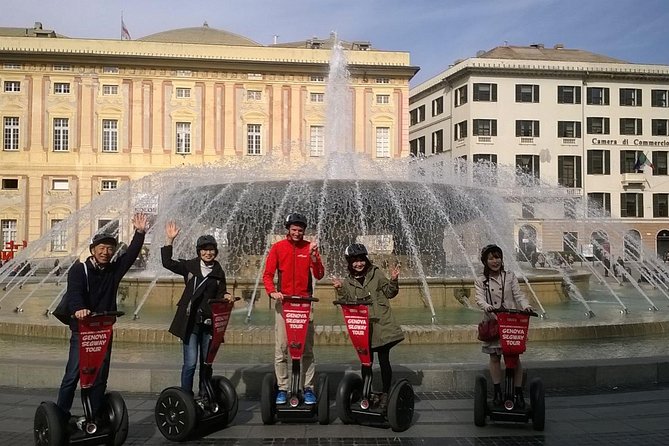
- Max 9 people means you’re not lost in a crowd; the guides can actually keep an eye on you.
- Quick training by the sea in Porto Antico helps you handle the Segway before you enter tighter streets.
- Caruggi + UNESCO old center coverage: you get the medieval maze without wearing out your calves.
- A line-up of major Genoa stops: Palazzo San Giorgio, Via XX Settembre, Palazzo Ducale, and the Cathedral area.
- Finish on the waterfront with Porto Antico’s pavilions and the Galeone Neptune view.
Getting Oriented at Edificio Millo and Learning the Segway Fast
Your tour starts at Edificio Millo, Calata Cattaneo 18, near the action of Porto Antico. The timing is set for a midday departure (12:00 pm start), and the whole experience runs about 2 to 2.5 hours, depending on pace and questions.
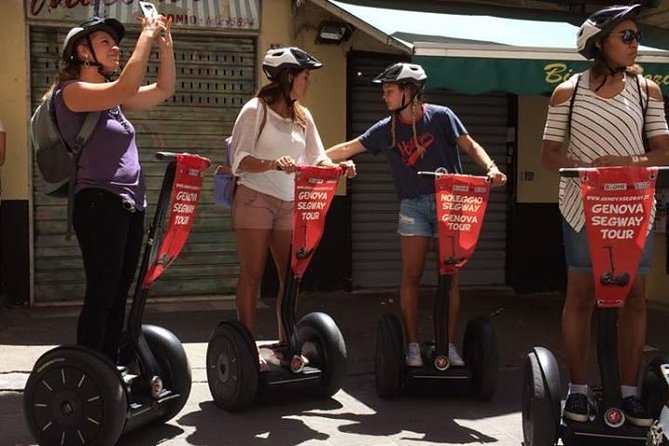
Before you zip into the old streets, you’ll start in a location that’s designed for learning. Porto Antico is pedestrian and close to the sea, so it’s a good place to get the basics down: forward motion, turning, and stopping smoothly. That matters in Genoa, because the city is all slopes and stone lanes. If you’ve ever tried to “just do one hill” on foot and regretted it an hour later, you’ll understand why this training step feels like a gift.
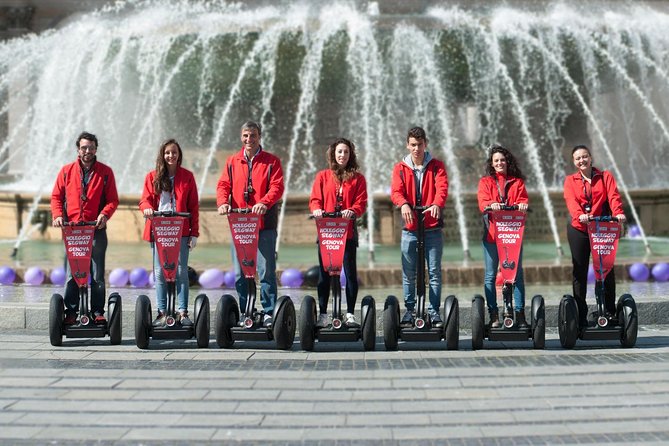
This is also where the small-group size helps. With up to nine travelers, instructors can correct posture and hand placement early, instead of giving one-size-fits-all instructions. If you’re arriving with mixed experience levels, you’ll likely appreciate the patient pace.
You can also read our reviews of more tours and experiences in Genoa.


Porto Antico Start: Safe Riding by the Sea
The first real segment is the Porto Antico area itself, which works as both a warm-up and a preview. It’s the city’s tourist-and-meeting hub, and because it’s fully pedestrian, you can learn without the stress of traffic.
You’re also right by the water. That sounds obvious, but it changes the feel of the ride. Genoa can be intense—tight alleys, uneven footing, and a lot of visual input. Starting near the sea helps you settle in and get comfortable on the Segway before the route starts getting more “old-world.”
One practical tip: wear shoes you’d wear for walking on cobblestones. You might not be walking much, but you’ll still need stable footing for getting on and off and for short stop-and-start moments.
Palazzo San Giorgio and the First Bank of Europe
From Porto Antico, the route shifts toward a heavyweight historical landmark: Palazzo S. Giorgio. The stop frames it as the first bank of Europe, which gives you a useful anchor for understanding why Genoa’s port power wasn’t just romantic ships and foggy postcards.
As you glide past, the guide isn’t only naming buildings. The value here is context. When you understand Genoa as a trading city—finance, ships, and influence—you start reading the old center differently. You stop seeing it as random stone streets and start seeing it as geography built for commerce.
This is where a guide like Matt tends to shine, based on what’s consistently highlighted: he brings local passion and connects the dots between what you’re riding by and what it meant for the city.
Entering the Medieval Old Town and the Caruggi Maze
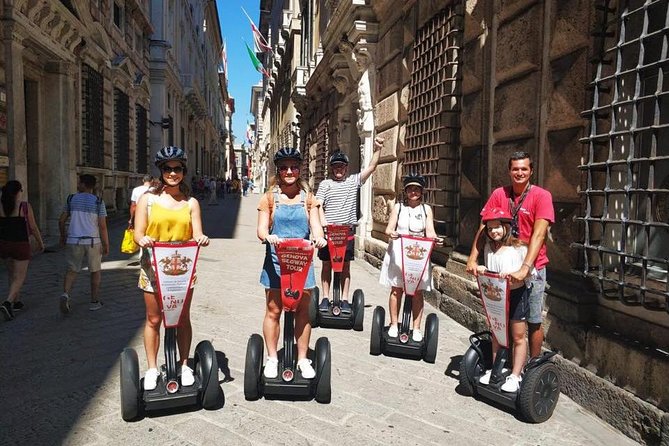
Soon you roll into the medieval old town, passing through a key square with curiosities and important buildings. Then it’s on to the Caruggi—Genoa’s famous narrow lanes—where cars can’t go and the city becomes foot-only.
This is where the Segway really earns its keep. Walking Caruggi streets can be a workout: short, tight turns plus steep sections. On a Segway, you still navigate the vibe—narrow walls, changing street angles, glimpses between buildings—but you don’t lose the afternoon to fatigue.
Also, Caruggi is not just aesthetic. It’s how you feel Genoa’s density and layers. You’re moving through areas with centuries of urban design, and because the tour is paced as a ride-through guided walk, you get to keep your eyes up and your head turning instead of staring at where you step.
UNESCO Pedestrian Center: Why It Works Without Crowds
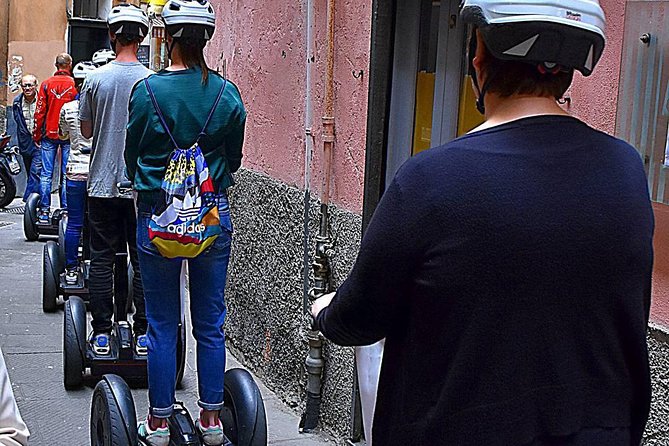
The tour highlights the largest pedestrianized historical center of Europe with a thousand-year history and UNESCO status. Even if you don’t care about official labels, this description signals something important: you’ll be in the heart of preserved old Genoa where the streets are meant for people, not engines.
The payoff for you is comfort and clarity. In a city like Genoa, it’s easy to spend hours trying to cross from one sight to the next while dodging hills and narrow entrances. Here, the route is designed to keep you in the pedestrian zone, so the ride feels smooth in the context of the city’s layout.
It’s also one reason the Segway feels more practical than it sounds. You aren’t using it to skip everything. You’re using it to move efficiently through the parts that are hardest to cover on foot.





The 16th-Century Street With Suspended Gardens
Next comes one of the most recognizable segments: a major road known for original design, symbol of the city, and the elegance of sixteenth-century buildings. The route also notes suspended gardens—an image that helps explain why Genoa’s historic center can feel both urban and theatrical.
What you should expect here is a shift in atmosphere. Earlier stops feel like exploration—turn, look, listen. This road feels more composed, like the city flexing its identity. You’ll get a sense of how planning and wealth show up in architecture and street shape.
If you like when a tour shows not just what exists, but why it exists, this part is for you. It’s a strong bridge between medieval layers and the grander later periods you’ll see next.
Nineteenth-Century Iron Gallery and the Next Layer of Monuments
After the lanes and older churches/buildings, the tour moves into a later era via a spectacular nineteen-century iron gallery. That type of structure does something important visually: it interrupts the stone-and-alleys feel with a modern engineering statement.
On a Segway route, that transition helps keep your brain engaged. You’re still moving through the old center, but you’re switching architectural language. It also gives the guide a chance to describe how Genoa kept evolving while preserving the big picture.
If you enjoy architecture, this segment tends to land well because it’s both functional and dramatic. It’s the kind of place where you look once, then look again because the lines are so distinctive.
Via XX Settembre, Carlo Felice Theater, and the Grand Squares
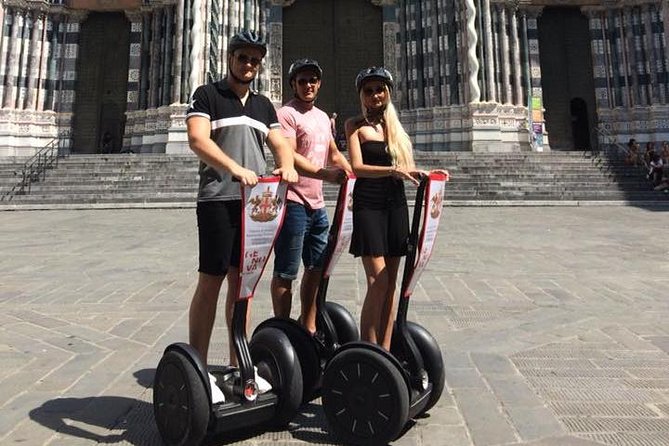
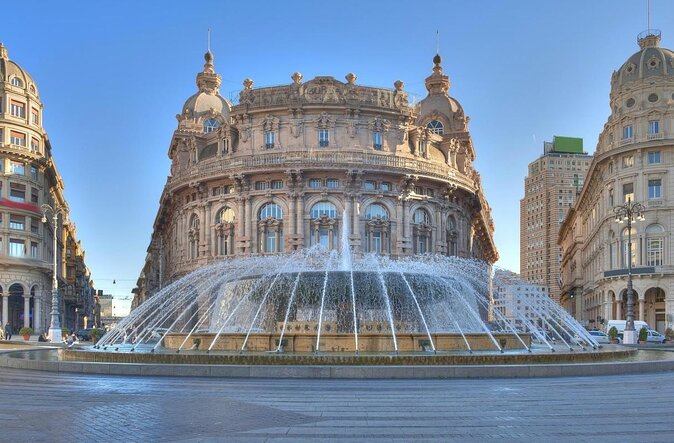
The ride then brings you to the heart of the historic center: a large square with a majestic fountain, plus nearby major landmarks like the Carlo Felice Theater and the Stock Exchange building. You’ll also pass Via XX Settembre, described as a historic shopping and business street.
This is the part where Genoa stops feeling like a maze and starts feeling like a capital city. The square opens up your view, and the Segway route makes it easier to process what you’re seeing rather than getting boxed in by crowds or forced into long detours.
Practical note: if you’re prone to motion sickness, slower turns and a calm pace here should help. The tour generally keeps you moving, but it’s not an adrenaline ride. Think controlled sightseeing.
Piazza Matteotti and Palazzo Ducale: Genoa’s Power Center
From the square area, you’ll reach Palazzo Ducale, presented as the residence of Genoese lords and the seat of the city’s power in the historic center, located in Piazza Matteotti.
This stop is valuable because it connects to governance, not just beauty. Genoa’s old wealth wasn’t only about ships. It was also about who held authority and how power was displayed through public buildings.
On the Segway, you can slow down at the right spots and get a clean look without weaving through tight pedestrian lines. It feels more efficient, yet still immersive.
The Navigator’s Birthplace and Via di Ravecca Alleys
The itinerary includes the house where a famous Genoese navigator was born in 1451. The exact story matters less than what it does for the tour’s structure: it ties Genoa’s seafaring identity to a real person and a real place.
Then you head back into the older neighborhood via Via di Ravecca. Expect the change in scale again. Wider streets become narrower. Light changes as walls get closer. This is part of the charm of Genoa: the city shifts textures quickly.
If you want photos, this is a good time. Many Caruggi moments are too tight to get a good angle on foot without constantly maneuvering around other people. A Segway ride helps you keep your spot and frame your shot without sprinting.
The Medieval Gate, an Ancient Cloister, and Cathedrals Up Close
Another notable stop is an imposing medieval gate, described as the ancient access to the Republic of Genoa. Gates like this help you understand the old city as something enclosed and controlled—an urban system, not just an aesthetic.
After that, the tour continues through one of the oldest neighborhoods and then includes an ancient church and its particular cloister. You’ll also get glimpses of the center from an elevated position before descending again toward the sea.
Then comes the Cathedral of Genoa, highlighted as the most important church in the historic center, with precious marbles and breathtaking architecture. This is the kind of stop where you end up looking upward even if you think you won’t.
The Segway here is useful because it gets you to the right area fast, but the cathedral still demands your attention. You’ll feel like the day is tying together: port power, civic buildings, and spiritual center.
Porto Antico Finish: Galeone Neptune and the Sea View
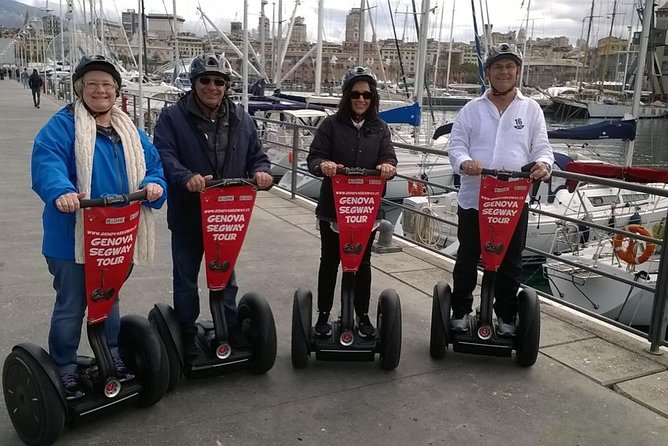
The tour ends with a walk along the seafront in Porto Antico. You’ll pass pavilions and modern buildings and reach the Galeone Neptune, described as a pirate-movie star. Then you arrive right on the shore for a dedicated area to admire the full port view.
This finish is smart because it gives you a “reset.” After hours of stone alleys and architecture, your eyes need space. The sea view does that, and it also puts Genoa back into perspective as a port city.
If you like souvenirs, you’ll probably notice the waterfront energy—people lingering, ships in the distance, the whole feeling of Genoa as a working coastline.
Price and Logistics: Is $72.56 Good Value?
The price is $72.56 per person, and the tour runs about 2 to 2.5 hours. For a Segway tour, that’s not just about the device. You’re paying for three things that matter in Genoa:
- Time saved in hills and pedestrian-only zones. Genoa’s street layout can punish your feet fast. A Segway lets you keep your day moving.
- A guided route that actually covers key areas. You’re not doing a random loop. You’re hitting multiple eras: banking power, medieval Caruggi, grand civic squares, and the cathedral area.
- Small-group attention. With a cap of nine travelers, the guides can train and correct in a way that feels safe and personal.
If you’re a couple or a small group that wants to see more without sprinting, this price usually feels fair. If you’re on a tight budget and plan to do lots of walking anyway, you might see it as optional. But if you hate wasting energy on steep climbs just to reach sights, the Segway often feels like a bargain.
The One Thing to Watch: Finding Edificio Millo
One recurring practical issue is locating the meeting spot. Some people get tripped up by map directions. The key is this: it’s an actual store-like location, not just a person standing in the street.
So do yourself a favor:
- Use the given address: Edificio Millo, Calata Cattaneo 18.
- Arrive a little early.
- Don’t assume the first spot that looks right is correct; look for the right house number.
If your stomach knots at the thought of being late, arrive early anyway. You’ll enjoy the training more if you’re not stressed.
Who This Segway Tour Suits Best
This tour is a great fit if you:
- want a high-sight-density day in Genoa without destroying your legs
- like guided storytelling and want context behind what you see
- enjoy moving through pedestrian-only neighborhoods efficiently
It’s not for you if:
- you’re expecting long off-road adventures or big country lanes (this is city-based)
- you’re uncomfortable balancing for short periods
- you’re traveling with children who need to drive (children under 16 can’t drive the Segway)
You should also factor in the weather. The experience notes good weather is required, and if it’s canceled due to poor weather, you’ll be offered a different date or a full refund.
Should You Book This Segway Tour in Genoa?
I think you should book if your ideal Genoa day includes the Caruggi, the big historic squares, and a waterfront finish—without turning your travel legs into jello. The biggest strength is the combination of easy early training and a route that makes sense for Genoa’s hills and pedestrian streets.
I’d especially choose it if you want a guided framework: you’ll move across centuries (from port power and civic authority to cathedral architecture) while still feeling like you’re wandering the city. And if you get Matt as your guide, the experience has a reputation for being energetic, funny, and very tied to local pride.
Skip it only if you know you don’t enjoy riding devices, or if you’re the type who hates logistical puzzles like finding a precise storefront. If you’re flexible and you arrive early, this one is a smooth way to see a lot of Genoa in a short time.
FAQ
How long is the Segway tour of Genoa?
It runs about 2 hours to 2 hours 30 minutes.
Where does the tour start?
The meeting point is Edificio Millo, Calata Cattaneo, 18, 16128 Genova GE, Italy. The tour ends back at the same meeting point.
Is the tour offered in English?
Yes, the tour is offered in English.
How many people are in the group?
This experience has a maximum of 9 travelers.
Do I need a certain fitness level?
You should have a moderate physical fitness level.
Can children drive the Segway?
Children under 16 years old cannot drive the Segway.
Is there a mobile ticket?
Yes, you receive a mobile ticket.
What if the weather is bad?
The experience requires good weather. If it’s canceled due to poor weather, you’ll be offered a different date or a full refund.
Can I cancel for a full refund?
Yes. You can cancel up to 24 hours in advance for a full refund. If you cancel less than 24 hours before the start time, the amount paid is not refunded.