REVIEW · POMPEI CAMPANIA
Pompeii and Herculaneum: Guided Tour with an Archaeologist
Book on GetYourGuide →Operated by Benedetto Tourist Guide · Bookable on GetYourGuide
Two ancient towns. One unforgettable day.
This Pompeii and Herculaneum guided tour is interesting because it’s built around an archaeologist guide (Benedetto) and a small group up to 10, so you get real context while still moving efficiently through huge sites. I like that you see both the everyday Roman city life and the darker aftermath of Vesuvius, from painted rooms and mosaics to the plaster casts of victims at Pompeii’s Forum. One consideration: this is not suitable for people with mobility impairments or wheelchair users, since you’ll be walking a lot on uneven ground.
I also like how the schedule keeps the day practical. You get a focused Pompeii section, a proper lunch break, then a short train ride to Herculaneum—where the archaeology feels different thanks to how the city was buried and preserved. The result is a route that helps you understand not just what you’re looking at, but why Pompeii and Herculaneum tell slightly different stories.
In This Review
- Quick reasons this tour gets such strong praise
- Pompeii to Herculaneum in one route (and why that matters)
- Meeting point and starting smoothly at Ristorante Suisse
- Pompeii walk: Porta Marina Inferiore, houses, baths, and the Forum casts
- The lunch break: planned time, not a scramble
- Train to Herculaneum: the short transfer that changes the mood
- Herculaneum’s best-preserved interiors: frescos, skeletons, and wood
- Why Benedetto’s guiding style is the real value
- Price and value: what $141.61 covers (and what it doesn’t)
- Practical tips so your day goes smoothly
- Who should book this Pompeii and Herculaneum day?
- Should you book this Pompeii and Herculaneum tour?
- FAQ
- How long is the Pompeii and Herculaneum guided tour?
- Where do we meet, and where does the tour end?
- What’s included in the price?
- Are headsets provided?
- Is it a small group tour?
- What languages are available?
- What parts of Pompeii are visited?
- How do you get to Herculaneum?
- Is lunch included?
- Is the tour wheelchair accessible?
- Do I need my passport or ID?
Quick reasons this tour gets such strong praise
- Benedetto’s mix of humor and archaeology keeps even the heavy parts of the story understandable.
- Small group size (up to 10) makes it easier to ask questions and move around the biggest crowds.
- Pompeii highlights in a smart order: Porta Marina Inferiore, theaters, houses with mosaics and frescoes, baths, Lupanare, then the Forum casts.
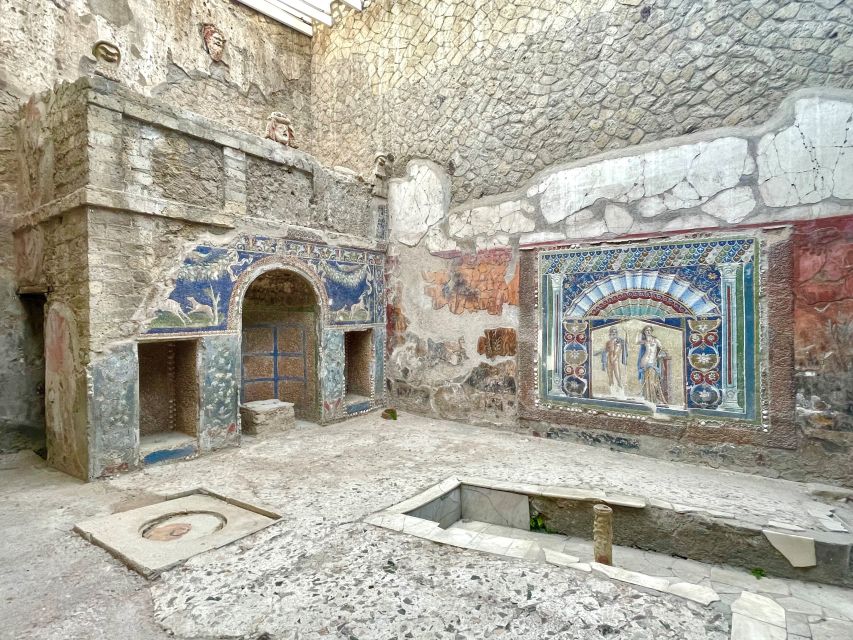
- Herculaneum is treated as its own world, with unusually well-preserved materials like wood, plus skeletons and detailed interiors.
- Headsets for groups over 8 help you hear clearly without craning your neck.
- Time-saving logistics like entry tickets and skipping the ticket line keep you out of unnecessary lines.
Pompeii to Herculaneum in one route (and why that matters)
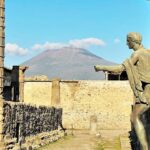
These two sites are close, but they don’t feel the same. Pompeii is the larger, louder example of a Roman city frozen in time after the eruption of Vesuvius in AD 79. Herculaneum is smaller and—because of how it was buried and preserved—often hits you more in the details: surviving decorations, surviving household objects, even materials you don’t expect to last.
This tour is smart because it gives you a full arc rather than two disconnected ruin walks. You start in Pompeii and learn how Romans lived day to day: homes, shops, food spots, baths, and public spaces. Then you shift to Herculaneum and notice what changes when preservation is better. You end up comparing both cities without needing to “study on your own” in the gaps.
You can also read our reviews of more tours and experiences in Pompei Campania.
Meeting point and starting smoothly at Ristorante Suisse
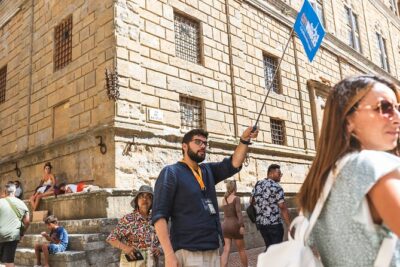
The tour begins at Ristorante Suisse, with your guide waiting for you there with a sign showing your name. That small detail helps a lot on a busy day. It means you spend less time hunting for the group and more time using your energy inside the archaeological parks.
Your guide also brings the practical pieces that can slow other tours down. Entry tickets are included, and the tour is set up to skip the ticket line, so you can move straight into Pompeii instead of burning time outside in the sun. And for groups larger than 8, you’ll use headsets, which makes a real difference when you’re trying to follow explanations while walking.
Language options include English, Italian, and French, so you can match what you want to hear without relying on translation apps.
Pompeii walk: Porta Marina Inferiore, houses, baths, and the Forum casts
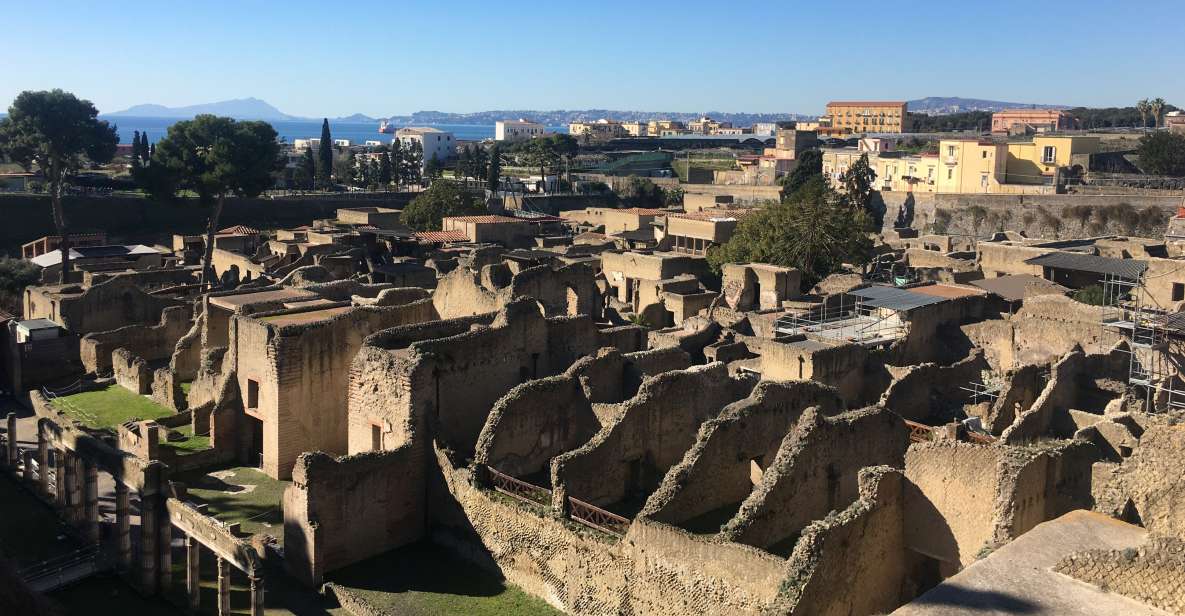
Pompeii is big. Left to your own devices, it’s easy to see fragments and miss the connections. With a guide like Benedetto, the tour turns the chaos into a path.
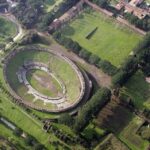
You start at Porta Marina Inferiore, then move through the area of the theaters. That early section helps you understand the city as more than ruins—it’s a place built for public life, entertainment, and routine movement.
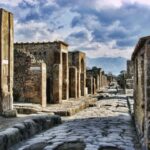
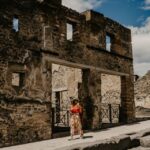
Then the walk shifts into the neighborhoods: ancient houses with mosaics, frescoes, and marble. This is where the tour does something I really value. Instead of only pointing at walls, it helps you interpret what decoration says about status, taste, and daily habits. You also pass places tied to food and everyday commerce, including shops and Roman bakeries, plus snack-bar style stops along the way.
Next you reach the public baths and then the Lupanare, which is one of Pompeii’s most discussed sites because it reveals how the city worked socially and economically. The tour doesn’t treat this as shock value. It uses it to explain context—how Romans organized public spaces and how life in Pompeii included everything from entertainment to vice.
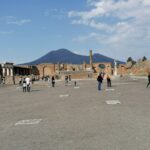
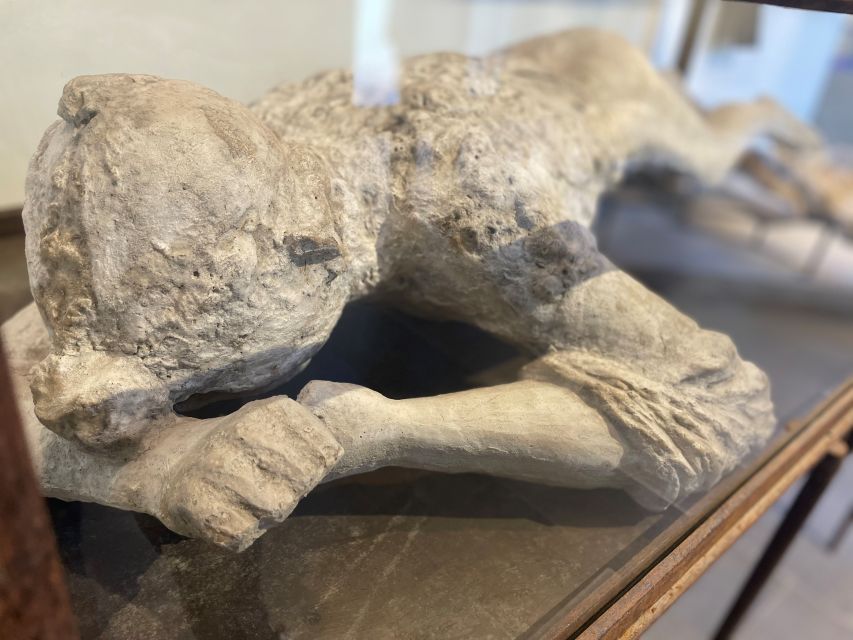
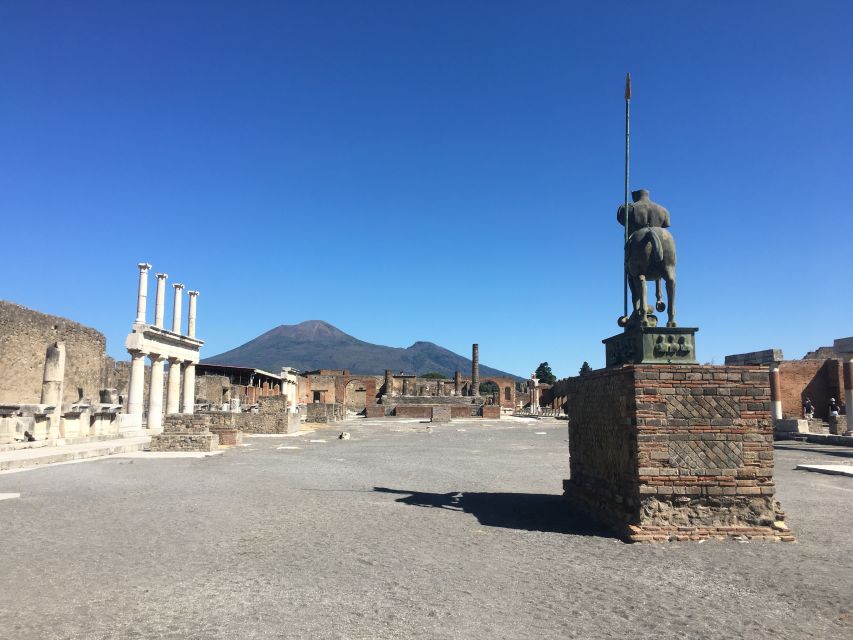
Finally, you reach the Forum with public buildings and plaster casts of the victims. This is the emotional end of the Pompeii storyline. It’s also a place where good interpretation matters, because it’s easy to look and feel overwhelmed. A guide can help you stay focused on what you’re seeing and why it’s historically important.
The lunch break: planned time, not a scramble
After about two hours in Pompeii, you get a break with free time for lunch (lunch itself is not included, but the window is). This matters because Pompeii can drain you fast. Heat, uneven ground, crowds—your brain wants downtime, not just another sprint to the next stop.
I like that the tour doesn’t pretend lunch happens instantly. You’ll have a real one-hour gap, which lets you eat, cool off, and regroup. A practical tip: the meeting-area restaurant is convenient for breakfast and lunch, and it can be helpful when you’d rather not search for food while already tired.
Also, bring a hat and water. You’ll thank yourself later, especially outside shoulder seasons.
Train to Herculaneum: the short transfer that changes the mood
Once lunch ends, you head to the station area and take the train to Herculaneum. The transfer is short—about 20 minutes by train—and that’s a key part of the design.
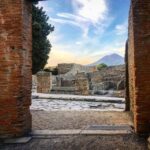
That gap isn’t just transportation. It’s a mental reset. When you arrive at Herculaneum, you’re ready to notice the conservation difference rather than still thinking in Pompeii terms. Pompeii teaches you the big-city layout. Herculaneum shows you what happens when details survive better: rooms, textures, and objects that feel closer to daily life.
If you’re comparing, pay attention to how the site reads at first glance. Herculaneum tends to feel quieter and more intimate than Pompeii, even though both are major archaeological destinations.


Herculaneum’s best-preserved interiors: frescos, skeletons, and wood
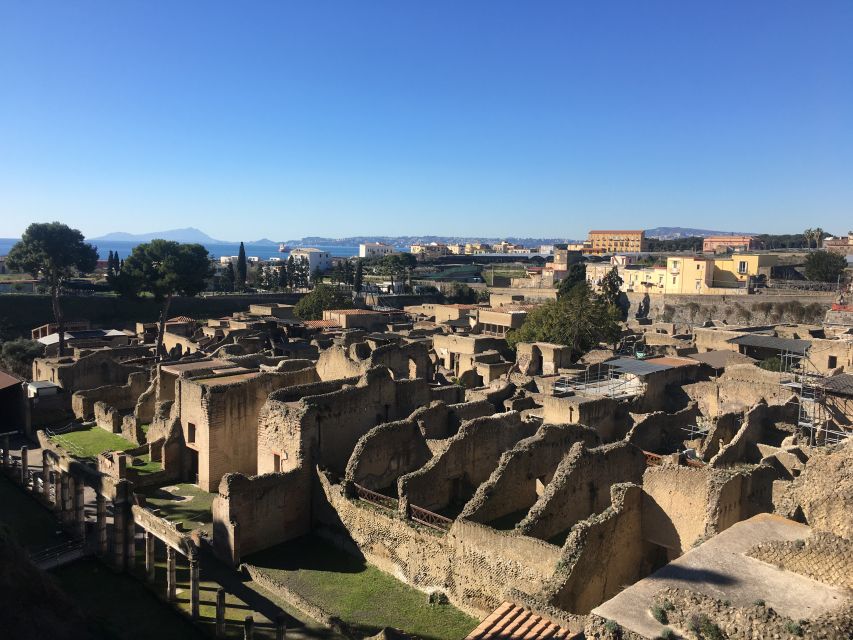
Herculaneum is the “small jewel” stop on this day, and it earns that nickname. You’ll spend about 1.5 hours inside with your archaeologist guide.
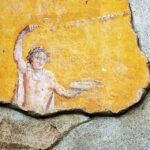
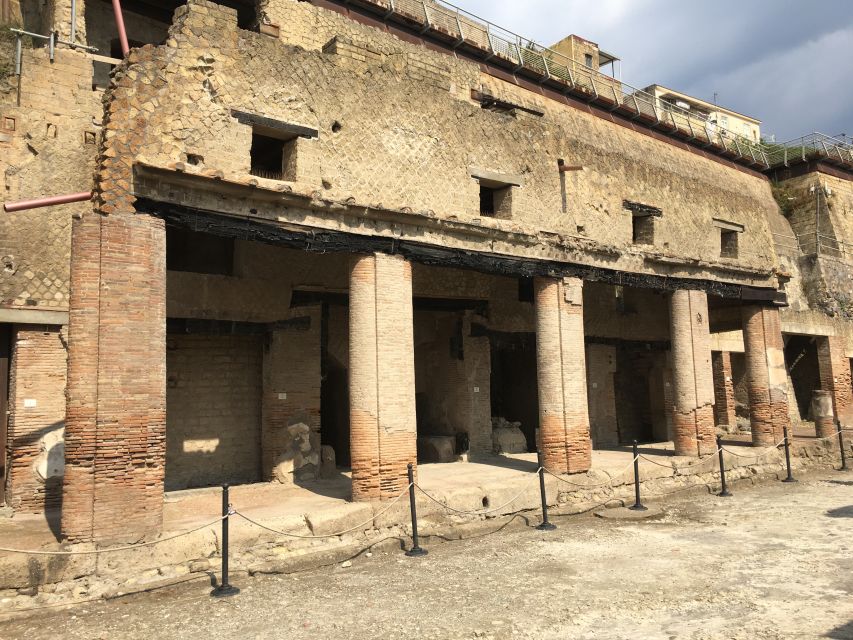
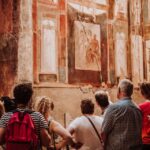
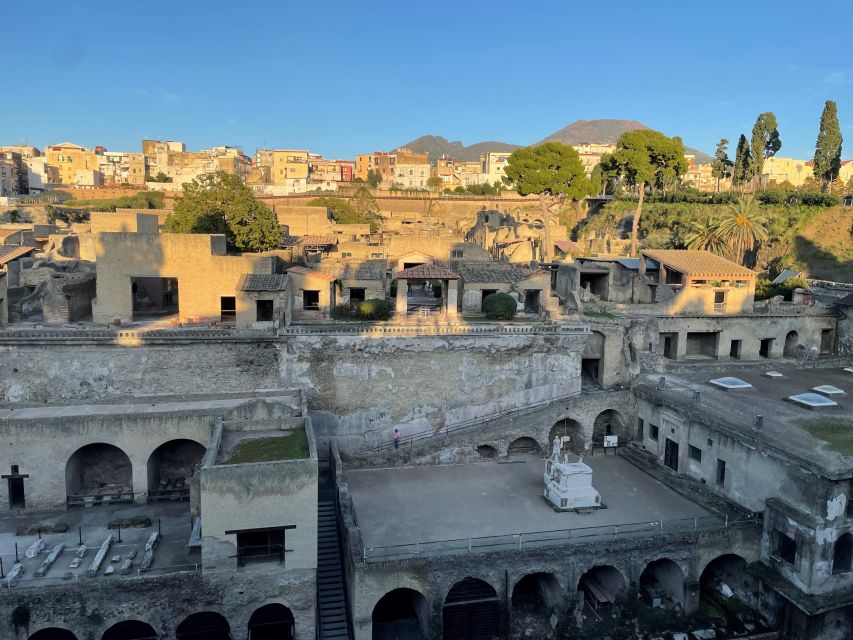
Here the focus shifts to residences and how they were decorated. Expect to see splendid homes with unique decorations and a long list of surviving features: frescos, marbles, mosaics, and jewelry. You’ll also encounter skeletons, which is heavy but important in understanding what the eruption meant for real people.
One of the strongest reasons people love this site is the exceptionally well-preserved wood. Seeing wooden elements that survived gives you a new kind of “how is this possible” reaction. It’s not just about what’s painted on walls—it’s about what remains of furnishings and household life.
Because Herculaneum is preserved differently, it helps you connect the dots. Pompeii can feel like a city-scene freeze frame; Herculaneum feels like you’re getting closer to the private rooms where people ate, slept, worked, and lived.
Why Benedetto’s guiding style is the real value
The tour’s facts are impressive on paper. The difference comes from the person running the walk.
Benedetto is consistently described as engaging, funny, and organized, with a way of explaining archaeology in plain language. That matters in Pompeii and Herculaneum, where the sites can overwhelm your senses. A good guide gives you structure: where to look, what to notice, and what each detail likely meant.
Another standout from guest experiences: he pays attention to logistics and crowd pressure. The walking paths can be brutal in peak season, so having someone who can steer a small group away from the worst congestion makes the tour feel relaxed instead of frantic. Many people also note that his explanations are interactive—he gives space for questions and keeps kids engaged, which isn’t always easy at these sites.
He’s also credited with helping with day-of travel issues when needed, including arranging options like shared taxis when trains get disrupted. That kind of problem-solving isn’t guaranteed, but it shows the tour isn’t treated like a conveyor belt.
Price and value: what $141.61 covers (and what it doesn’t)
At $141.61 per person for about 5 hours, this isn’t a bargain-tour price. But it’s also not just a generic guided walk.
You’re paying for:
- An archaeologist guide (not just a script-reader)
- Entry tickets included
- Headsets for groups larger than 8
- A lunch break with free time
- Pompeii plus Herculaneum in one day, with the transfer time built in
- A plan to skip the ticket line
What’s not included:
- Transportation (you’ll handle your own getting to the meeting point and any local connections beyond what’s built into the tour)
- Food and drink
Is it worth it? For me, the value comes from the combo: two sites + real archaeological interpretation + small-group pacing. If you’re someone who wants to take photos, ask questions, and actually understand the difference between Pompeii and Herculaneum (instead of just reading a few signs), this price usually makes sense.
If you prefer totally free-form exploration, you might spend less alone. But you’d likely miss the guided “why this matters” layer, especially at the emotional locations like the victim casts.
Practical tips so your day goes smoothly
This kind of day has a few known needs, and the tour gives you the basics.
Bring:
- Passport or ID card (important because the Pompeii ticket is named)
- Comfortable shoes (you’ll be walking)
- A hat
- Water
Know before you go:
- In Pompeii, tickets are named. After booking, you’ll need to provide the first and last names of all participants. Also, don’t forget the original passport/ID.
Timing reality check:
- You’ll be moving in the heat if you’re visiting during summer. Even when the schedule is efficient, your body is the limiting factor. Hydrate, use shade when you can, and don’t plan extra activities immediately afterward.
One small “local-life” tip from the day-of experiences: the restaurant at the meeting area can be a useful food option for lunch/breakfast. And there’s mention of no-cost restroom access via small cards at tables—worth keeping in mind so you’re not paying unnecessarily while tired.
Who should book this Pompeii and Herculaneum day?
This works especially well if you:
- Want an archaeologist-led explanation, not just a walking description
- Prefer a small group over huge crowds
- Like photography but want to know where your attention will be rewarded
- Want a single day that compares both cities instead of splitting your time across multiple days
It’s also described as designed and recommended for families, including kids around primary school age—mainly because the guide’s style is engaging and he’s patient.
Skip it if:
- Mobility is an issue. The tour is not suitable for wheelchairs or people with mobility impairments, based on the operator’s guidance.
- You hate structured walking. This is a guided route with fixed time blocks.
Should you book this Pompeii and Herculaneum tour?
If you can handle a lot of walking and you want your day to feel organized, book it. The small-group size, the archaeologist-led explanations, and the Pompeii-to-Herculaneum contrast are exactly the kind of thing that turns famous ruins into a memorable, understandable story.
If you’re mainly looking for low-cost entry and independence, you could explore on your own. But you’d likely lose the value of a guide who knows where to focus, how to explain the “why,” and how to keep the experience moving without chaos.
Overall: for most people who want the best day in Campania without spending hours figuring things out, this is a strong choice.
FAQ
How long is the Pompeii and Herculaneum guided tour?
It lasts about 5 hours, including visits to both sites, a lunch break, and train time between Pompeii and Herculaneum.
Where do we meet, and where does the tour end?
You meet at Ristorante Suisse and the tour ends back at the meeting point.
What’s included in the price?
The price includes an archaeologist guide, entry tickets, headsets for groups larger than 8, and free time for lunch. Food and drink are not included.
Are headsets provided?
Yes, headsets are included for groups larger than 8 to help everyone hear the guide clearly.
Is it a small group tour?
Yes. The group is kept small, up to 10 people.
What languages are available?
The live guide is available in English, Italian, and French.
What parts of Pompeii are visited?
You’ll visit Pompeii starting at Porta Marina Inferiore, passing through the theatres area, seeing ancient houses with mosaics and frescoes, walking by shops and Roman food spots, and then reaching the public baths, the Lupanare, and the Forum with plaster casts of the victims.
How do you get to Herculaneum?
You take a train. The transfer takes about 20 minutes.
Is lunch included?
Lunch itself is not included, but the tour includes free time for lunch.
Is the tour wheelchair accessible?
No. It is not suitable for wheelchair users or people with mobility impairments.
Do I need my passport or ID?
Yes. In Pompeii, the ticket is named, so you must bring your passport or ID card in original form.