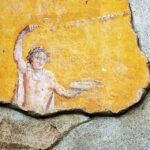
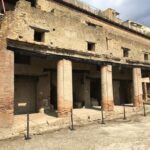
REVIEW · POMPEI CAMPANIA
Pompeii: Guided Tour with Archaeologist with max. 12 People
Book on GetYourGuide →Operated by Benedetto Tourist Guide · Bookable on GetYourGuide
Pompeii works best with an expert guide. This small-group tour uses real archaeological context to help the ruins make sense fast, from streets and shops to the public heart of the city.
I really like that it’s led by Benedetto, an archaeologist, not a script-reading tour worker. I also love the pacing: a tight route with smart stops at the House of Menander, Terme Stabiane, the Forum area, and the plaster casts moment you won’t forget.
One drawback to plan around: with only 2 hours, you’ll see the highlights, not everything. If you want a slow, no-pressure wander through every corner, you’ll need extra time after the tour.
In This Review
- Key Highlights I Think Matter
- Why Pompeii Feels Clearer in This 2-Hour Format
- Meeting at Suisse Restaurant and Handling Named Tickets
- Porta Marina Inferiore to the Theaters: Reading an Original Roman Road
- House of Menander: Frescoes, Mosaics, and What People Looked At
- Terme Stabiane Baths: Leisure as a Real Social System
- Foro Civile, Temple of Jupiter, and the City’s Public Core
- Macellum and Basilica: How Romans Bought and Conducted Business
- Lupanare: The Real Shock of a Brothel in Roman Context
- Plaster Casts and the AD 79 Story You’ll Carry
- Small Group Size, Headsets, and How You Get Better Answers
- Price and Value: Is $65 a Smart Spend Here?
- Who This Tour Suits Best
- Final Advice: Should You Book This Pompeii Tour with Benedetto?
- FAQ
- Is this a small-group Pompeii tour?
- How long is the guided tour?
- What does the price include?
- Where do we meet the guide?
- What languages is the tour offered in?
- Do I need to bring my ID or passport?
- Is the ticket named for participants?
- Is food or drink included?
- Is the tour accessible for wheelchair users?
Key Highlights I Think Matter
- Small group (max 12) keeps questions easy and the route more flexible
- Archaeologist guide (Benedetto) explains what you’re seeing in plain, practical terms
- Original city stops include House of Menander, Terme Stabiane, the Forum area, and the Lupanare
- Frescoes, mosaics, and house decoration help you picture daily Roman life
- Headsets when needed (for groups over 8) so you can still hear without craning
- Free time after the tour so you can keep exploring at your own pace
Why Pompeii Feels Clearer in This 2-Hour Format
Pompeii isn’t a museum you can “get” in one wandering loop. The site is spread out, signage can be limited in places, and much of what you’re looking at is fragments of rooms, streets, and walls. With an archaeologist leading the way, the ruins connect into a story: how the city worked, what people did all day, and what changed in AD 79.
This tour is also built for attention. In two hours, you move through a sequence that mirrors how a visitor might actually experience Pompeii: entry from the Porta Marina Inferiore area, then theaters, houses, shops and bakeries, baths, the Lupanare district, and finally the more official spaces like the Forum.
You can also read our reviews of more tours and experiences in Pompei Campania.

Meeting at Suisse Restaurant and Handling Named Tickets
You meet at Ristorante Suisse, and the guide waits there with a sign showing your name. It’s a simple setup, but it helps to be there a few minutes early so you don’t start the tour stressed.
One detail I don’t skip: Pompeii tickets are named. After booking, you’ll need to provide the first and last names of all participants (and have the passport or ID card with you in original form). This is the kind of rule that can slow you down if you only realize it at the gate, so double-check your info early.
Porta Marina Inferiore to the Theaters: Reading an Original Roman Road
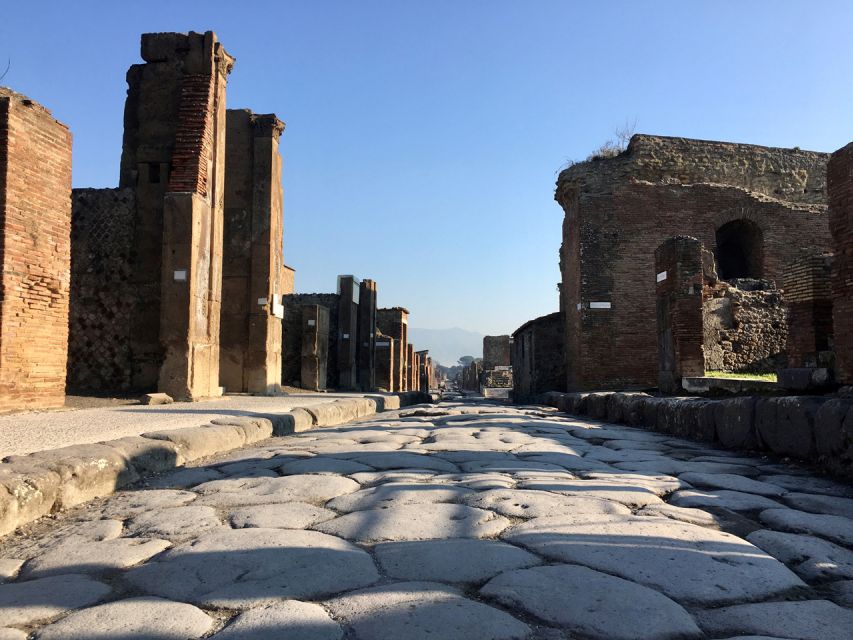
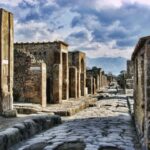
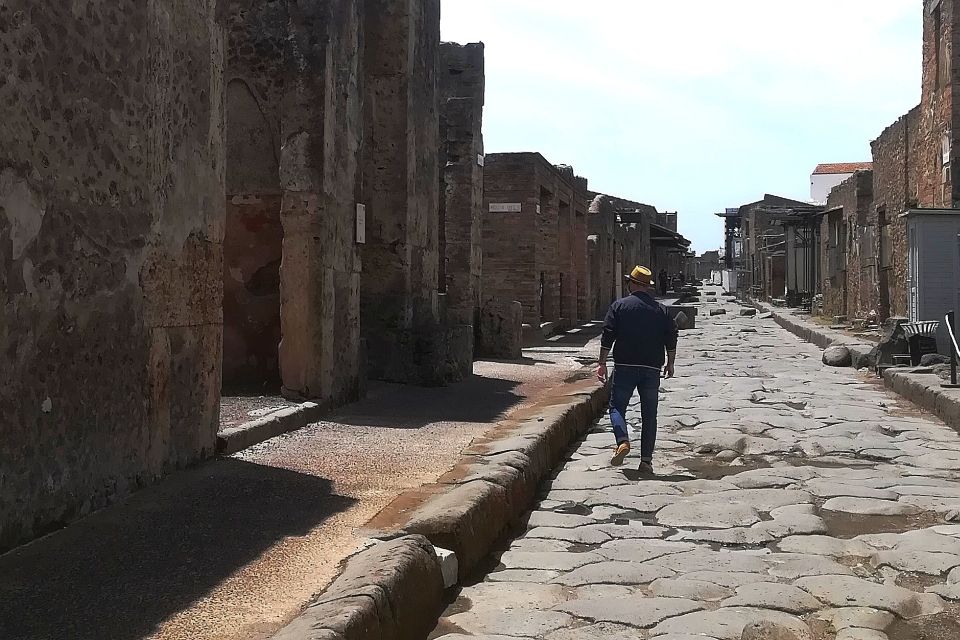
The tour starts in the Porta Marina Inferiore area and moves toward the theater zone. Right away, you’re on an environment that feels more like walking inside a real town layout than touring a pile of stones. That matters because Pompeii is so spatial: streets, thresholds, and building fronts are part of the lesson.
As you walk, you also get the “day-to-day” layer. The route includes walking past shops and everyday food stops—Roman bakeries and snack-bar type spaces—so the city isn’t only tragic. It’s a functioning place with commerce and routines. This is one reason the tour works well for first-timers: you’re not only waiting for the eruption story, you’re learning what was normal before it ended.
House of Menander: Frescoes, Mosaics, and What People Looked At
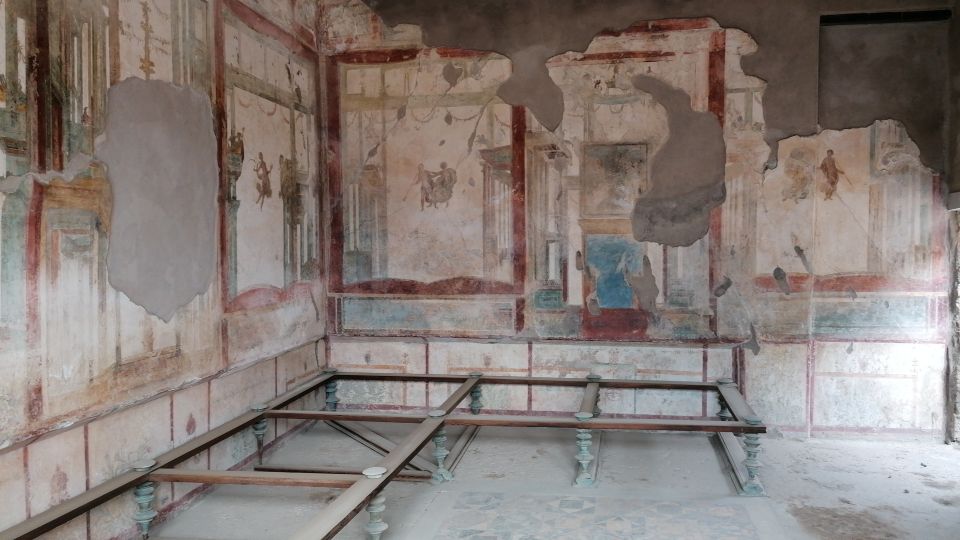
One of the most satisfying parts is the stop at the House of Menander. The value here is not just seeing pretty walls. It’s learning how decoration signaled identity—taste, wealth, and even how homeowners wanted guests to feel while walking through rooms.
You’ll spend time in the part of the tour focused on house art and interior surfaces, including mosaics, frescoes, and marble-like details mentioned as part of what you’ll see. Even if you only remember a few artistic terms, you’ll still come away with the bigger picture: Romans arranged beauty and daily life in the same spaces.
If you’re the kind of traveler who loves photo stops, this is where you’ll want to slow down. Details like floor patterns and painted scenes are easier to appreciate when you’re not sprinting between crowds.
Terme Stabiane Baths: Leisure as a Real Social System
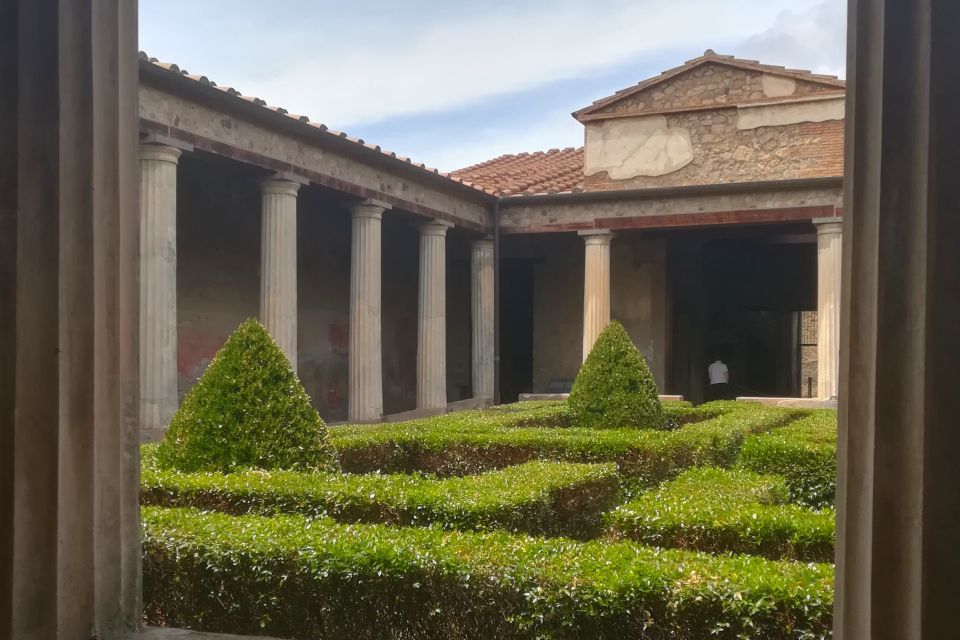
Next up is Terme Stabiane, the public thermal baths. Roman baths weren’t just “wash and leave.” They were social hubs and part of the city rhythm—where conversation, relaxation, and routine met in one place.
In a tour like this, baths are especially useful because they teach you how Romans designed public space. You’re not just seeing architecture; you’re seeing a layout that supports movement between rooms and temperature zones. The archaeologist angle helps you understand what you’re looking at without needing to be an expert.
A practical bonus: on hot days, the guide’s attention to comfort matters. Multiple guests highlight that Benedetto finds shade and keeps the tour workable in real conditions. Bring water and wear comfortable shoes, but it helps to know the route is handled with weather in mind.



Foro Civile, Temple of Jupiter, and the City’s Public Core
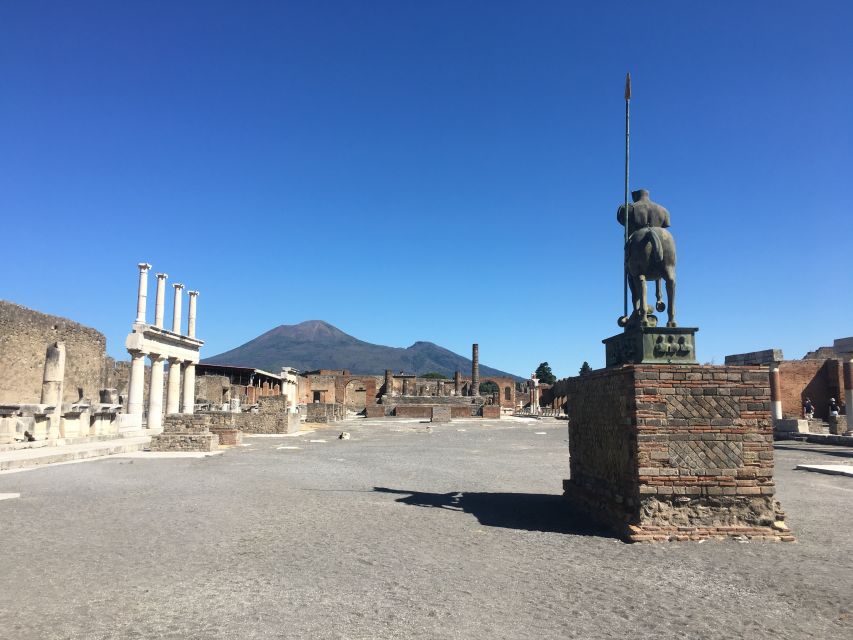
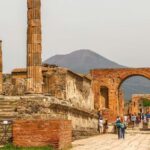
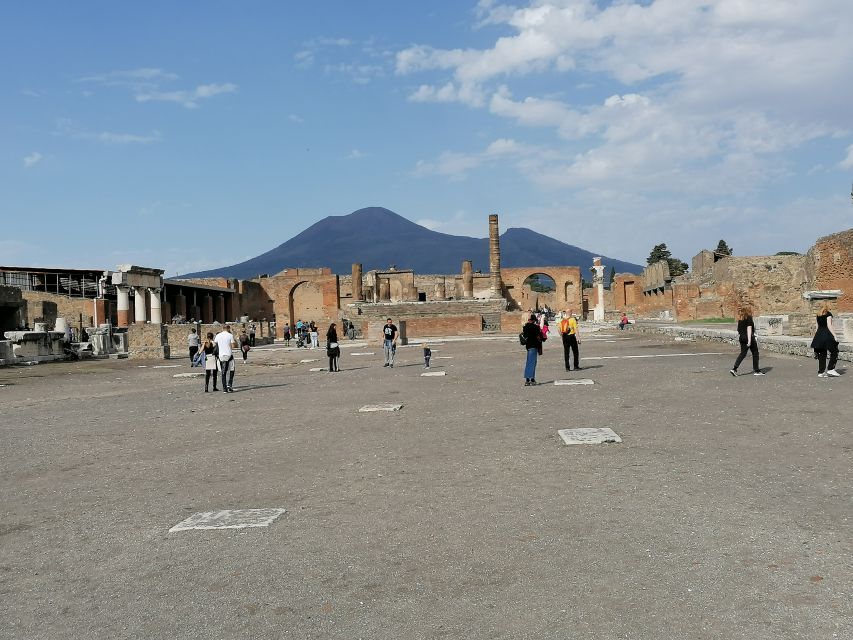
When the tour reaches the Foro Civile di Pompei area, you shift from neighborhoods and daily routines into public life. This is where the city shows what it valued: civic buildings, official spaces, and religious power.
You’ll also visit the Temple of Jupiter, which is a key stop if you want the story of Pompeii to extend beyond homes and commerce. Jupiter represents political and religious authority, and seeing the temple context helps you understand why certain spaces weren’t just decorated—they mattered to how the city organized belief and leadership.
This section tends to be where the crowds gather on your own, which is exactly why a guide’s route choices are valuable. Guests note Benedetto steers the group to avoid the worst congestion so you spend more time looking and less time waiting.
Macellum and Basilica: How Romans Bought and Conducted Business
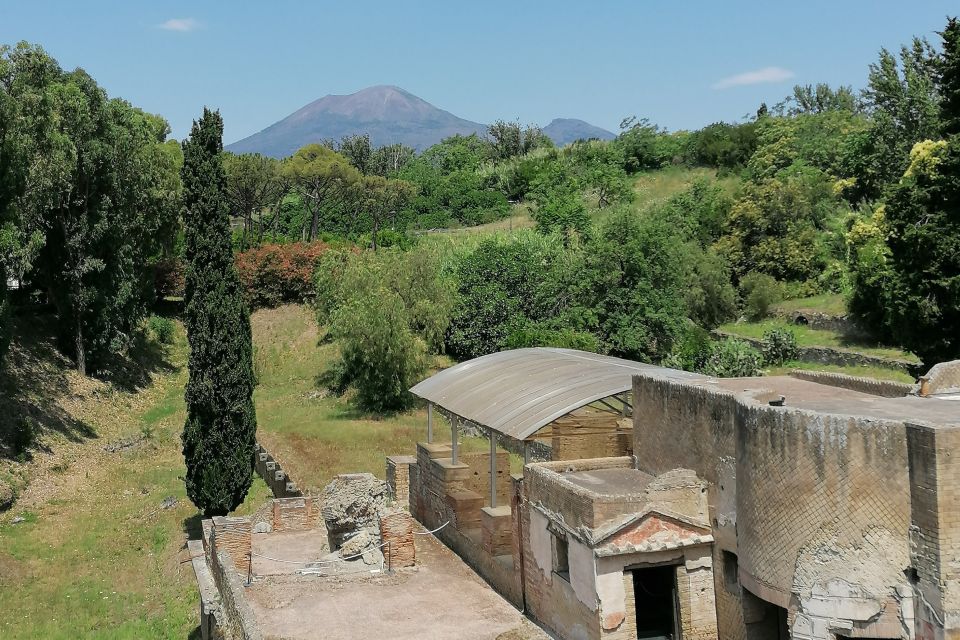
The tour includes both the Macellum of Pompeii and the Basilica. Even with just two hours, these stops are smart because they fill in the “in-between” parts of daily life.
The Macellum is the food and market side of Pompeii—where buying and selling fits into the city’s everyday pulse. The Basilica, on the other hand, supports public gatherings and practical civic activity. Together, they show you how public life wasn’t separated into fancy, unreachable zones. People moved between work, business, and community spaces constantly.
If you only remember the eruption story from history class, this part helps you rebuild the missing half: Pompeii wasn’t a backdrop. It was a working city with systems that made daily decisions possible.
Lupanare: The Real Shock of a Brothel in Roman Context
The stop at the Lupanare is where Pompeii stops feeling like a clean textbook case and starts feeling real. This was a brothel district, and it’s included in the tour because it’s part of the city’s social structure, not just a scandal.
I like tours that don’t dodge this subject. When your guide explains context—who used these spaces, how the built environment supported it, and how decoration fit the function—you get more than shock. You get a more complete Roman city picture.
Also, because this is part of a guided route, you’re not stuck in a bottleneck. The small-group size helps here, too.
Plaster Casts and the AD 79 Story You’ll Carry
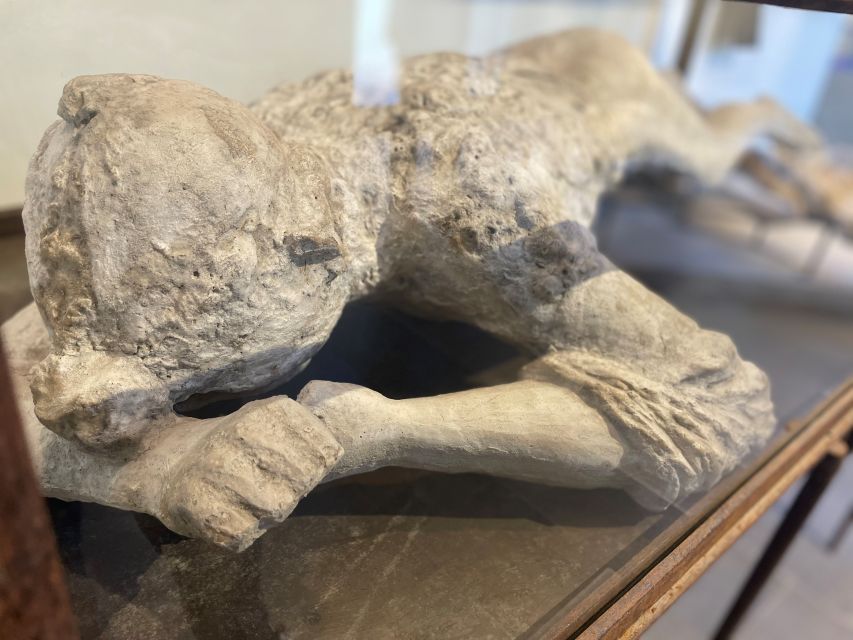
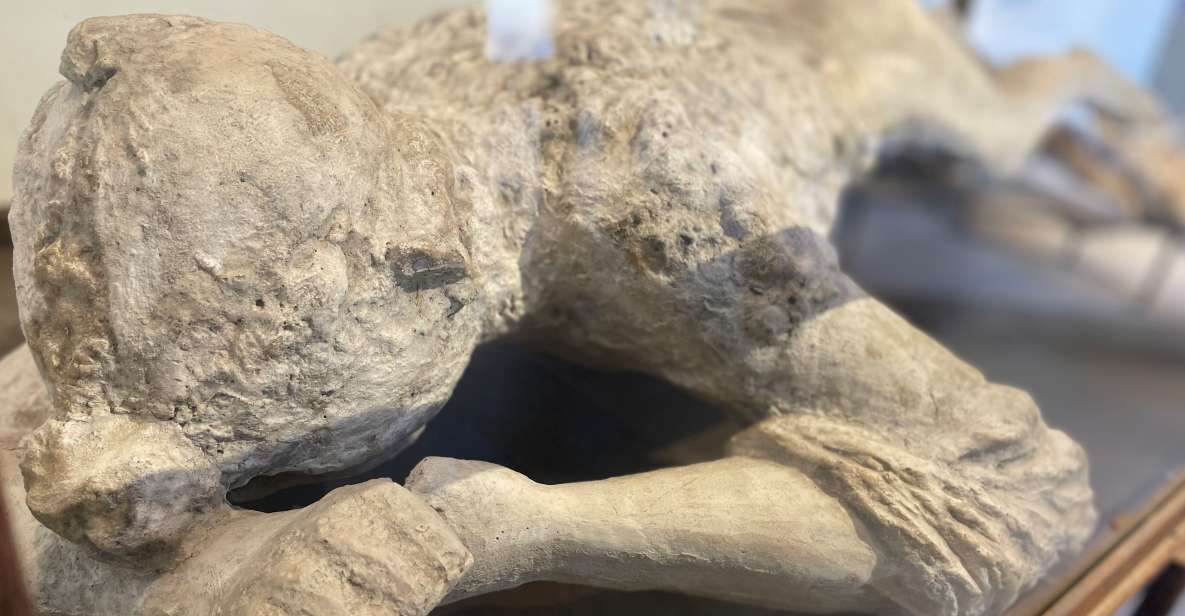
The eruption story lands at the end of the route, tied to the Forum area and the famous plaster casts of victims. This moment is intense, and it’s also where an archaeologist’s framing helps the most.
Without guidance, many visitors just see tragedy. With the tour’s structure, you’re prepared to understand why the casts matter archaeologically: they preserve human forms and details in a way that turns a historical date—AD 79—into something you can picture.
You’ll also get time at the end for free exploration. That’s a big practical win. After a heavy moment, it’s good to have space to slow down, wander, and revisit the sights that grabbed you.
Small Group Size, Headsets, and How You Get Better Answers
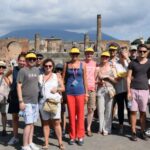
This tour keeps groups small, with a stated max of 12. That limit changes the whole experience. Instead of shouting across distance, you can ask follow-up questions and keep the group together without constant regrouping.
Headsets are included when the group is over 8. If you’re with a smaller group, you may not need them as much, and you can hear more naturally. Either way, the goal is the same: you should be able to listen and look at the same time.
From the guest feedback, a consistent theme is Benedetto’s ability to keep the tour moving without leaving people behind. You’ll hear details, laugh a bit, and still feel like you’re getting serious archaeology.
Price and Value: Is $65 a Smart Spend Here?
At $65 per person for a 2-hour guided experience, the value comes from what’s bundled: an archaeologist guide, an express entry ticket, headsets when needed, and time to explore on your own after the tour.
If you’re the type who feels lost in large historic sites, paying for an expert makes sense because you’re buying clarity. Pompeii can look repetitive if you don’t know what you’re seeing. Here, the guide turns it into a sequence: streets → houses → baths → public buildings → the eruption climax.
You’re also not paying for long transit or meals. This tour focuses on site time. For many visitors, that’s exactly what you want in Pompeii: maximize understanding without burning your whole day in logistics.
Who This Tour Suits Best
This works especially well if you:
- want a guided structure that makes Pompeii easier to understand
- care about Roman daily life, not only the disaster
- like asking questions without being lost in a huge crowd
- want to cover major stops in a short time, then explore more afterward
It may not be the best fit if you:
- need step-free access or have mobility limitations (it’s listed as not suitable for mobility impairments or wheelchair users)
- want a fully self-paced visit with lots of long pauses and detours
Final Advice: Should You Book This Pompeii Tour with Benedetto?
If you want Pompeii to feel like a place with routines, art, public space, and human stories, I’d book this. The mix of archaeologist-led interpretation plus a route that includes the houses, baths, civic center, and the Lupanare gives you a rounded picture in a realistic time window.
I’d especially choose it if you’re visiting for the first time or you only have a short stay. The free time afterward helps you adjust, so you don’t feel trapped by the clock.
FAQ
Is this a small-group Pompeii tour?
Yes. The tour is capped at a maximum of 12 people.
How long is the guided tour?
The duration is 2 hours.
What does the price include?
It includes an archaeologist guide, an express entry ticket, headsets for groups of more than 8 people, and free time to explore the archaeological site.
Where do we meet the guide?
You meet at Suisse Restaurant (Ristorante Suisse). The guide waits for you with a sign that shows your name.
What languages is the tour offered in?
The guide provides live commentary in Italian, English, and French.
Do I need to bring my ID or passport?
Yes. You should bring your passport or ID card in original form.
Is the ticket named for participants?
Yes. Pompeii tickets are named, so you need to provide first and last names of all participants after booking.
Is food or drink included?
No. Food and drinks are not included.
Is the tour accessible for wheelchair users?
No. It is not suitable for mobility impairments or wheelchair users.