REVIEW · POMPEI CAMPANIA
Pompeii: Skip-the-Line Guided Tour
Book on GetYourGuide →Operated by City Wonders Ltd. · Bookable on GetYourGuide
Pompeii feels impossible until you walk it. This 2-hour guided visit uses a skip-the-line entrance so you can spend more time among Roman streets than standing in queues. You also get the storytelling layer that makes big sights like the Forum and House of the Faun click, with guides such as Bernadette and Carlo bringing the ruins to life through clear, local-feeling commentary.
I particularly like two things about this tour. First, it keeps a small-group pace with time for questions, so you don’t feel rushed through the highlights. Second, the tour’s structure balances guided stops with short free time at the Amphitheater and House of the Faun, which is exactly what you want for photos and wandering at your own rhythm.
One thing to consider: Pompeii is not stroller-friendly and this tour isn’t set up for wheelchair or guests needing special assistance, so you’ll want to plan for lots of walking on uneven ground. Also, if you hate hearing through shared audio gear, note that a few people asked for better mic/gadget quality, even though many said the earpiece worked well.
In This Review
- Key things I’d zero in on before you book
- Pompeii in 2 hours: what you’re really getting
- Meeting at Coffee Shop Vittoria and getting inside quickly
- The route through daily life: why the Forum stop matters
- Victims’ plaster casts: seeing the tragedy without losing context
- House of the Faun: the stories you’ll remember
- Amphitheater stop: how to use your 30 minutes
- What the guide does best: pace, questions, and clear listening
- After the tour: making the most of your extra time
- Price and value: what $39 buys you in real terms
- Who this Pompeii tour fits best
- A few practical expectations before you go
- Should you book this skip-the-line Pompeii guided tour?
- FAQ
- How long is the Pompeii skip-the-line guided tour?
- Where do I meet the guide?
- Does this tour include skip-the-line entry?
- Is the guide English-speaking?
- Is there free time during the tour?
- Can I bring a stroller or baby carriage?
- What should I bring, and what’s not allowed?
Key things I’d zero in on before you book
- Skip-the-line, separate entrance so you start faster once you meet your guide
- Short, timed highlights that hit the Forum and House of the Faun without trying to cram everything into one day
- English live guide + audio setup (earpieces/headphones) that helps you hear explanations clearly
- Local guide stories and humor with examples like Carlo and Antonio showing up in guest feedback
- Good Q-and-A time rather than a pure lecture sprint
- Practical orientation help including the way the route is managed so you can keep moving after the tour
Pompeii in 2 hours: what you’re really getting
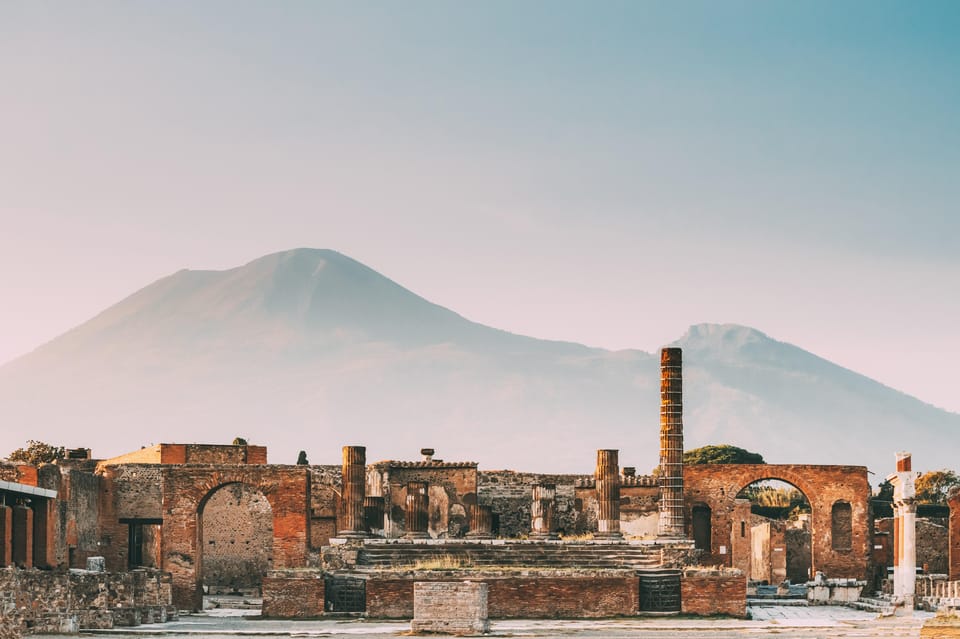
Pompeii is massive. Even when you think you’ll just do the “main sights,” you can easily burn hours getting your bearings and then still miss details that make the ruins meaningful. This tour aims at the sweet spot: a guided route long enough to explain what you’re seeing, then a little breathing room to look closer.
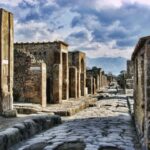
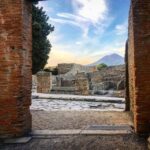
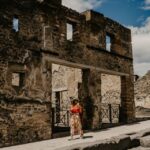
The experience is built around the moment you learn Pompeii isn’t just stone. It’s a complete daily-life stage that froze in time after the 79 AD eruption of Mount Vesuvius. Your guide’s job is to translate what you’d otherwise see as random walls and arches into spaces with routines—where people worked, ate, went to baths, shopped, and (in some cases) sought entertainment.
The duration also matters for value. At $39 per person, you’re paying for more than an entry ticket—you’re buying a guided pass plus the time-saving benefit of skipping the line, which is what keeps the day from turning into queue management.
You can also read our reviews of more tours and experiences in Pompei Campania.
Meeting at Coffee Shop Vittoria and getting inside quickly
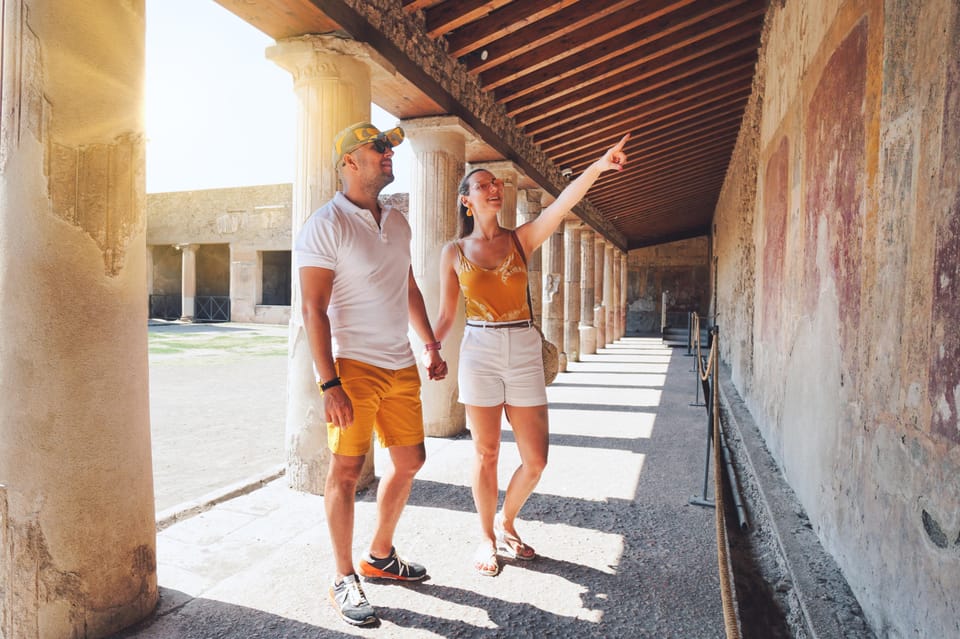
Your tour starts at Coffee Shop Vittoria, where your guide meets you in front holding a City Wonders sign. This is one of the most practical parts of the whole day: a clear meeting spot reduces the common stress of “where are we supposed to be?” once you’re already at Pompeii.
From there, the key win is skip-the-line entry through a separate entrance. You’re still walking through the same ancient site, but you’re cutting down the time lost before you even reach the ruins. If you’re traveling in peak season or it’s hot, that difference feels huge.
A few important on-the-ground realities: you’ll want comfortable shoes (Pompeii’s surfaces aren’t the forgiving kind), plus sunscreen and a sun hat. And pack light—no luggage or large bags, and no baby strollers on group tours.
The route through daily life: why the Forum stop matters
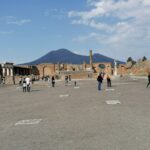
The heart of Roman everyday life is the kind of thing you miss when you go too fast. This tour makes the Forum a centerpiece, and that’s smart. The Forum is where civic life and commerce overlap, where people gathered and where official buildings signaled power.
On a guided walk, you’ll get explanations that help you connect layouts to routines: how space was used, what different buildings likely signaled, and why certain spots would have pulled crowds. This is where your guide’s commentary earns its keep—because the Forum only becomes “iconic” once you understand what it was doing.
You’ll also hear stories connected to other major stops you visit on the route, including residential spaces like the House of the Faun. That matters because Pompeii isn’t only public buildings. The story shifts from politics and public routines to the home, where status, taste, and daily habits played out.
Victims’ plaster casts: seeing the tragedy without losing context
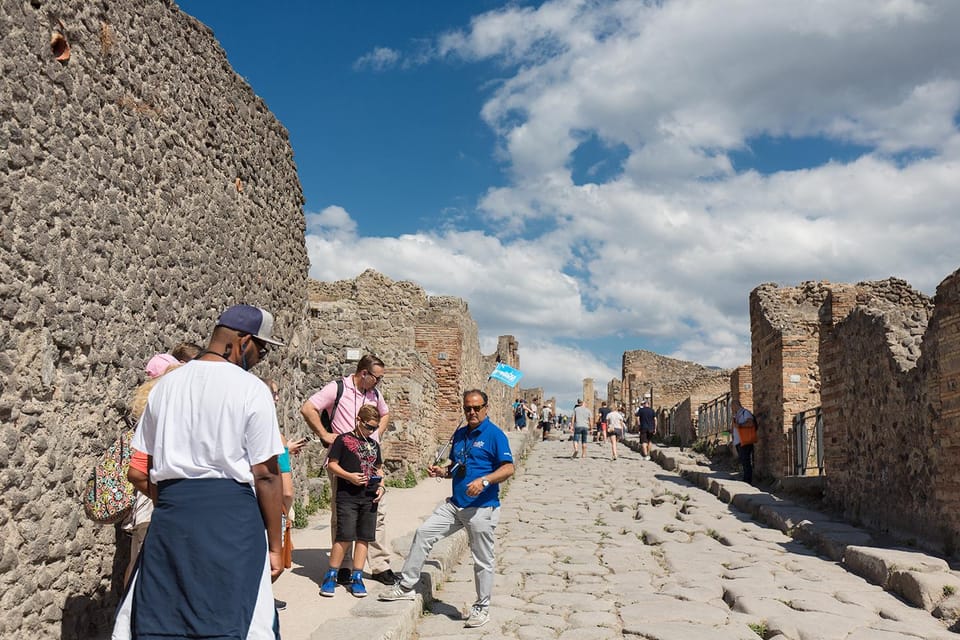
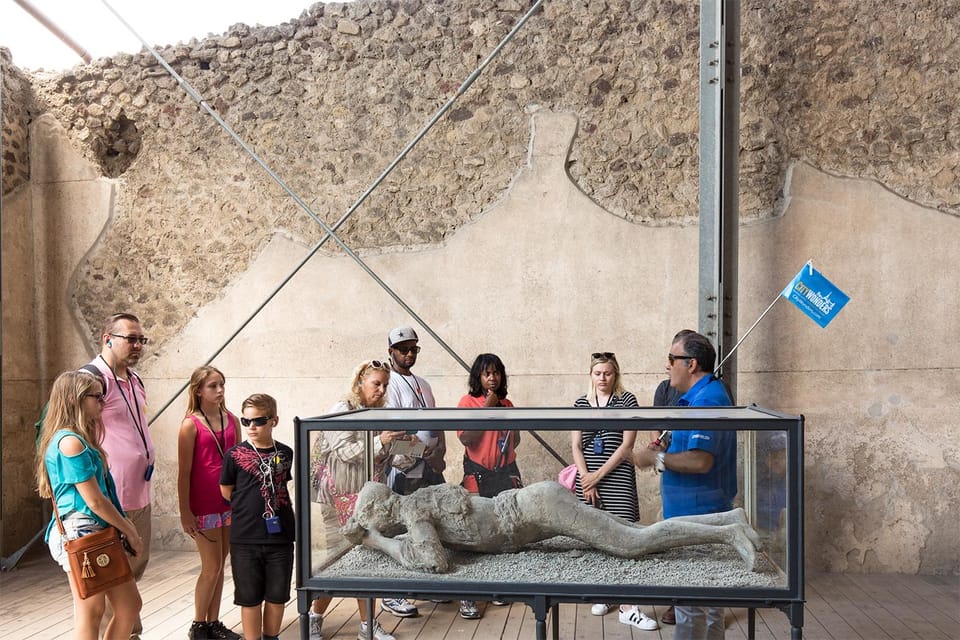
One of the most unsettling parts of Pompeii is also one of the most historically important: the plaster casts of victims. The tour’s description points to these as a highlight, and it’s easy to see why. They turn the disaster into individual human stories rather than a vague event from a textbook.
When you approach this kind of section with a guide, you’re less likely to treat it like a quick photo stop. Instead, you’ll get context—what you’re looking at and why it’s preserved—so you can process it properly while still keeping the visit moving.
This is also where pacing helps. The tour keeps you within a structured time frame, so you’re not stuck staring at one spot for so long you miss the rest of the city’s layout.
House of the Faun: the stories you’ll remember
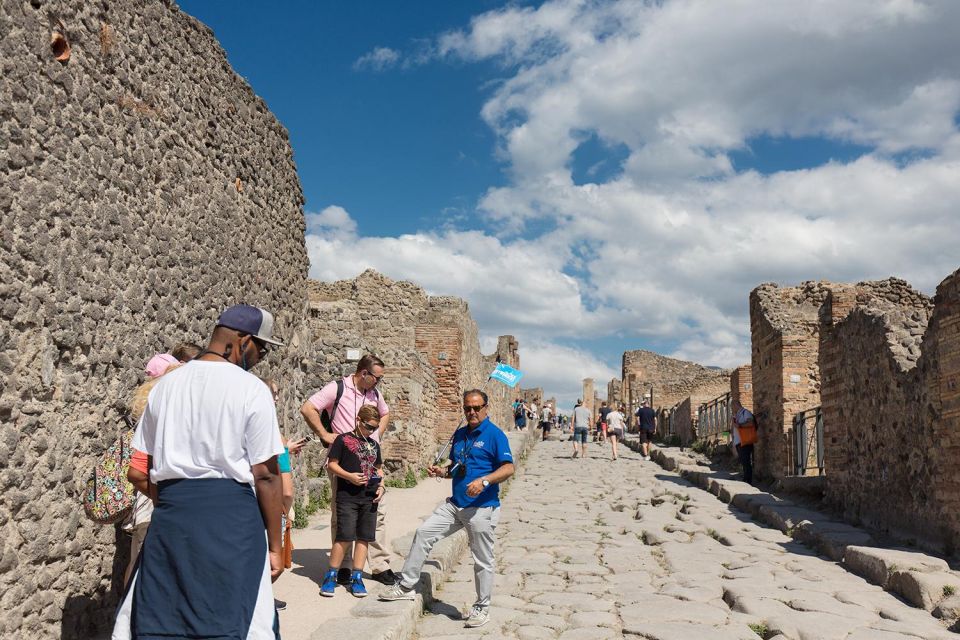
The tour specifically calls out the House of the Faun and sets you up for it with both guided elements and 30 minutes of free time. That structure is exactly right for a place like this. You benefit from the guide’s setup—then you can walk, look, and form your own impressions without feeling herded.
The House of the Faun is famous, but what makes it worth your attention is what the stories reveal about Pompeii’s social world. You’re not just seeing a big house; you’re seeing signals of status, design choices, and how Roman taste worked in real living spaces.
Guides also tend to connect this neighborhood feel to broader city routines. From what you’ll cover on the tour, you’ll hear about places tied to daily life beyond the Forum, including the thermal baths and the Lupanar. Even when you don’t get long stays at every location, the guide’s linking of these spaces helps you understand the city as a system—public life, private life, leisure, and commerce all running alongside each other.
And if you’re the type who likes a little humor, you’re likely to appreciate the guiding styles that show up in feedback. Carlo and Antonio come up repeatedly as examples of guides who keep explanations engaging without losing clarity.


Amphitheater stop: how to use your 30 minutes
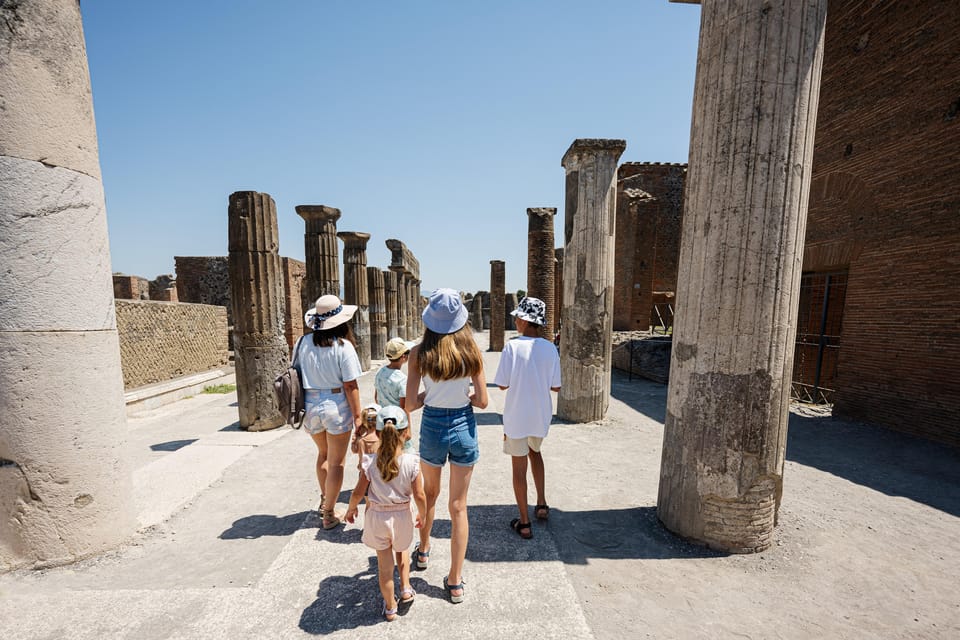
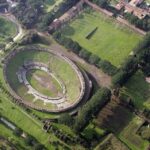
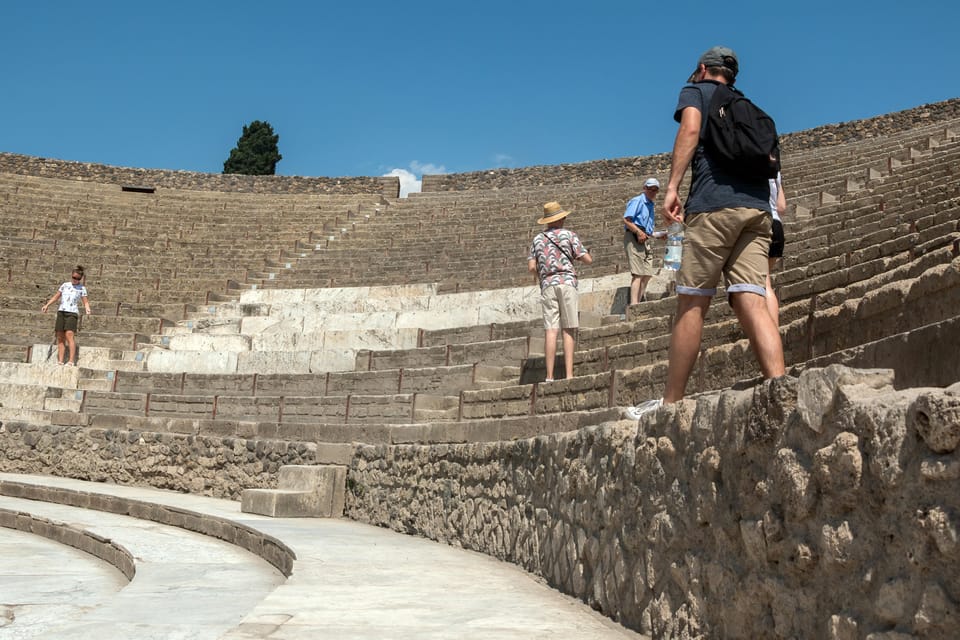
After the main guided portion, the tour includes a stop at the Amphitheater of Pompeii with 30 minutes of visit and free time. This is a good compromise. The amphitheater is a major sight, but it’s also one where you’ll get more value by splitting time between looking around and reading the space with fresh eyes.
Use your half hour strategically. First, take a step back to get the scale. Then walk a bit so you can understand how spectators would have moved and where sight lines likely mattered. Pompeii ruins are visually dramatic, but the “wow” factor becomes more meaningful when you understand how they functioned.
This free-time block is also your chance to slow down for photos and texture—walls, arches, and stone wear patterns. The tour is designed to give you that time, rather than forcing you to treat every stop as a sprint.
What the guide does best: pace, questions, and clear listening
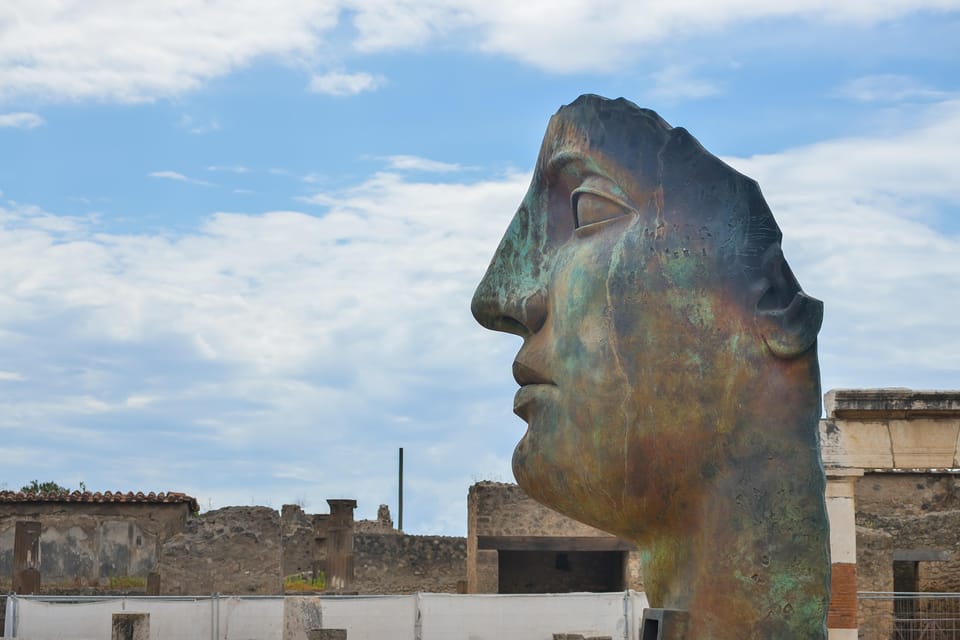
The best guided tours do two things: they explain, and they keep you from getting lost in the middle of the explanation. Here, the repeated feedback is strongly in favor of guides keeping a reasonable pace and making time for questions.
You’ll also notice the listening setup gets positive mention in multiple comments. People praised the earpiece/headphones system, including cases where it worked perfectly. On a site this large, audio clarity is the difference between “I caught some facts” and “I actually followed the story.”
One more practical detail: a few guests noted the tour can run over the advertised 2 hours depending on timing and flow, with guides working to provide quieter viewing of popular spots. That’s not guaranteed, but it’s a helpful signal that your guide isn’t running on autopilot.
After the tour: making the most of your extra time
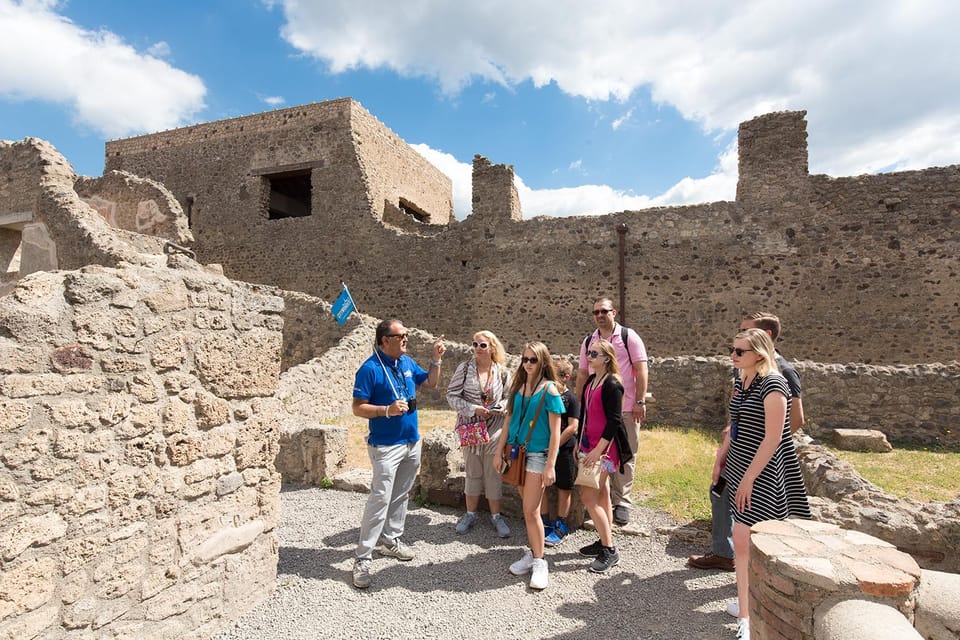
This tour is structured so you’re not done when the guided portion ends. You’ll have free time at key sights, and when you finish the scheduled visit, you’ll still be standing inside one of the world’s most walkable archaeology parks with an orientation advantage.
A couple of guests mentioned they spent extra time afterward, wandering on their own and using the map they were given. Even if you don’t get a printed map in your specific group, you’ll still leave with a mental route. That makes it easier to target what you want next—maybe more residential spaces, more detail in the Forum area, or a return to a spot you found especially moving.
A smart approach: pick one “must revisit” area during your free time. Then, after the tour ends, return only if you still care. Pompeii can swallow your attention fast, and you’ll enjoy it more if you control your focus rather than trying to see everything.
Price and value: what $39 buys you in real terms
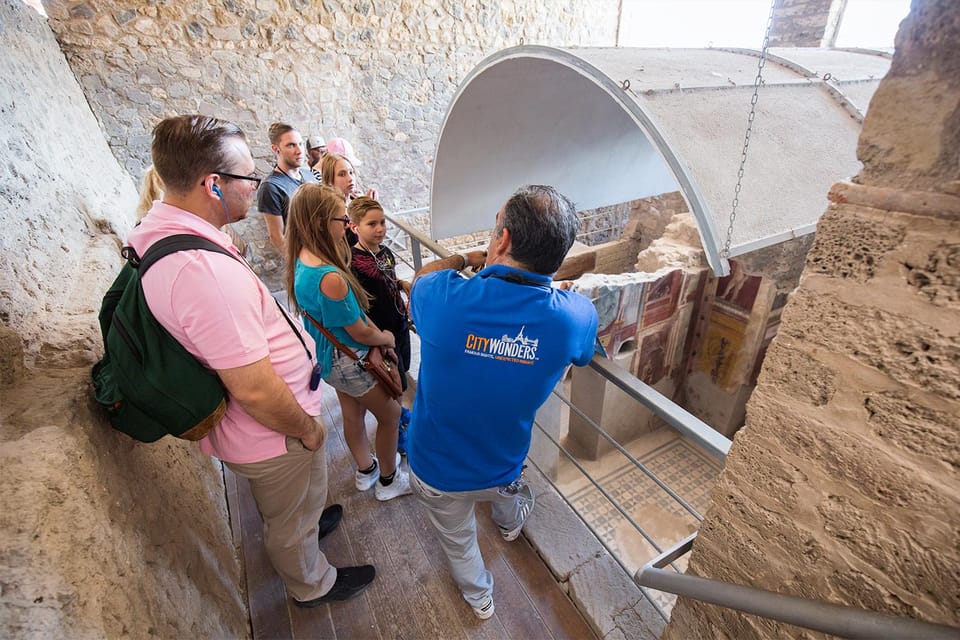
At $39 per person, the price is often the deciding factor for Pompeii tours. What makes this one feel fair is the bundle: you’re paying for an English-speaking guide plus skip-the-line entry. You’re not stuck paying separately for entry and then hoping the tour still feels worth it.
One helpful detail that shows up in feedback: the included entry ticket would otherwise be about €22. If that roughly matches your expectations, then you’re essentially paying the tour price for guidance and saved time, not just a ticket.
Is it the cheapest option? Maybe. But based on the structure and what people repeatedly praise—time to ask questions, not being rushed, and good listening—this price seems aimed at people who want a high-impact overview without losing quality.
Who this Pompeii tour fits best
This tour is ideal if you want a guided route that covers the most important parts of Pompeii’s daily life without trying to turn it into a full-day marathon.
You’ll likely be happiest if:
- You value clear explanations and want context for major sights like the Forum and House of the Faun
- You like a small-group feel and don’t want to be sprinted through
- You want both structure and breathing room, with free time built in
- You’re visiting in hot weather and appreciate route management that tries to avoid the worst crowds and low-shade areas (seen in guide approaches in feedback)
If you’re a super-technical archaeology person who wants long, deep reading at every building, you might find 2 hours guided plus short free breaks is only a start. But for most people, that’s the point: it sets you up to explore intelligently on your own after.
A few practical expectations before you go
Pompeii is famous, but it’s also work. You’re walking among ruins with uneven ground and bright sun, and the site can feel exhausting if you show up without planning for heat and foot pain.
Also, manage bag expectations. No luggage or large bags helps keep the tour moving, but it means you should travel light.
And one more reality check: this tour isn’t suitable for wheelchair users and isn’t designed to accommodate mobility impairments or guests needing special assistance. If that affects you, it’s worth looking for an option built for your pace and access needs.
Should you book this skip-the-line Pompeii guided tour?
I’d book this tour if you want a strong first visit to Pompeii and you know you’ll get more from the ruins with a guide. The best selling points are practical: skip-the-line entry, an English-speaking live guide, and a route that hits the Forum and House of the Faun while still giving you time to look around.
Skip it only if you strongly prefer a fully self-guided visit from start to finish, or if your mobility needs don’t match the tour’s limitations. Otherwise, this is a solid way to turn Pompeii from a famous name into a place you actually understand.
FAQ
How long is the Pompeii skip-the-line guided tour?
The guided portion is 2 hours, and you can check availability to see starting times.
Where do I meet the guide?
Meet your guide in front of Coffee Shop Vittoria. Your guide will be holding a City Wonders sign.
Does this tour include skip-the-line entry?
Yes. You get skip-the-line entry through a separate entrance to the Pompeii Archaeological site.
Is the guide English-speaking?
Yes. The tour includes an English-speaking live guide.
Is there free time during the tour?
Yes. You’ll have free time at the Amphitheater of Pompeii (30 minutes) and the House of the Faun (30 minutes).
Can I bring a stroller or baby carriage?
No. Strollers and baby carriages are not allowed on group tours.
What should I bring, and what’s not allowed?
Bring comfortable shoes, a sun hat, and sunscreen. Luggage or large bags are not allowed, and the tour is not suitable for wheelchair users or guests needing special assistance.