REVIEW · POMPEI CAMPANIA
Pompeii: Skip-the-Line Ticket with Audio Guide and Map
Book on GetYourGuide →Operated by Around Vesuvio · Bookable on GetYourGuide
Pompeii hits hard, even when you plan. This skip-the-line ticket gives you independent access to the ancient city from 9:00 am to 3:00 pm, with an audio guide and map so you can pace your visit instead of waiting around. You’ll move through millenary streets and choose what to spend time on.
I especially like two things: the skip-the-line entry that helps you start sooner, and the audio guide + map pairing that keeps you oriented while you look. It’s a smart combo for Pompeii, where the site is large and easy to wander past the good stuff.
One thing to consider: the audio guide depends on getting the device correctly. Bring a valid ID document for the rental, and if you’re relying on downloading audio on-site, connectivity can be unreliable.
In This Review
- Key things to know before you go
- How the 9:00–15:00 Entry Window Shapes Your Day
- Getting Started: Where to Meet and How to Not Waste Time
- Skip-the-Line Ticket Value: Why It Matters at Pompeii
- Audio Guide and Map: Making Them Work (Not Just Carrying Them)
- The one audio complication to plan for
- Pompeii Essentials You Can’t Skip: Amphitheater and Victims’ Casts
- The amphitheater (and why it’s a “must”)
- The casts of the victims
- Frescoed Houses, Spas, Temples, Shops, and Thermopolis Stops
- A practical note on pacing these areas
- Theaters and Brothels: Seeing Pompeii’s Social Life
- One Day in Pompeii: A Simple Route Strategy That Works
- Shoes and your body matter
- Languages and Support: What You’ll Be Able to Ask For
- Who This Works Best For (And Who Should Think Twice)
- Price and Value: Is $44 Fair for Pompeii?
- Should You Book This Pompeii Skip-the-Line Ticket?
Key things to know before you go
- Skip-the-line access lets you enter any time between 9:00 and 15:00 (within your chosen slot).
- Audio guide + updated map make self-paced exploring feel doable instead of chaotic.
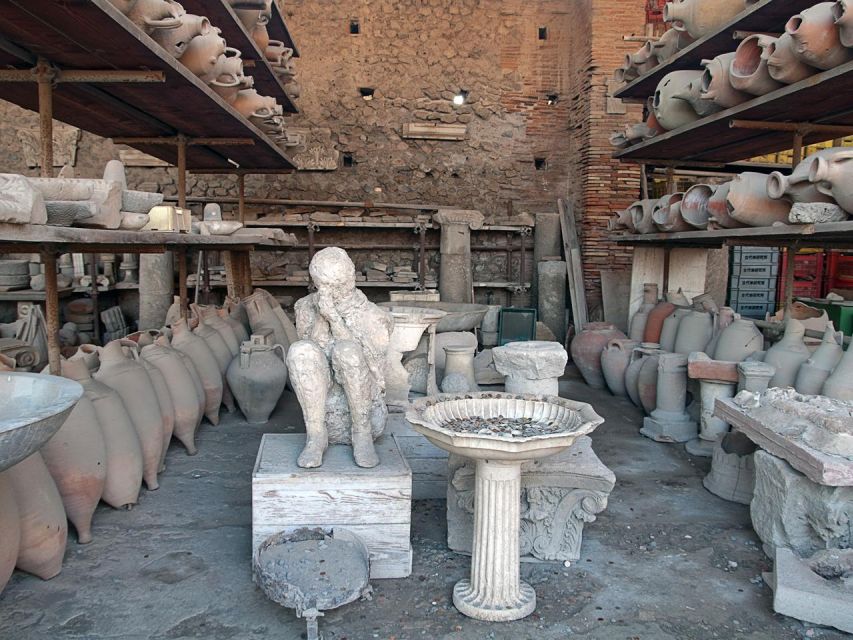
- Top stops included: the amphitheater and the casts of the victims of the eruption.
- You control the pace across frescoed houses, spas, temples, shops, thermopolis, theaters, and even brothels.
- Morning tends to feel calmer, so early entry is a good move if you want breathing room.
- Plan for audio hiccups: bring ID, and expect that on-site connectivity can be unpredictable.
How the 9:00–15:00 Entry Window Shapes Your Day

This experience is built around flexibility. Your ticket lets you enter Pompeii at your convenience during the 9:00 am to 3:00 pm window, so you’re not stuck with a rigid group schedule. If you like to stroll, stop often, and take photos without racing, that open entry time helps a lot.
You also get a full day pass, but you’ll want to think like a “light packing” one-day visitor. Even with a 1-day ticket, Pompeii rewards smart choices. The site includes a wide range of sights—public spaces, everyday business areas, and the more dramatic eruption-related exhibits—so your goal is to cover the essentials without burning out.
If you’re sensitive to crowds, aiming for the morning entrance is worth it. One booked experience specifically called out that going early meant fewer people around and a more relaxed pace for looking closely.
You can also read our reviews of more tours and experiences in Pompei Campania.



Getting Started: Where to Meet and How to Not Waste Time
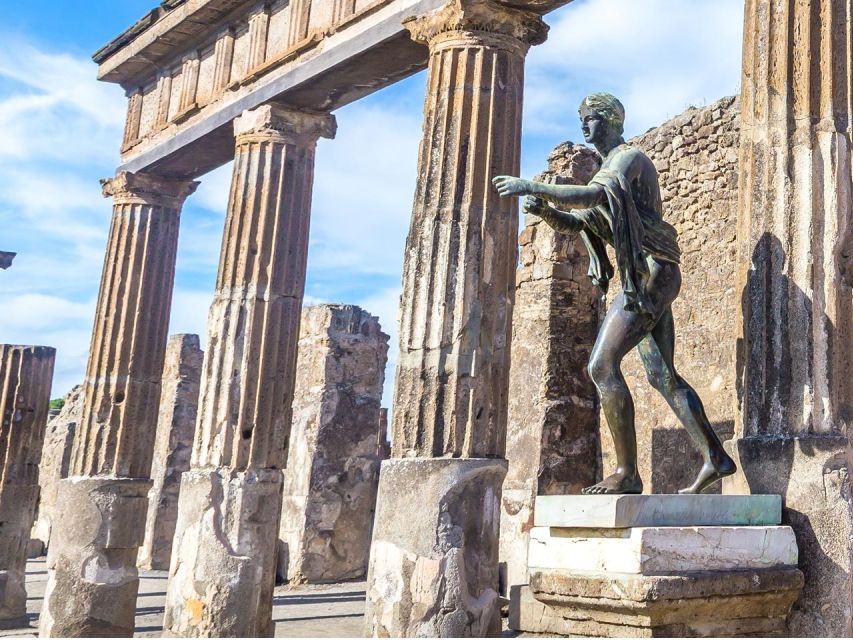
Meet your team outside their office right beside Pasticceria De Vivo. The staff are usually wearing blue and yellow jackets, which makes it easier to spot the group quickly. Getting this part right matters because Pompeii time is limited: you’re working with that 9:00–15:00 window.
Practical tip: go with the expectation that you’ll be walking from the meet point to the entry areas. Plan your arrival so you’re not rushing through the last few minutes before you can enter.
Also note the equipment rules. Oversize luggage isn’t allowed, and large bags are not allowed either. If you’re carrying a big daypack, keep it reasonable; if you have luggage, arrange storage before you head out.
Skip-the-Line Ticket Value: Why It Matters at Pompeii
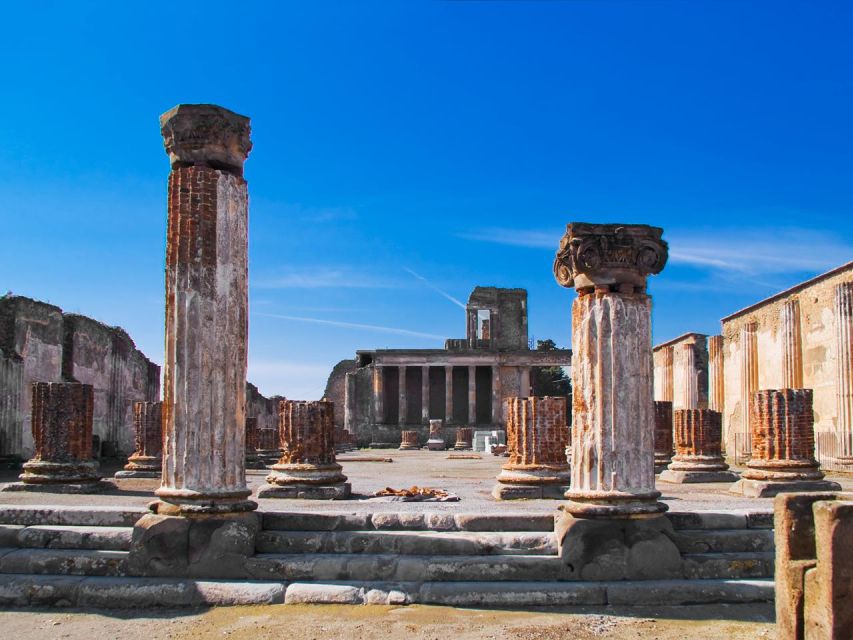
A “skip-the-line” ticket sounds straightforward, but in practice it’s about control. Pompeii can mean long queues at busy times, and the time cost can be brutal when you only have the on-site hours listed for your visit.
Paying about $44 per person for this package is mainly about bundling the important parts:
- a Pompeii skip-the-line ticket
- an audio guide (not just generic sightseeing)
- a map meant to help you navigate the site at your own pace
If you were to approach Pompeii without skipping the line, you might lose the most valuable resource you have: time. And since Pompeii is spread out, those minutes don’t just delay you—they can shrink how much you can see.
One booked experience praised the overall value because they were able to visit “very valuable ruins,” and they went in the morning when it felt less crowded. That combination—less waiting plus more time at the stops—gets you the best return for your money.
Audio Guide and Map: Making Them Work (Not Just Carrying Them)
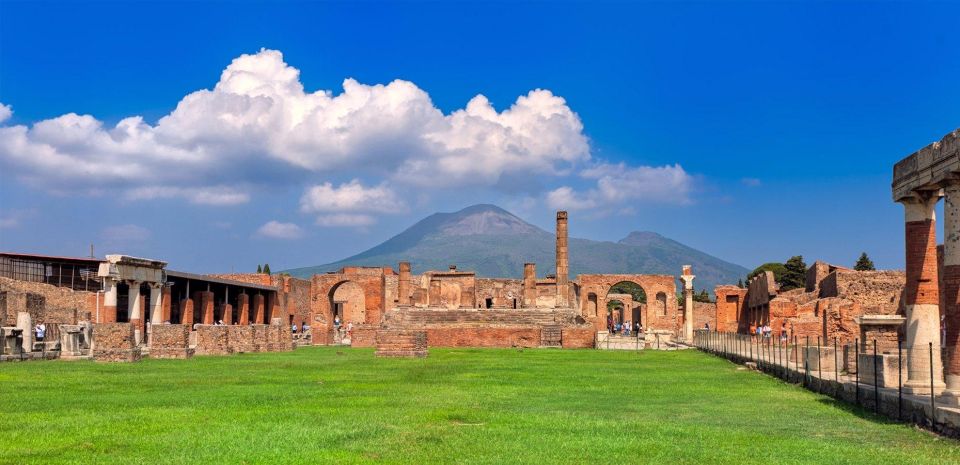
The audio guide is included, and it’s available in many languages: English, Italian, French, German, Hebrew, Russian, Chinese, Portuguese, and Spanish. The instructor language options are English, Italian, Spanish, and French, which can help if you need quick support before you start.
Here’s how I’d use the audio guide so it doesn’t become an unused accessory:
- Start with the biggest areas first, then let the audio deepen what you just saw.
- If a section catches your eye (frescoed walls, a specific public building), stop and play the relevant track rather than “listening in order.”
- Use the map as a tool to connect the story to the space. Pompeii is not a one-street walk. The map keeps you from bouncing back and forth.
Important ID note: you need a valid ID document to rent the audio guide. Don’t treat this like an optional detail. If you forget your ID, you risk losing the whole point of the package.
The one audio complication to plan for
One experience shared a very practical problem: internet connectivity in Pompeii can be unpredictable. In that case, they couldn’t download and listen to the audio guide and ended up needing to use a device option instead. The backup required a pick-up/drop location that involved a 20-minute walk from the train station.
So if your plan is “audio on my phone,” build in a little flexibility. Bring whatever you can (headphones, battery), and be ready to switch to the on-site audio device path if connectivity fails.


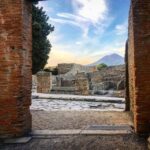
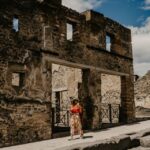

Pompeii Essentials You Can’t Skip: Amphitheater and Victims’ Casts
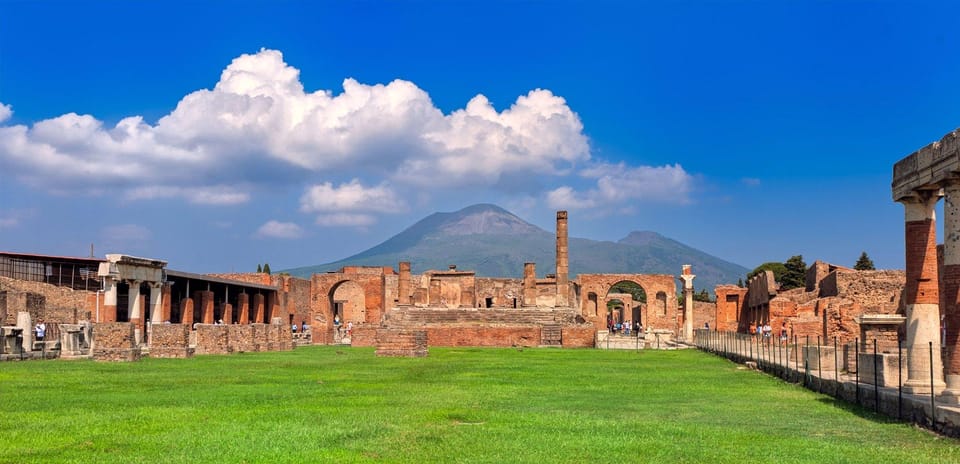
Your ticket covers key, emotionally and visually powerful parts of Pompeii, especially if you want both the everyday and the impact of the eruption.
The amphitheater (and why it’s a “must”)
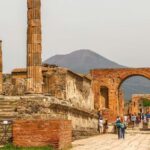
You’ll have access to the amphitheater, including Roman amphitheater remains that are described as among the best-preserved. That matters because Pompeii isn’t just about fragments—you can still read how these public buildings worked through what survives. Even if you’re not a hardcore architecture person, this stop usually delivers because it’s so instantly recognizable as a gathering space.
If you’re planning your day, treat this as a “anchor stop.” Get it onto your list early, so even if you run short on time later, you still hit one of the most intact pieces of the city.
The casts of the victims
Then there are the casts of the victims of the eruption. This is the part of Pompeii that often feels the most immediate. You’re not just learning that Vesuvius erupted—you’re seeing the human cost represented through the casts.
Because this stop can be emotionally heavy, it helps to schedule it when you’re mentally ready. If you prefer a gentler pacing, visit it after you’ve already enjoyed the more “daily life” sections, so the contrast lands without overwhelming you from the start.
Frescoed Houses, Spas, Temples, Shops, and Thermopolis Stops
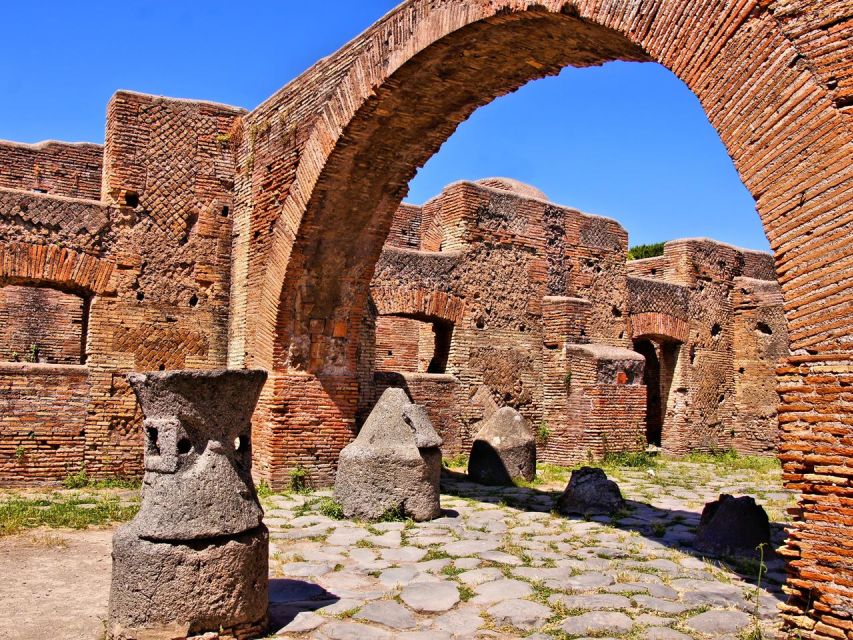
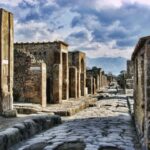
A big reason this package works is that it covers Pompeii’s variety. Instead of only seeing large monuments, you get plenty of “smaller scale” scenes—homes, businesses, and spaces where people relaxed, shopped, and worshipped.
Here’s what you can expect to visit:
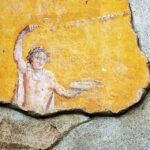
- Frescoed houses: you’ll be looking at the surviving interior decoration and wall art.
- Spas: Pompeii had public and semi-public bathing culture, and the ruins reflect that.
- Temples: places of worship that help explain civic life.
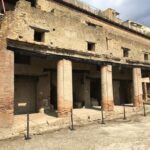
- Shops: business spaces that give you a sense of how trade and daily commerce functioned.
- Thermopolis: this is described as the coffee-fast food of the time, so you’re not only seeing “grand buildings.” You’re seeing the rhythm of everyday eating and stopping by.
What’s valuable about these stops is that they turn Pompeii from a dramatic story into something more lived-in. The audio guide and updated map are doing real work here, because each category has its own visual cues. With the audio tracks, you can connect what you’re seeing to the city’s history and the eruption’s aftermath.
A practical note on pacing these areas
If you try to “do everything,” you’ll end up skimming. The self-paced structure is meant for targeted wandering. Pick 2–3 house or shop clusters you want to study more closely, then move on. Your enjoyment improves when you let your brain rest between zones.
Theaters and Brothels: Seeing Pompeii’s Social Life
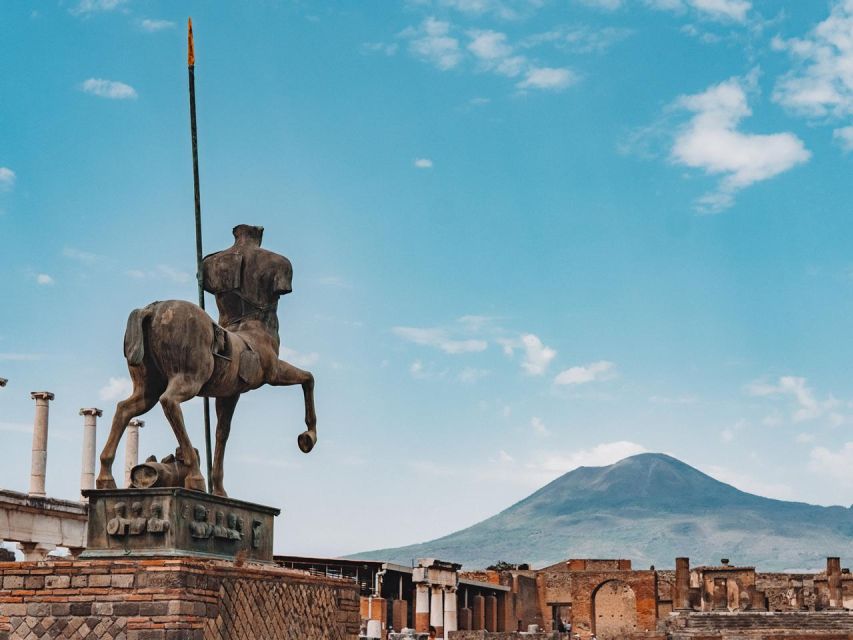
Pompeii doesn’t hide from real human behavior. Your visit includes access to theaters and even brothels. These stops can feel surprising if your mental image of Pompeii is mostly temples and big plazas.
The theater side helps you understand public entertainment and community gathering. The brothel stop is different: it’s an example of private, commercial, adult life that still existed alongside civic religious spaces.
This is exactly where an audio guide can pay off. Without explanations, some ruins can feel like “cool old walls.” With commentary, those locations become understandable parts of social systems.
If you’re visiting with teens or you prefer to avoid adult themes, you can still steer your day. The key point is that the ticket gives you the option to see these places, not a forced schedule.
One Day in Pompeii: A Simple Route Strategy That Works

Because the entry is open during the day and the visit is self-paced, your planning should be simple. You want a route that hits the strongest highlights without turning into a sprint.
Here’s a strategy that fits the structure you’re getting:
- First third of your day: handle one major anchor stop like the amphitheater, then start moving into the areas that feel most “readable” visually.
- Middle of your day: spend time in the mixed-use sections—frescoed houses, spas, temples, shops, and thermopolis. This is where the audio guide helps you connect dots.
- Final third: do the heavy emotional stop (the victims’ casts) and then use the map to fill in any gaps you still want.
This keeps you from arriving, getting distracted by one cool corner, and then realizing you never made it to the most important areas.
Shoes and your body matter
Wear comfortable shoes and comfortable clothes. Pompeii involves a lot of walking over uneven ground. This is not the day for brand-new sneakers or fashion footwear.
Languages and Support: What You’ll Be Able to Ask For
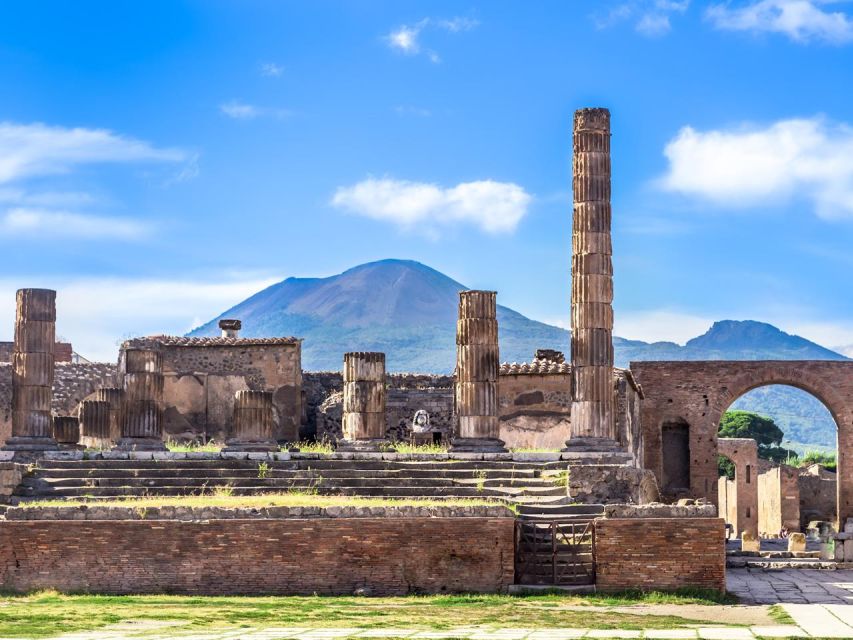
The instructor/in-person support language options include English, Italian, Spanish, and French. The audio guide languages are far broader, including German, Hebrew, Russian, Chinese, and Portuguese.
If your plan is to rely fully on the audio guide, you might not need to talk much after you arrive. But having support in several languages helps if you run into issues at the start, especially around audio guide rental or finding the right entry access.
Who This Works Best For (And Who Should Think Twice)
This is a good match if you like a museum-style day where you can stop when something catches your eye. The self-paced format works well with people who want control: fewer instructions, more time at the ruins you care about.
It’s also strong for history-curious visitors because the audio guide is designed to teach about the city and the eruption of Mount Vesuvius. That helps you avoid the frustrating experience of reading everything on signage only to forget it 10 minutes later.
That said, the experience is not suitable for:
- people with mobility impairments
- people with heart problems
- people with altitude sickness
If any of those apply, it’s better to choose a format designed with your needs in mind.
Price and Value: Is $44 Fair for Pompeii?
Let’s look at what you’re paying for. The listed price is $44 per person, and what’s included is a Pompeii skip-the-line ticket and an audio guide.
The value comes from combining two things that cost you time and energy on your own:
- Skipping the line so you enter within the day window without wasting the best hours.
- Having interpretation built in via the audio guide, so the ruins aren’t just visuals.
One booked experience noted that the audio was “just okay,” but even with that, the visit still felt valuable because they saw important ruins and benefited from a quieter morning. That suggests the core value holds even if your audio experience isn’t perfect.
Where you might feel less happy is if you planned to use phone-based listening and ran into the connectivity problem. If that worries you, come prepared for the possibility of using the audio device route instead of relying on download.
Should You Book This Pompeii Skip-the-Line Ticket?
Book it if you want an efficient Pompeii day where the big highlights are covered and you can explore at your own pace. The skip-the-line entry plus the audio guide and map are the right mix for a one-day visit, especially if you’re aiming for an early start to keep crowds manageable.
I’d only hesitate if you know you’ll struggle with the audio guide requirements. Make sure you bring a valid ID for the rental, and plan for possible connectivity headaches if you’re trying to download audio on your phone.
If you fit the self-paced style—walk, stop, listen, repeat—this is a solid way to experience Pompeii without losing hours to lines or guesswork.