REVIEW · POMPEII
Pompeii Private Tour with an Archaeologist and Skip The Line
Book on Viator →Operated by ELIANA SANDRETTI · Bookable on Viator
Pompeii can feel like chaos if you go alone. This private, 2-hour plan keeps you moving through the best-survival-of-ancient-life parts of the site, with an archaeologist explaining what you’re seeing. You’ll also get skip-the-line entry help, so your time goes to ruins, not paperwork.
I especially like the stop list: theaters, baths, the Forum, gladiator spaces, and the haunting casts. Second, the route is built for real understanding, from Roman street life on Via dell’Abbondanza to the darker corners like the Lupanar district.
One drawback to think about up front: the Pompeii park entrance ticket is not included in the tour price. You’ll buy the ticket separately (19 euros per person), and the skip-the-line setup works best once you’ve got that squared away.
In This Review
- Key things to know before you go
- Enter Pompeii With an Archaeologist, Not a Speed-Run
- Meeting Point: Piazza Esedra and the Start That Saves Time
- The Smart Route Through Pompeii Archaeological Park
- A respectful note on the casts
- Small Theater (Odeion): How Roman Acoustics Worked
- Teatro Grande: Pompeii’s Big Stage
- Via dell’Abbondanza: Pompeii’s Main Street in Motion
- Granaries del Foro: Evidence Packed Into Deposits
- Stabian Baths (Terme Stabiane): The Roman Spa Moment
- Foro di Pompei: The Main Square That Ran the City
- Basilica di Pompei: Justice in the Open Air
- Temple of Jupiter and Temple of Venus: Religion in the Center
- Quadriporticus of the Theatres: Gladiator Barracks and Training Rooms
- Vicolo del Lupanare: The Red District Light (and What It Means)
- Casa del Fauno: Wealth, Style, and Daily Life at Home
- Price and Value: What $375.05 Covers (and What to Budget for)
- How to Make This Tour Work with Your Schedule
- Who Should Book This Pompeii Private Tour
- Should You Book It?
- FAQ
- FAQ
- Is the Pompeii Archaeological Park entrance ticket included?
- Do I still get skip-the-line if I buy my ticket separately?
- How long is the tour?
- Is this a private tour?
- Where do we meet?
- What language is the tour offered in?
- Are food and drinks included?
- What if there is bad weather?
- What is the cancellation policy?
- Is it suitable for everyone?
Key things to know before you go
- Private group (up to 10): easier pacing and more room for questions.
- Skip-the-line support: you’ll still need the site entrance ticket, bought in advance if possible.
- Two theaters in one route: the Odeion’s acoustics and the Teatro Grande’s scale.
- Forum-life walkthrough: basilica, Jupiter, and the Granaries where the evidence is physical.
- Stabian Baths stop: the Roman spa vibe is one of the most memorable areas.
- A house with swagger: Casa del Fauno shows the wealth side of Pompeii.
Enter Pompeii With an Archaeologist, Not a Speed-Run
Pompeii is huge, and it’s easy to miss the meaning while you’re chasing the “big sights.” This private tour is designed to compress the best parts of the Pompeii Archaeological Park into about 2 hours, while your guide explains how the city actually worked before the eruption of 79 AD.
Because it’s private (up to 10 people) and led by an archaeologist, you get two practical advantages. First, the guide can adjust the walk so it fits your pace. Second, you’re not stuck listening to one long lecture while you stand in the wrong place trying to see a detail.
Language is English. If you need multiple languages, it can be arranged only on request—so it’s worth asking when you book.
You can also read our reviews of more tours and experiences in Pompeii.



Meeting Point: Piazza Esedra and the Start That Saves Time
You meet at Piazza Esedra, 10, 80045 Pompei NA, Italy. The tour ends back at the same place, which matters in Pompeii because getting lost inside the park is easy even for confident map users.
A small-but-important detail: the provider sends a link one day before the tour to buy online tickets in advance to skip also the tickets office line. That doesn’t replace everything else (you still follow the guide), but it helps you avoid the slowest part of arrival—standing around.
The tour is delivered through a mobile ticket, and confirmation comes at booking. If you’re traveling with a service animal, service animals are allowed.
The Smart Route Through Pompeii Archaeological Park
The tour begins at Pompeii Archaeological Park, where the guide takes you to major areas. The itinerary is a mix of “big architecture,” daily life, and the specific evidence sites—especially the casts of people who died during the eruption.
Stop 1 is the main sweep through the park highlights. Expect to see:
- Theaters and Temples
- A rich house (one of the wealthier residential examples)
- Stabian Baths (Roman spa buildings)
- Shops and even fast food
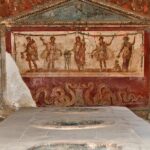
- The Lupanar area (brothel district)
- The Forum (main square)
- The Area of the Gladiators
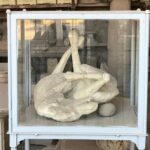
- The casts (the preserved bodies)
The time on this stop is listed as part of the overall 2-hour routing, but the way the route is built matters more than the exact minutes. You’re not just collecting photos—you’re getting a map in your head: entertainment, religion, food, politics, training, and tragedy.
A respectful note on the casts
You will visit casts—human remains molded from the eruption moment. It’s powerful, but it can also be emotional fast. If you prefer a lighter pace, tell the guide early. With a private format, you have more room to steer the intensity without derailing the whole tour.
Small Theater (Odeion): How Roman Acoustics Worked
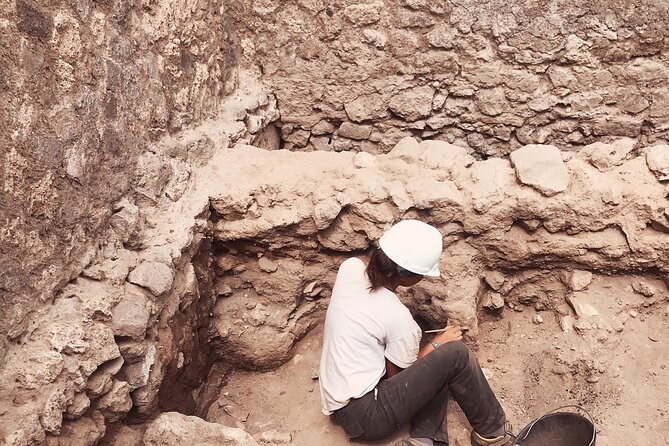
Then comes a focused stop at the Small Theater (Odeion). The tour is set up so you can hear how the Romans recreated strong acoustics.
This is a great choice because it’s not just architecture spotting. It’s interactive. You’re likely to notice how sound behaves in a space like this—what would be lost if you only walked past.
If you’re the kind of person who likes the “how did they build it” side of travel, this stop is a keeper. It turns the ruins into a real engineering lesson you can experience with your ears.



Teatro Grande: Pompeii’s Big Stage
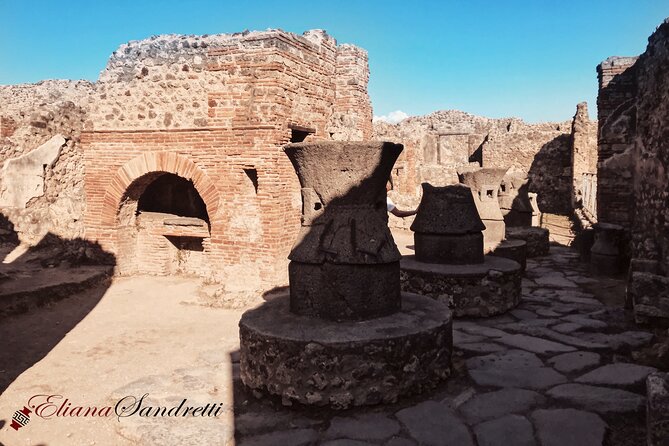
Next is Teatro Grande, the Great Theater of Pompeii. It’s described as the most important theater in the archaeological site, and the stop is about 15 minutes.
What you’re looking for here is scale and purpose. This is the space that hosted performances in a city built around public life. Even if you’re not into theater, the Teatro Grande helps you understand why Pompeii invested so much in communal spaces.
This stop lists admission as included, but you still need your main site entrance ticket (not included in the tour price). Think of it as: once you have the right ticket, the guide gets you into the right places quickly.
Via dell’Abbondanza: Pompeii’s Main Street in Motion
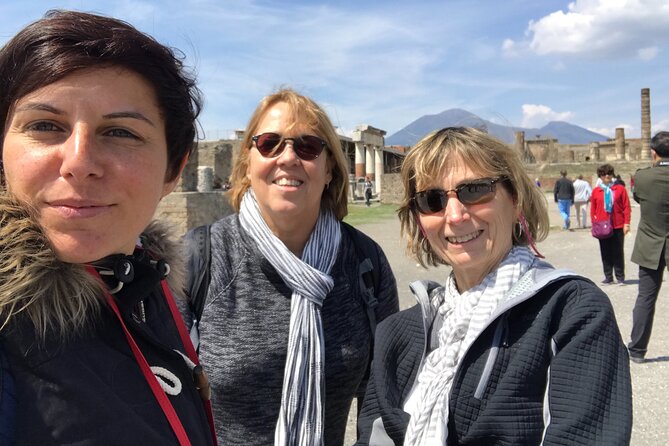
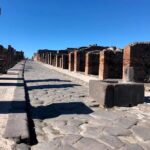
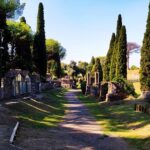
Between major set-piece stops, you’ll cross via dell’Abbondanza, Pompeii’s main street.
This matters because Pompeii isn’t only temples and arenas. It’s also commerce, passing feet, and storefront life. A guided walk down the main street helps you connect the big buildings to the street-level reality: where people bought things, ate, talked, and moved around.
Granaries del Foro: Evidence Packed Into Deposits
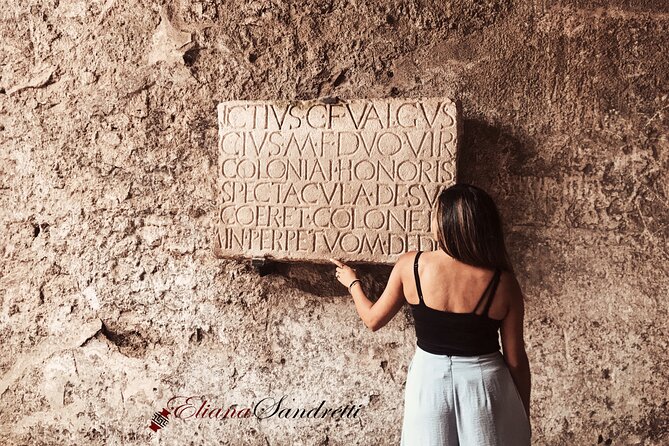
Stop 3 is Granai del Foro—the Granaries of the Forum—with another cast visit. The stop is about 15 minutes, and this is one of the most “stuff still here” moments of the day.
You’ll see:
- The casts again in this area
- An archaeological deposit full of amphorae and work tools
This is where the site starts feeling like a snapshot instead of a ruin museum. Granaries were practical spaces tied to food storage. Seeing amphorae and tools gives you a grounded sense of what was in motion right before the eruption.
If you like material details, you’ll get a lot from this stop. If you prefer less emotional impact, just prepare yourself: this is cast-focused.
Stabian Baths (Terme Stabiane): The Roman Spa Moment
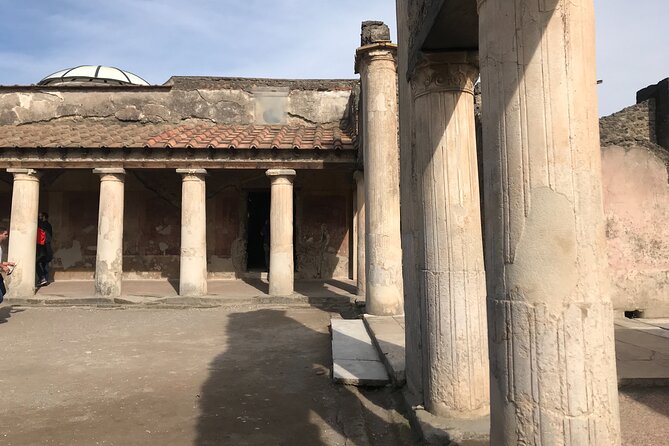
Stop 4 is Stabian Baths, listed as the best SPA of the Roman Empire in Pompeii. You’ll have about 15 minutes here.
This is one of the most fun stops because it feels modern in a way ruins don’t usually. You get to picture routine: washing, relaxing, socializing, and moving through a sequence of rooms. It also helps you understand Pompeii beyond “public spectacles.” People lived and cared for themselves here.
If it’s hot out, baths can also be a break from sun—though you should expect Pompeii to remain exposed in many sections.
Foro di Pompei: The Main Square That Ran the City
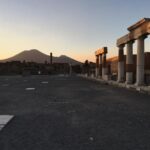
Stop 5 is Foro di Pompei, the Forum of Pompeii. It’s described as the main square with markets and temples, with about 10 minutes allotted.
This is the “power center” stop. A Forum is where civic life happens, and in Pompeii it’s also where religious structures anchor the city’s identity. When you walk through the Forum with the guide, it stops being just stones and becomes the layout of daily decision-making.
Basilica di Pompei: Justice in the Open Air
Stop 6 is Pompei La Basilica—the ancient court where justice was administered. You’ll spend about 15 minutes here.
It’s a smart inclusion because it shows how Romans used architecture for public order. You can often spot how the design directs attention. Even if you don’t read Latin inscriptions, you can feel the intention: gathering space for official business.
Temple of Jupiter and Temple of Venus: Religion in the Center
Two more religious stops round out the civic-religious core: the Temple of Jupiter and the Temple of Venus.
You’ll see Jupiter present in the main square area and then a separate visit to the Temple of Venus. Together, they help you understand that religion wasn’t on the edge of town. It sat in the places people walked through every day.
If you want a quick framework for Pompeii, think: civic life + street life + worship life all overlap. This tour leans into that.
Quadriporticus of the Theatres: Gladiator Barracks and Training Rooms
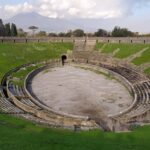
Next is Quadriporticus of the theatres, where you visit the Gladiator Barracks—including apartments and where they trained.
This stop is valuable because it explains the machine behind the show. Gladiators weren’t only characters in fights. They lived in a system, trained in spaces designed for preparation, and stayed in housing tied to the theater world.
You’ll get about 15 minutes here, which is enough to understand the purpose of the buildings without rushing past the details.
Vicolo del Lupanare: The Red District Light (and What It Means)
Stop 8 is Vicolo del Lupanare, the ancient red district light area (brothel district), with about 15 minutes listed as “free.”
This can be uncomfortable territory depending on your sensibilities, but it’s part of real urban life in Pompeii. The key is how it’s explained. A guided approach helps you place the area in context instead of treating it as shock value.
If you’re with kids, teens, or anyone who might find it upsetting, you can ask the guide to frame it in the historical and architectural way only.
Casa del Fauno: Wealth, Style, and Daily Life at Home
The tour wraps with Casa del Fauno (house of the faun). It’s listed as a 15-minute visit and described as one of the richest and most luxurious residences in Pompeii.
This is where Pompeii shifts from public spaces to private power. A big residence like this tells you about wealth, decoration, and what elite life looked like. Even if you’ve seen photos before, seeing the layout in person changes the story.
And for many people, this final stop is the one that sticks. It gives you an ending that’s not only tragedy and civic architecture—it’s life as it was, at home.
Price and Value: What $375.05 Covers (and What to Budget for)
The cost is $375.05 per group (up to 10 people) for about 2 hours with a private archaeologist guide, plus skip-the-line help.
That sounds pricey until you run the math in your head. If you travel as a full group of 10, the guide portion works out to roughly $37 per person. On top of that, you need the Pompeii entrance ticket at 19 euros per person (and free for under 18 with ID/passport if age is checked).
So the real value question is: do you want the time saved and the interpretation delivered by a specialized guide? If you don’t want to figure out which stones matter, this is a good use of your Pompeii hours.
Also consider that this is private. You’re not competing with a big group for the guide’s attention. You’re less likely to feel like you have to keep up.
How to Make This Tour Work with Your Schedule
Pompeii is best with a plan, not just enthusiasm. This tour fits well if:
- you only have about half a day in Pompeii
- you want the key areas without building your own route
- you prefer fewer people around you
- you like explanation, not just walking
If you have more than a day, this still works as an orientation. You’ll know what you’re looking at when you return on your own.
And timing can matter. The tour itself is listed as English and has an average booking window of 45 days in advance, which usually signals popular demand. If you’re going in high season, you’ll want the entrance ticket in advance.
Who Should Book This Pompeii Private Tour
This tour is a strong fit for people who want structure. You’ll enjoy it if you like:
- a guided walk through major zones (Forum, baths, theaters)
- clear explanations of how the city worked
- a private group pace, up to 10 people
It’s also a good choice for families—some groups have benefited from guides adjusting pacing and attention to match different ages.
If you already love independent planning and you want a slow, wandering day through Pompeii’s many corners, a private guide still helps—but you might feel limited by the fixed route length.
Should You Book It?
If your goal is to see Pompeii efficiently and understand what you’re looking at, yes, this is a solid booking. The price is easier to swallow when you split it across a group, and the route hits the biggest narrative anchors: entertainment, civic life, daily street trade, and the casts that make the eruption real.
Just go in with one mindset: buy the entrance ticket separately and do it early in peak season. Once you handle that, the tour plan is built to help you move fast, ask questions, and leave with a much clearer Pompeii map than you’d have after casual walking.
FAQ
FAQ
Is the Pompeii Archaeological Park entrance ticket included?
No. The Pompeii site entrance ticket is not included. The ticket cost is listed as 19 euros per person, and free tickets apply for under 18 with ID or passport because age can be checked.
Do I still get skip-the-line if I buy my ticket separately?
The tour includes skip-the-line and the provider sends a link one day before the tour so you can buy tickets online in advance to also skip the ticket office line.
How long is the tour?
The duration is listed as about 2 hours.
Is this a private tour?
Yes. It is a private tour/activity, and only your group participates. The group size is up to 10 people.
Where do we meet?
The start is at Piazza Esedra, 10, 80045 Pompei NA, Italy, and the tour ends back at the meeting point.
What language is the tour offered in?
The tour is offered in English. Multiple languages are possible only on request.
Are food and drinks included?
No. Food and drinks are not included.
What if there is bad weather?
If it’s canceled due to poor weather, you can choose another date or a full refund. The experience also requires good weather.
What is the cancellation policy?
You can cancel up to 24 hours in advance for a full refund. If you cancel less than 24 hours before the start time, the amount paid is not refunded.
Is it suitable for everyone?
The information states that most travelers can participate. Service animals are allowed, and the tour is near public transportation.