REVIEW · ROME
Rome: Big Bus Hop-on, Hop-off Open-Top Sightseeing Tour
Book on Viator →Operated by Big Bus Tours - Rome · Bookable on Viator
Rome’s sights, from curb to Colosseum. What makes this Big Bus loop fun is the recorded audio (headphones included) plus the option to hop on and off at big hitters like the Colosseum, Vatican area, Spanish Steps, and Trevi Fountain when you feel like it. I also love the VOX digital walking tour included with your ticket, because it gives you a plan once you’re on the ground. The one drawback to plan around: key stops can shift or be farther than expected when roads or access change, so you’ll want a flexible mindset and comfy shoes.
This is a solid “get your bearings fast” tour—especially if you don’t want to commit to a single long guided walking day. Ticket options let you match your pace (from a quick loop to multiple days), and the buses come with a real-time tracking app. Just remember: the 72-hour option adds a panoramic night tour, but that part is not hop-on, hop-off.
In This Review
- Key things that make this tour worth your time
- How the Big Bus Rome loop actually works (and how to use it well)
- Price and what you’re really getting for about $26
- On board: recorded audio, headphones, and Wi‑Fi (the stuff you’ll feel most)
- Choosing the right ticket length: 3, 24, 48, or 72 hours
- Finding the stops: Termini to the Vatican route (and why location matters)
- Stop 1: Rome Termini station and Santa Maria Maggiore as your warm-up
- Stop 3: The Colosseum area (and the Roman Forum entrance situation)
- Stop 4: Circus Maximus for the big arena vibe from street level
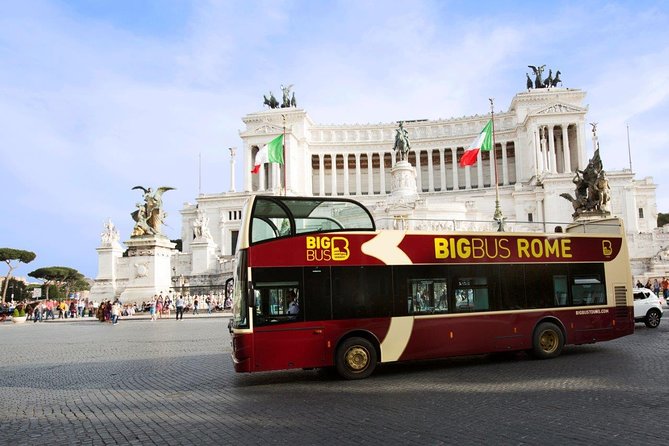
- Stop 5: Piazza Venezia and the Rome viewpoints you can use all day
- Stop 6: Vatican Museums stop and the walk logic (what to expect)
- Stop 7: Spanish Steps and a smart gelato moment
- Stop 8: Piazza Barberini as a calmer finish with good city wandering
- The Trevi Fountain and why it’s often not a quick stop-and-go
- Timing, traffic, and the “bus arrived later” problem
- Small practical issues that can change your experience
- Who this tour fits best (and who should pick something else)
- Quick “before you go” tips that make the day smoother
- Should you book the Big Bus Rome Hop-on, Hop-off?
Key things that make this tour worth your time
- Headphones + multi-language recorded commentary designed for rolling past Rome’s landmarks
- VOX digital self-guided tour download included for every ticket length
- Free Wi‑Fi on board plus a real-time bus tracking app
- A mix of classic sights on one route: Termini, Santa Maria Maggiore, Colosseum area, Circus Maximus, Piazza Venezia, Vatican Museums area, Spanish Steps, and Barberini
- Stops can be a walk from the attraction, so plan on short legs, not instant drop-offs
- 72-hour = night tour add-on (May–Oct), and it’s not hop-on, hop-off
How the Big Bus Rome loop actually works (and how to use it well)
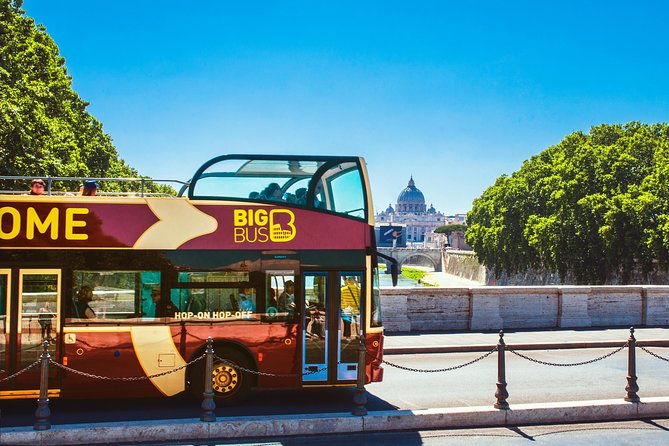
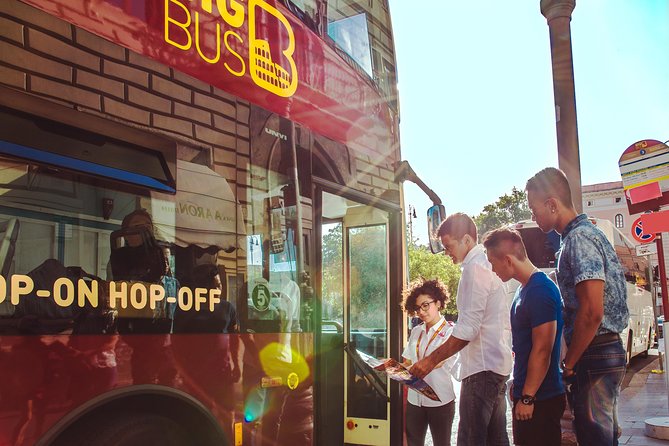
This is a hop-on, hop-off sightseeing bus with the classic idea: you board at a stop along the route, swap your voucher for the right ticket time period, and then stay as long as you want at each stop. When you feel done, you hop back on when the next bus arrives and continue.
The practical win is that Rome is best when you can change your mind. One hour you might want photos from the top deck; the next hour you might want to linger inside a church or just wander side streets. This tour gives you that rhythm without locking you into one massive group schedule.
Two details matter for your day:
1) You’re renting time, not just transportation. If you’re aiming for the Colosseum and Vatican area, choose longer validity (24/48/72 hours) so you’re not racing against bus timing.
2) You’re also borrowing a route with city constraints. Rome’s street closures, events, and access rules can affect which stops are available and how close the bus ends up to the exact entrance you want. That doesn’t mean the tour is “bad”—it means your plan should include a buffer.
You can also read our reviews of more tours and experiences in Rome.


Price and what you’re really getting for about $26
At roughly $26.43 per person, this tour isn’t trying to be the cheapest way to see Rome. It’s priced like convenience: you pay for an efficient loop, onboard narration, and included digital walking content.
Where the value shows up:
- You get multiple tools in one bundle. Audio commentary + VOX self-guided tour download + free onboard Wi‑Fi + live tracking app. Even if you only hop off for two or three stops, those extras add up.
- It reduces decision fatigue. Instead of mapping a dozen stops yourself, you follow a route and decide case-by-case where to go next.
- It helps you spread Rome across time. Short validity can work if you’re only orienting and grabbing the main views, but longer options make it easier to match your energy.
Where to be careful: if you’re the kind of traveler who expects the bus to drop you right at the ticket gates (no walk at all), you may feel annoyed. Some stops can be farther than advertised, and a few people report that the Colosseum or Roman Forum area access wasn’t as straightforward as they expected.
On board: recorded audio, headphones, and Wi‑Fi (the stuff you’ll feel most)
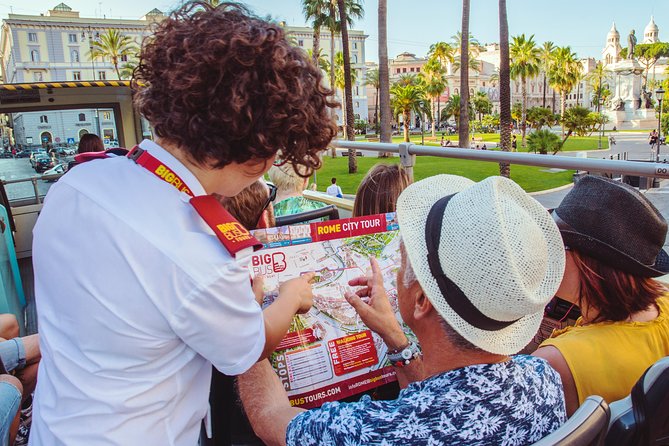
The core onboard experience is the recorded commentary delivered through provided headphones. You’re looking at narration in multiple languages, with English available. The audio is designed to give you context as the bus passes key sights—history plus what the area means today.
In theory, you’ll get the “Rome explained” part without needing a live guide. In practice, there are two things to watch:
- Headphone jacks can be hit-or-miss. One review mentioned ports not working for some seats, which means you can miss dialogue. If that happens, it’s worth asking staff to help you switch or troubleshoot.
- Audio timing and road reality don’t always line up. Traffic can slow the bus, so the narration may not perfectly match what you’re seeing at that exact moment.
Free Wi‑Fi is included on board, and there’s also a real-time tracking app. Wi‑Fi performance seems less consistent from person to person—some report it working fine, others say it didn’t load—so I wouldn’t treat it as guaranteed streaming time. Use it as a bonus, not a plan.
Choosing the right ticket length: 3, 24, 48, or 72 hours

You pick a ticket time window that matches your schedule: 3-hour, 24-hour, 48-hour, or 72-hour. The longer you go, the more chances you have to hop off at multiple sites without feeling rushed.
Here’s a simple way to think about it:
- 3-hour ticket: best for first-day orientation and a few photo stops. If you want just the highlights from street level once (not deep sightseeing at each place), this can work.
- 24-hour ticket: good for seeing several main areas in one day plus one longer stop.
- 48-hour ticket: ideal if you want to take your time at one or two big attractions and still cover the rest of the route.
- 72-hour ticket: this adds a panoramic night tour (May to October only). It is not hop-on, hop-off, so don’t expect to customize that evening part.
If your goal is big-ticket interiors (or you know your walking pace is slow), longer validity tends to pay off. Short tickets can feel stressful in Rome traffic, especially if buses bunch up.
Finding the stops: Termini to the Vatican route (and why location matters)
Where you start matters. The Rome route includes stops at major transit anchors and central landmarks, so you’ll generally have options even if one stop is busy.
For example:
- Stop near Rome Termini is listed at Via Giovanni Giolitti, 32.
- Vatican Museums area is listed at Lungotevere Tor di Nona 7.
Those addresses help if you’re checking a map. The other key tool is the app’s real-time tracking. When you’re waiting, it’s easy to lose track in Rome’s urban maze, and several people point out that bus timing can be slower than expected because of traffic. Live tracking helps you avoid standing around too long at the wrong curb.
Also, quick heads-up: luggage is not permitted on board for security reasons. If you’re traveling with a suitcase, you’ll need a different plan for how you move it during the day.



Stop 1: Rome Termini station and Santa Maria Maggiore as your warm-up
Termini is a smart starting point because it’s one of Rome’s best-connected hubs. If you’re arriving by train or want an easy place to begin, you can build the rest of your route from there.
From Termini, the next stop is the Basilica Santa Maria Maggiore (Piazza dell’Esquilino area). Even if you only do a quick look, it’s a useful early stop because it sets the tone for what you’ll see all day: Rome mixes sacred spaces, ancient remnants, and busy modern streets.
What I’d do here: treat this as your “photo + orientation” stop. You don’t need to spend hours immediately. Then you can decide later whether you want a deeper visit when you have better energy.
Stop 3: The Colosseum area (and the Roman Forum entrance situation)
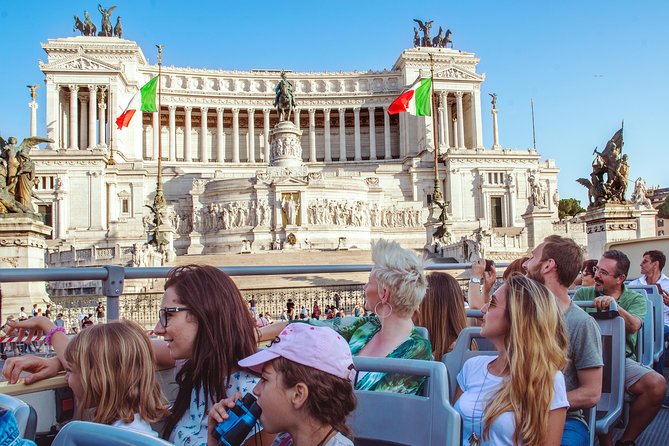
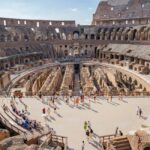
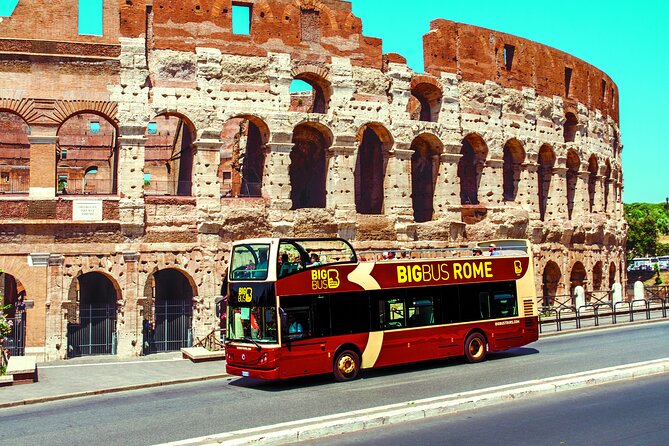
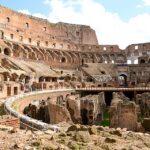
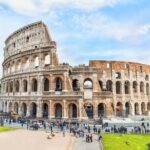
The Colosseum is the headline. The bus stop for it is described as being outside the Roman Forum entrance area (not a perfect curbside guarantee right at the main gates). That nuance matters because some people report that the bus didn’t stop where they expected or that access was temporarily affected.
Here’s the reality to plan for:
- Expect walking. Even when the stop is “for the Colosseum,” you may have to go on foot from the bus area to the entrance you’re aiming for.
- If the stop is closed or skipped, the adjustment can be annoying. Some reports mention Colosseum-related stop issues, with guests having to walk from a different planned stop. There can be little time to react if you only find out at the bus.
My practical advice: when you’re aiming for Colosseum time, don’t schedule it as your only stop. If something goes sideways, you’ll still have other sights along the same loop.
If you’re traveling with mobility constraints, this is one of the places where your plan needs extra time. One review mentions a wheelchair user having help from staff, but the underlying walking from bus stops is still a factor.
Stop 4: Circus Maximus for the big arena vibe from street level

Circus Maximus isn’t always on everyone’s “must-do” list, but it’s a great stop from a sightseeing-bus point of view. From here you can understand how massive Roman entertainment spaces were—whether you’re taking photos, reading signs, or just letting the scale hit you.
What’s good about this stop is that it’s less about one single doorway and more about absorbing a zone. So if you end up walking a bit farther, it can feel less like you missed the point.
Stop 5: Piazza Venezia and the Rome viewpoints you can use all day
Piazza Venezia is a crossroads of views. Even if you don’t go inside anything here, it’s useful for planning because it gives you a sense of where you are in central Rome.
This is also the kind of stop where you can connect the dots: from the bus and from nearby streets, you start noticing how attractions cluster. If you’ve had a long walking day, you can also treat this as your reset stop—grab a drink, take a few photos, and jump back on.
Stop 6: Vatican Museums stop and the walk logic (what to expect)
The Vatican area is included on the route with a stop at Lungotevere Tor di Nona 7. The big caution: the bus stop may not put you directly next to the Vatican itself in a convenient line-of-sight way.
Some people report that the stop doesn’t bring you close or “plain sight” as expected. In practical terms, you should assume some walking from the bus stop into the Vatican complex area, even if the bus brings you near.
The best way to make this work is to:
- plan for the walk,
- give yourself a little extra time,
- and avoid placing the Vatican as a last-minute jump if you’re trying to fit everything into one short ticket window.
Stop 7: Spanish Steps and a smart gelato moment
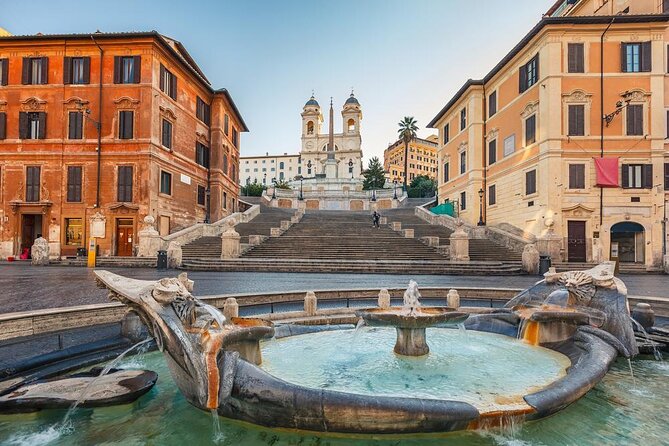
The Spanish Steps stop is listed at Via Ludovisi, 73. This area is perfect for a “walk, look, snack, repeat” style of sightseeing.
From this stop, you can also use it as a buffer if you’re waiting for the bus. The streets around here are lively, and it’s easy to turn a short hop-off into a satisfying wander.
I like this stop because it’s not just about one monument. It’s about Rome’s street theater: people-watching, photos, and casual breaks that don’t require a timed entry.
Stop 8: Piazza Barberini as a calmer finish with good city wandering
Barberini is a strong final (or mid-day) option because it sits in a part of central Rome that feels connected but not as tightly focused on one single landmark.
If you’ve been over-focused all day—Colosseum, Vatican, main fountains—this stop can help you switch gears back to strolling. It’s also a good place to refuel before you head back to your starting point or plan your next hop.
The Trevi Fountain and why it’s often not a quick stop-and-go
Trevi Fountain is named as one of the landmarks on this tour route. The catch is distance: some people report that the Trevi stop still involves a noticeable walk.
So I’d treat Trevi like this:
- If you want the classic fountain moment, plan to walk there with time to enjoy the area.
- If you’re trying to do everything fast, Trevi may end up being one of those “worth it, but schedule it properly” stops.
Timing, traffic, and the “bus arrived later” problem
Rome traffic can affect how often buses pass. Even if a website says a time, delays can happen. One review described a big gap between posted arrival and actual bus timing.
Here’s how to handle it without losing your day:
- use the app’s real-time bus tracking,
- add a buffer to your hop-off schedule,
- and don’t treat the bus as your only timed plan for the day.
Also, note that there can be stop closures or diversions. When road access changes, you might be redirected without a detailed announcement at the exact curb.
A good habit: if you’re standing at a stop and unsure, ask staff directly whether that stop is serving the attractions you came for. It’s a small question that can save you from an unexpectedly long walk.
Small practical issues that can change your experience
A great tour idea can be ruined by one annoying mismatch. Here are the practical pain points that show up in real usage, plus how to protect yourself:
- Headphone ports might fail for some seats. If you can’t hear properly, switch if possible and ask staff.
- Some stops may be farther than you expect. Build walking time into your plan, especially for the Colosseum/Roman Forum area and Vatican approach.
- Onboard Wi‑Fi may not work reliably. Treat it as a bonus.
- Top deck access isn’t always guaranteed. If you’re expecting an open-top experience exactly like photos, keep flexibility in mind.
- Narration can lag behind what you see. Traffic slows the bus, and the story may not perfectly match the view at that second.
None of these mean you shouldn’t take the tour. They just mean you should treat it as a tool, not a promise that Rome will cooperate.
Who this tour fits best (and who should pick something else)
This Big Bus loop fits best if you want:
- a high-level overview of central Rome,
- clear audio guidance while you travel,
- and flexibility to hop off when something catches your eye.
It also helps if you’re mixing a lot of stops in a short window and you’d rather spend your energy sightseeing than figuring out transit.
You might consider another approach if:
- you want zero-walk drop-offs at major sites,
- you hate relying on app tracking and traffic variability,
- or you plan only one short visit and want it to be perfectly timed.
For mobility needs, the tour can still be useful because staff may help with practical needs, but the route’s access rules and walking distance between stops and attractions can be a limiting factor.
Quick “before you go” tips that make the day smoother
- Wear shoes you can walk in for real distances from bus stops.
- Use the app early to confirm you’re at the right stop and to avoid long waits.
- Don’t schedule the most complex site as the only stop on a short ticket day.
- If a stop seems off, ask staff what’s happening and whether that area is served today.
- Since luggage isn’t allowed on board, travel light or plan storage.
Should you book the Big Bus Rome Hop-on, Hop-off?
If you want an easy way to get oriented and you like learning as you move, I think this is worth booking—especially for a first visit to Rome or a short trip. The audio commentary with included headphones plus the VOX walking tour download gives you more than just bus-window sightseeing. And the mix of major landmarks on one route can save time and stress.
But book with open eyes. Stops can be farther than expected, and access can change with city conditions. If you’re the type who needs perfect, curbside drop-offs at the Colosseum and Vatican entrances, you’ll probably feel frustrated.
My call: book it if you’ll use it as a flexible framework for your day. Skip or pair it with something more direct if your top priority is minimal walking and tightly controlled timing.