REVIEW · POMPEII
Pompeii and Mount Vesuvius Small Group Tour
Book on Viator →Operated by Askos Tours · Bookable on Viator
Two ancient worlds, one long day in Campania. This Pompeii and Mount Vesuvius small-group tour is interesting because it packs major highlights into a tight schedule, with expert interpretation on the ruins and crater views at the top. I like that you get real archaeologist-led context at Pompeii, plus a small-group pace that keeps things moving without turning the day into a mad dash. I also like the Mount Vesuvius part: the plan includes the crater edge and the Bay of Naples panorama when visibility cooperates. One thing to watch: the climb is physically demanding (including steep uphill stretches), and fog or rain can reduce what you actually see from the crater.
For Pompeii, guides such as Teresa, Daniela, Raffaela, Simona, Guilia, Anna, and Benedetto show up in rotation, and the common thread is how they turn streets and doorways into daily life. For Vesuvius, the hiking guide Mario (and sometimes Luciano) is often praised for a steady pace and clear explanations, even when conditions change. If you’re easily stressed by weather delays, plan to be flexible, because the day can pivot if the crater trail closes.
In This Review
- Quick hits before you go
- Why this one-day combo makes sense for first-timers
- Pompeii start point: Porta Marina Superiore and a guide-led rhythm
- The Forum stops: how the city’s center tells the story
- Houses, baths, and the private-public mix: what you’ll actually learn
- Theaters and the city’s public face: Teatro Grande
- The “between Pompeii and Vesuvius” reality: plan your energy
- Up Mount Vesuvius: what the crater trail feels like
- Weather pivots: Herculaneum when the crater trail closes
- Logistics that affect the comfort of your day
- Price and value: is $119.77 a fair deal?
- Who should book this tour (and who should rethink it)
- Should you book Pompeii and Mount Vesuvius with this operator?
- FAQ
- How long is the Pompeii and Mount Vesuvius small group tour?
- What’s included in the tour price?
- Do I need to pay for Mount Vesuvius entry separately?
- What should I wear or bring for the Vesuvius hike?
- What happens if Mount Vesuvius is closed due to bad weather?
- Is the tour suitable for children?
Quick hits before you go
- Two guides, two skill sets: an archaeologist for Pompeii plus a licensed hiking guide for Vesuvius
- Small group size: capped at 14 people for the minibus ride
- Crater trail is real hiking: the last uphill section is steep, and you start with steps right away
- Photo payoff depends on weather: fog can erase the panorama, but you still get the geology story
- Backup plan exists: if Vesuvius is closed due to force majeure, you visit Herculaneum instead
- Time-efficient Pompeii highlights: short stops at the Forum, baths, houses, and theaters with interpretation
Why this one-day combo makes sense for first-timers
Pompeii can eat a whole vacation day. Mount Vesuvius can also eat the better part of a day. This tour smartly combines both so you get the “before and after” story of the eruption in a single stretch of time.
You’re not just walking through ruins. You’re getting a guided framework for how the city was laid out and how people lived inside those stone walls. Then you go up the volcano to see the current crater area and take in the wider view of the Bay of Naples when it’s visible.
The value is in the pacing. Pompeii is huge, and most independent visits suffer from a problem of orientation: you see a lot, but it can feel like disconnected scenes. Here, the guide’s job is to help you connect the pieces fast, while the day still leaves time for the hike.
You can also read our reviews of more tours and experiences in Pompeii.

Pompeii start point: Porta Marina Superiore and a guide-led rhythm
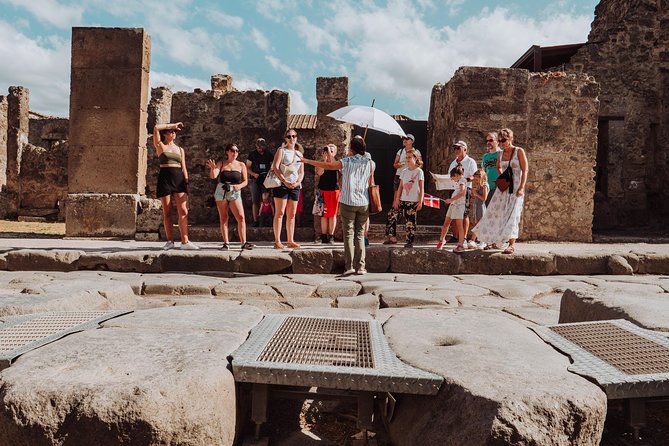
You meet at Via Villa dei Misteri, 2, and your Pompeii visit begins at the main entrance area known as Porta Marina Superiore. From there, you get a guided session of about two hours with an archaeologist, limited to a group size up to 20 at Pompeii.
This matters because Pompeii is not laid out like a museum with a neat, single path. It’s a whole city. A good guide gives you the city’s “logic”: where the major public spaces were, how neighborhoods were arranged, and why certain buildings matter more than others.
From the reviews you’ll hear names like Teresa, Daniela, Raffaela, Simona, Guilia, Anna, and Benedetto, and the praise is consistent: they explain what you’re looking at and make the ruins feel tied to actual people, politics, art, and daily habits. That’s the difference between reading plaques and walking through a place that starts to make sense.
Practical note: the tour includes guided time plus short free-look moments. So you’ll get both interpretation and a chance to slow down and look without feeling guilty that you’re behind schedule.
The Forum stops: how the city’s center tells the story
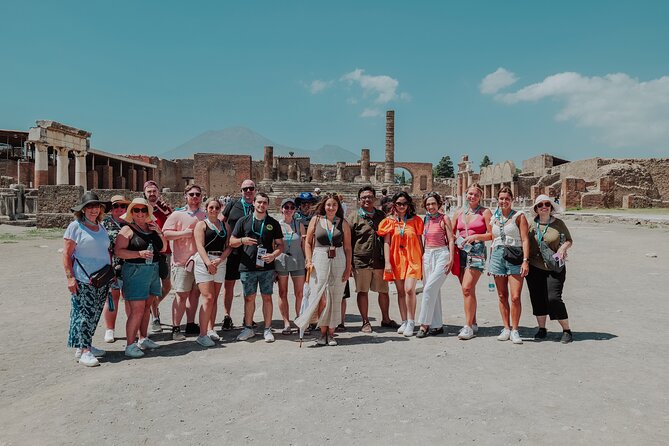
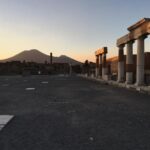
The tour includes quick, high-impact stops in Pompeii’s central areas, including the Foro de Pompeya (the ancient main square). Even if you only spend about ten minutes there, the goal is to set the stage: this is where civic life would have played out.
Then you move through smaller points that help explain daily rhythms and the city’s social texture:
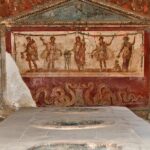
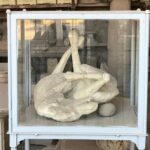
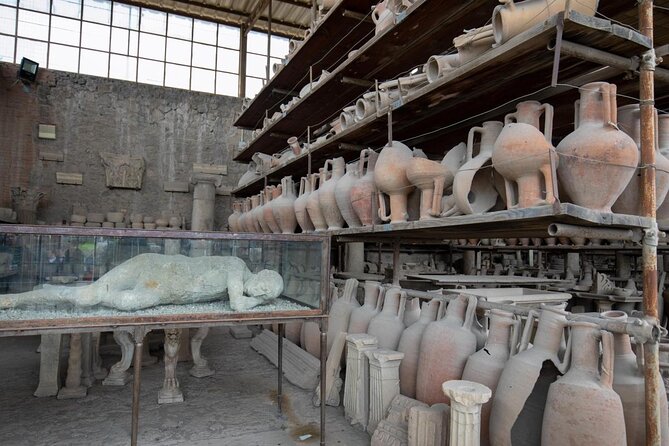
- Granaries of the Forum: you’ll see marble tables and architectural elements tied to fountains at house entrances. You’ll also encounter casts related to the eruption, including a dog and even a tree cast. That detail hits hard in the best way: Pompeii isn’t just art and temples; it’s also loss and the sudden end of normal life.
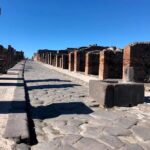
- Walk through the main street: this short stretch helps you picture movement through the city rather than viewing isolated buildings like a highlight reel.
The tradeoff with a packed itinerary is simple: you can’t linger. If you’re the kind of traveler who wants to sit with one mosaic for 45 minutes, you’ll feel the time pressure. But if you want a guided map of what matters most, these Forum-centered stops do the job quickly.
Houses, baths, and the private-public mix: what you’ll actually learn
Pompeii is famous for homes, and this tour highlights several that illustrate different sides of wealth and daily life.
Key house stop:
- House of Menander: described as one of the richest and most magnificent residences in Pompeii, especially for architecture and decoration. Even a short visit can show you how elite domestic spaces worked as both lifestyle and status display.
Other “you can’t unsee this” Pompeii stops:
- Stabian Baths (Terme Stabiane): these are among the oldest thermal complexes in the city. You’re not just looking at stone rooms; you’re seeing a social engine. Baths weren’t only about hygiene. They were where people met, relaxed, and talked.
- Lupanar: the famous brothel. It’s uncomfortable in a real-life way, but that’s also the point. Pompeii captures the full spectrum of human life, not just the pleasant or polished parts.
- House of the Faun: one of the largest private residences. It’s a strong choice if you want to compare scale—what “big” meant in Pompeii—against the public spaces you already visited.
And along the way, the tour also includes a brief look at Teatro Piccolo and then a more focused stop at Teatro Grande, Pompeii’s most important theater.
If you’re curious about how Roman entertainment and politics blended into one public stage, the theater stops are where that idea really clicks.
Theaters and the city’s public face: Teatro Grande
When you reach Teatro Grande, you’re hitting one of Pompeii’s signature public structures. Even with a short stop, you can grasp the theater’s role as a gathering place.
This is a good moment to connect back to the Forum. Together, they help you see how the city worked socially: big public squares and big entertainment spaces were where people came together, and domestic wealth sat close enough to the public stage to show the city’s tight social wiring.
If the day feels fast, Teatro Grande is often the stop where it finally feels cohesive.



The “between Pompeii and Vesuvius” reality: plan your energy
Food and drinks aren’t included, so you’ll want to handle lunch like a local: keep it quick, keep it simple, and don’t assume you’ll have time for a long restaurant sit-down.
You’ll also be switching environments. Pompeii is mostly walking on archaeological surfaces. Vesuvius adds a climb with loose ground, wind, and changing weather at altitude. So I treat the lunch break as an energy checkpoint, not a vacation meal.
Pack light if you can, but think about essentials: water, sunscreen, and whatever you need to stay comfortable for a hike in sun—or a hike in damp air and wind.
Up Mount Vesuvius: what the crater trail feels like
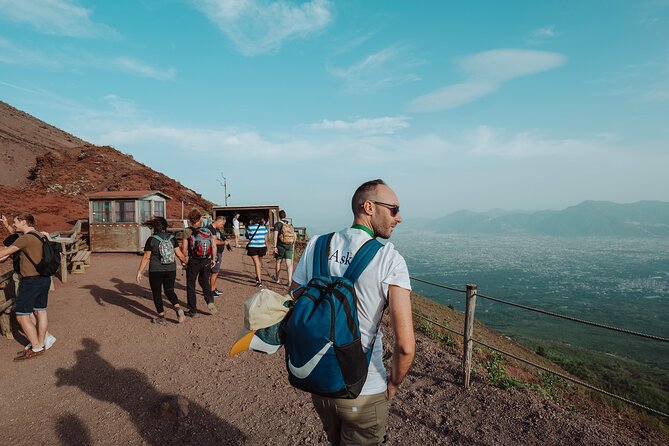
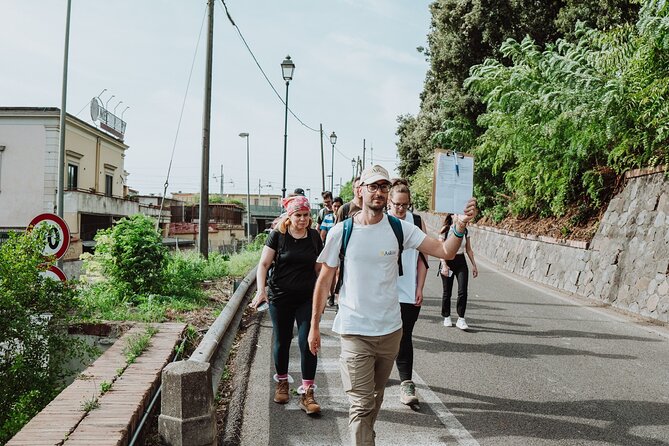
The Vesuvius part starts with a drive and then walking up to the crater area. Here’s what matters for your body and your expectations:
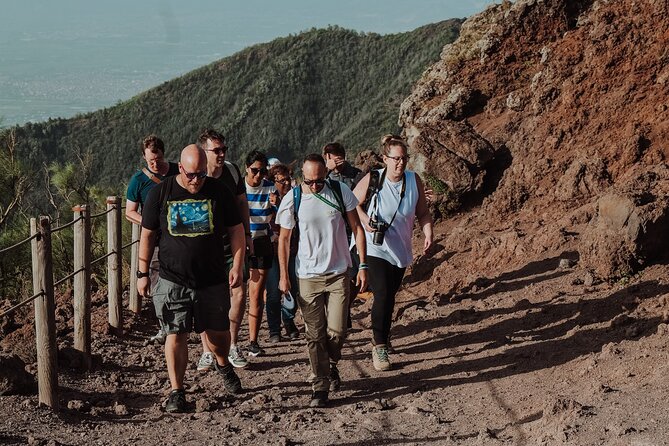
- The first 30 minutes include steps to reach the crater area.
- The last 500 meters is a very steep uphill walk.
- Closed-in shoes are essential.
The tour description also notes that you should expect a bit of a climb and that you’ll see the crater area that still smokes slightly, plus views over the Bay of Naples, Capri, Ischia, and the edge of the Sorrento coast when visibility is good.
What I like about this portion is that it’s not just a walk for photos. The hiking guide role is described as licensed, and many guides such as Mario explain how the eruption worked and how it affected Pompeii and Herculaneum, plus what’s happening on the volcano today.
In the real world, the crater edge is where weather becomes a character in the story. Clear days are great for panoramic photos. Misty days can turn it into a science lesson with less scenery.
Also: the wind at the top can be noticeable. Reviews mention chilly, windy conditions at the summit, so bring a light layer you’ll actually wear.
Weather pivots: Herculaneum when the crater trail closes
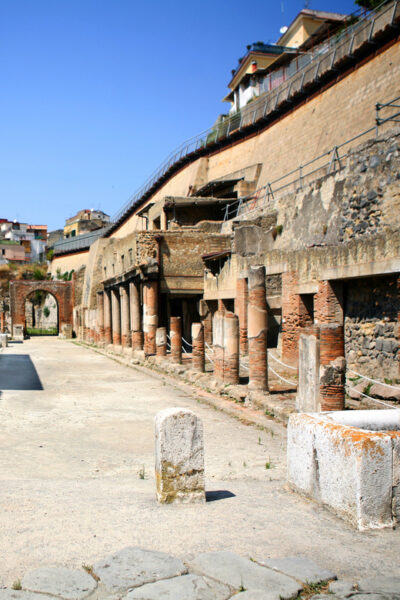
Vesuvius can close quickly, and the tour is set up to handle that. If Vesuvius is not accessible due to force majeure, the experience includes a visit to Herculaneum instead.
This isn’t just a Plan B. For many people, it becomes the better part of the day. Herculaneum is often described as more intimate and well-preserved, with enough detail to round out the Pompeii story rather than repeat it.
The most important takeaway: crater views aren’t guaranteed. But the day can still be strong if you stay flexible. If your heart is set on seeing the Bay of Naples from the rim, pick late spring or early fall when weather often behaves better. Still, go in knowing that fog can show up fast.
Logistics that affect the comfort of your day
This is designed as a small-group tour, with a maximum of 14 people on the minibus. That’s a meaningful difference from bigger coaches when you’re moving between sites, waiting at access points, and trying to hear instructions.
You’ll also be walking more than you think, because the Pompeii stops are quick but constant, and then Vesuvius adds a real uphill element. Reviews mention some groups moving smoothly, while others mention issues like hearing difficulties or coordination delays. Nothing to panic about, but it’s smart to arrive early, keep your expectations flexible, and assume the day runs on a tight clock.
One more note from the tour data: children under 6 are not allowed. And it’s not recommended for mobility or walking impairments.
Price and value: is $119.77 a fair deal?
At $119.77 per person, the pricing feels reasonable if you’re comparing it to what you’d pay for (1) admission, (2) guided expertise, and (3) transportation within the area.
Here’s what’s included:
- Two hours of Pompeii guidance by an archaeologist (small-group format)
- Pompeii express and Mount Vesuvius admission fees
- Modern minibus transfer from Pompeii and back
- Mount Vesuvius hiking guide (licensed)
Food and drinks are not included, so you’ll still budget for lunch. But the biggest expenses—site access and guided services—are already covered.
Value-wise, this is best if you:
- want a strong overview without trying to self-navigate Pompeii from a basic map
- want a guided hike experience instead of figuring out crater-trail logistics on your own
- care about interpretation more than unchecked roaming
If you’re the kind of visitor who hates group timing and wants to wander for hours per site, you may feel the tour is a bit scheduled. But if you want the best “meaning per hour,” the structure is a good fit.
Who should book this tour (and who should rethink it)
I’d book this if you:
- want a first-time Pompeii visit with an archaeologist explaining what you’re seeing
- want the Mount Vesuvius summit experience without solo-planning
- like the idea of learning the eruption story on the ground level and then revisiting the city’s ruined layout later
- prefer a small group over huge bus tours
I’d rethink it if you:
- have mobility limitations or find steep uphill walks difficult
- need a completely low-effort outing (this has steps and steep sections)
- are traveling with someone who becomes anxious with weather changes or reduced visibility
The tour repeatedly calls out moderate physical fitness and the steep “last stretch” on Vesuvius. Be honest with yourself. The view is worth it, but only if you can get there comfortably.
Should you book Pompeii and Mount Vesuvius with this operator?
Yes, if you want a tight, guided day that connects Pompeii to Vesuvius without wasting time. The biggest strength is not the checklist—it’s the guiding. Pompeii guides like Teresa, Daniela, Raffaela, Simona, Guilia, Anna, and Benedetto are a big part of why the ruins feel understandable fast, and guides like Mario help you handle the hike with context, not just effort.
Book it if you can handle steps and steep uphill walking, and if you’re okay with the idea that fog or rain can change the crater-view payoff. If you want a guaranteed panorama, plan for a flexible day. If you want a memorable, meaningful one-day story from ruins to crater edge, this is a strong choice.
FAQ
How long is the Pompeii and Mount Vesuvius small group tour?
It runs about 8 hours (approx.). Your day includes around two hours at Pompeii with an archaeologist guide and about two hours on the Vesuvius portion.
What’s included in the tour price?
You get Pompeii guidance for about two hours by an archaeologist, admission fees for Pompeii Express and Mount Vesuvius, and transportation by modern minibus. You also get a licensed hiking guide for Mount Vesuvius.
Do I need to pay for Mount Vesuvius entry separately?
The Mount Vesuvius entry ticket is listed as 11.00 euros, and admission fees are included in the tour.
What should I wear or bring for the Vesuvius hike?
Wear closed-in shoes. The first 30 minutes include steps to reach the crater area, and the last 500 meters is a very steep uphill walk. In summer, wear sunglasses and sunscreen.
What happens if Mount Vesuvius is closed due to bad weather?
If Vesuvius is not accessible due to force majeure, the tour includes a visit to Herculaneum instead.
Is the tour suitable for children?
Children under 6 years old are not allowed on this tour. You should also plan for moderate physical fitness due to the walking and steep sections on Vesuvius.