REVIEW · POMPEII
Pompeii: Guided Small Group Tour Max 6 People with Private Option
Book on Viator →Operated by LivTours · Bookable on Viator
Pompeii hits hard, then it’s over. This small-group experience is built for getting the most from Pompeii in 2.5 hours with skip-the-line entry, so you spend less time waiting and more time learning. I like that the tour keeps the focus on major, recognizable places and explains what daily life looked like right after Pompeii was buried in 79 BC by Vesuvius. You also get guided storytelling from real professionals—people like Mario and Francesca are named among the guides you may be assigned.
The only real catch is that Pompeii is an active excavation site, so the exact walk can shift depending on what the archaeologist is dealing with that day. If you’re the kind of planner who needs every step to match a script, that uncertainty is worth factoring in.
You choose a morning or afternoon start, and you can go standard small-group (max 6) or upgrade to a private tour. It runs in English and several other languages, and it starts at Via Villa dei Misteri in Pompeii and ends back there.
In This Review
- Key things I’d want you to notice first
- Why 2.5 Hours in Pompeii Works (Most Days)
- Small-Group Size: Max 6 Means Better Explanations
- The Pompeii Walk: Forum, Theatre, Baths, and Real Homes
- Start in Pompeii’s heart: Forum plus theatre
- Bath house stop: the daily-life clue people miss
- Houses that explain status and routine
- Why the selection matters
- Skip-the-Line + Mobile Ticket: Less Waiting, More Seeing
- Guides: What Makes This Tour Feel Different
- Vesuvius View: Why It’s Not Just a Pretty Stop
- Price and Value: What You’re Really Paying For
- Practical Tips for a Smoother Pompeii Day
- Who This Tour Suits Best
- Should You Book This Pompeii Small-Group Tour?
- FAQ
- How long is the Pompeii guided tour?
- Is skip-the-line entry included?
- What group size is this tour?
- Do I get an admission ticket included?
- Can I upgrade to a private tour?
- Where does the tour start and where does it end?
- What sights are included during the tour?
- Is food included?
- What languages are available?
- Does the route ever change?
Key things I’d want you to notice first
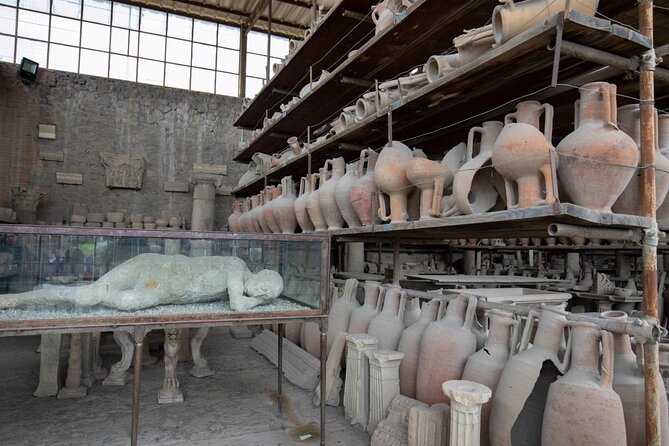
- Max 6 people keeps questions from getting lost in the shuffle
- Skip-the-line tickets included means you can get into the ruins fast
- Archaeologist-led style focuses on everyday life, not just big monuments
- Forum, theatre, and bath house give you the full “city” picture in one loop
- Vesuvius view stop helps you connect the disaster to the geography
- Route may adjust because Pompeii is still under active excavation
Why 2.5 Hours in Pompeii Works (Most Days)
Pompeii is one of those places where “I’ll just wander” turns into “I walked past half the important parts.” This tour is timed to avoid that problem. Around two and a half hours is long enough to hit the core highlights and understand what you’re seeing, but short enough that you don’t start fading when the heat and crowding crank up.
You also get a guided order to your walking, which helps your brain build structure. Pompeii isn’t a single site you can take in like a museum hall. It’s a whole city—houses, shops, temples, public spaces—layered with clues about how people actually lived. A guide helps you read the ruins instead of just looking at walls and stones.
You can also read our reviews of more tours and experiences in Pompeii.



Small-Group Size: Max 6 Means Better Explanations
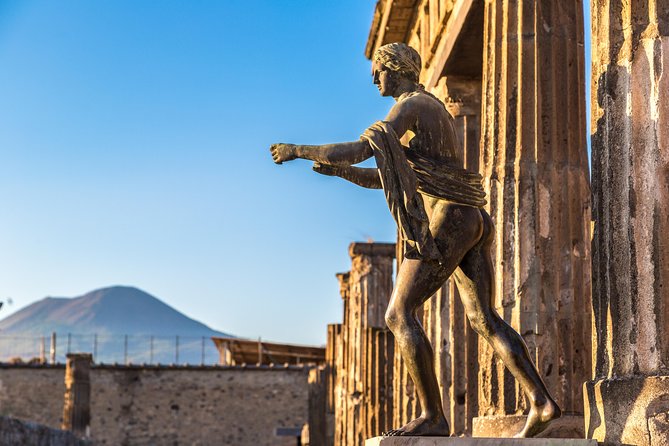
The max-6 setup is the whole point here. With fewer people, your guide can slow down when something matters—like how a household is laid out, why a bath house functions the way it does, or what a specific room type suggests about status and daily routine.
I especially like that the tour is offered in a morning or afternoon time slot. That’s not just convenience. It helps you line Pompeii up with the rest of your day so you’re not fighting for time back and forth from other stops.
And if you want the full attention, there’s a private option. That can be a smart choice if you’re traveling with family, you have mobility needs that call for less group pressure (even though the tour says most travelers can participate), or you simply want your own pace.
The Pompeii Walk: Forum, Theatre, Baths, and Real Homes
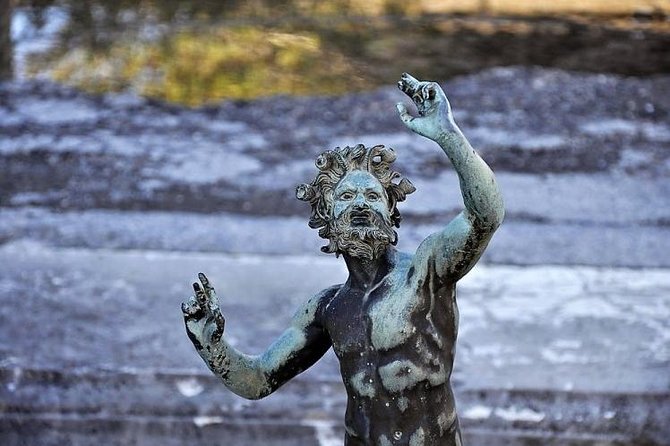
This tour is designed to cover the most important parts of Pompeii without turning into a long, exhausting marathon. The emphasis is on public space plus domestic life, so you get the city in a balanced way.
Start in Pompeii’s heart: Forum plus theatre
You’ll spend time in the Forum, which is where civic life played out. It’s one of the fastest ways to understand that Pompeii wasn’t only about private houses. People gathered, did business, and moved through a shared public world.
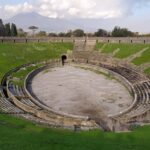
Next, you’ll connect that city energy to the theatre. Roman theatres aren’t just entertainment. They’re also part of social structure: where you sit, what you can see, and how the space shapes a crowd. Even if you don’t care about architecture for its own sake, the theatre helps you feel how communal life worked.
Bath house stop: the daily-life clue people miss
You’ll also visit a Roman bath house. This is a highlight for anyone who wants to understand how routine shaped culture. Baths weren’t only about hygiene; they were a social rhythm. In a compact tour window, a bath stop gives you a strong “how people spent their time” anchor.
If the guide includes the suburban baths as part of the day’s route, that’s even better for the bigger picture. You get beyond one “main” building and start seeing how leisure and routines spread across the city.





Houses that explain status and routine
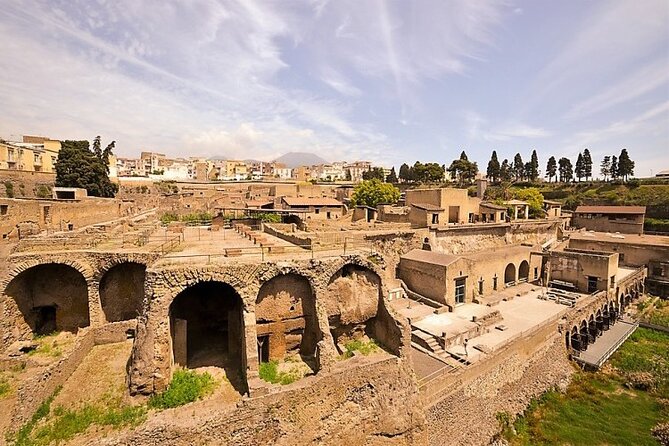
Pompeii’s homes are the heart of why the city feels so human. You’ll see a selection of villas and house interiors/structures that typically include standouts such as the House of Sallust and House of Julia Felix. These aren’t random stops. A good guide uses them to show patterns—how rooms flowed, how space was used, and what the design implies about the people who lived there.
Depending on the day, you may also cover other major houses and points of interest such as:
- House of Menander
- House of the Gladiators
- House of the Tragic Poet
- House of the Vettii Lupanar
- Temple of Isis
- House of Loreius Tiburtinus
Here’s the practical value: without a guide, it’s easy to get stuck looking at decorated surfaces and miss how the layout tells you about daily movement. With the tour, you’re pointed toward details you’d likely walk right past.
Why the selection matters
This mix matters because Pompeii isn’t just one kind of ruin. It’s civic areas, entertainment, bathing culture, and private domestic spaces. When you get all those pieces in one guided loop, it starts to feel less like a list of attractions and more like a place where people had schedules, neighbors, and rituals.
Skip-the-Line + Mobile Ticket: Less Waiting, More Seeing
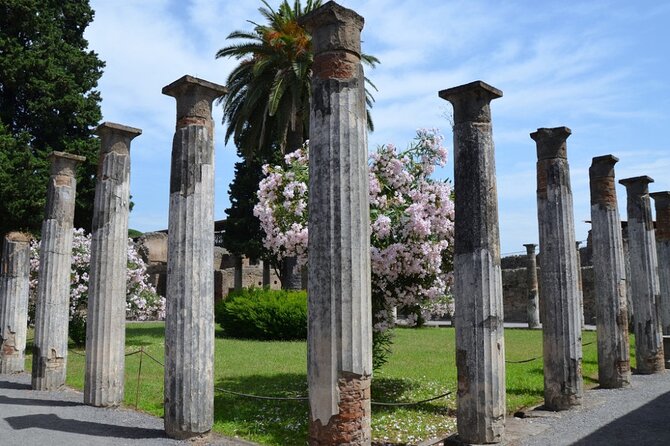
Pompeii can be crowded, and queues can eat your time fast. This tour includes guaranteed skip-the-line tickets, which is a big deal if you’re on a tight schedule. Instead of burning the most valuable part of your day standing still, you start moving through the ruins while your energy is still high.
The tour also uses a mobile ticket, which is practical. You don’t have to hunt for paper passes in your bag. It’s one less thing to manage when you’re already dealing with sun, water, and the simple fact that Pompeii is outdoors.
Guides: What Makes This Tour Feel Different
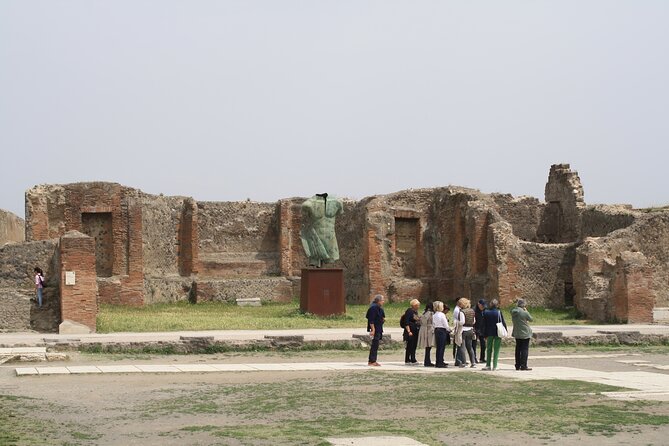
This is where the tour wins, in my opinion. Pompeii can be impressive but confusing if nobody connects the dots. The guides are described as professional and strong in English, with many guests praising the way guides explain what everyday Romans did and how the city functioned around 79 AD.
Several guide names come up in past experiences, including Mario, Francesca, Carla, Luigi, Mariana, Imma, and Maria. That consistency—people repeatedly praising clarity, friendliness, and the ability to point out what most visitors would miss—is exactly what you want in a place like Pompeii.
I also like that the experience is archaeologist-led in style, not just a “walk and read the signs” approach. When someone shows you what to look for—like how a bath complex works or how a household layout suggests social habits—you leave with more than photos. You leave with context.
Vesuvius View: Why It’s Not Just a Pretty Stop
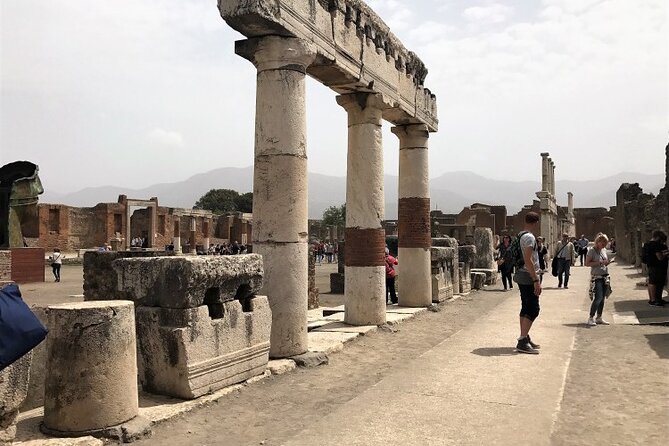
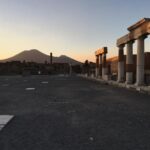
The stop at the Mount Vesuvius view is more than a scenic add-on. It helps you connect the ruins to the geography. Pompeii doesn’t make full sense until you see how close it is to Vesuvius and how a city could be wiped out in an instant.
That connection matters because Pompeii is frozen in time. You’re looking at rooms and streets that survived under ash. The view makes that tragedy feel real, not abstract.
Price and Value: What You’re Really Paying For
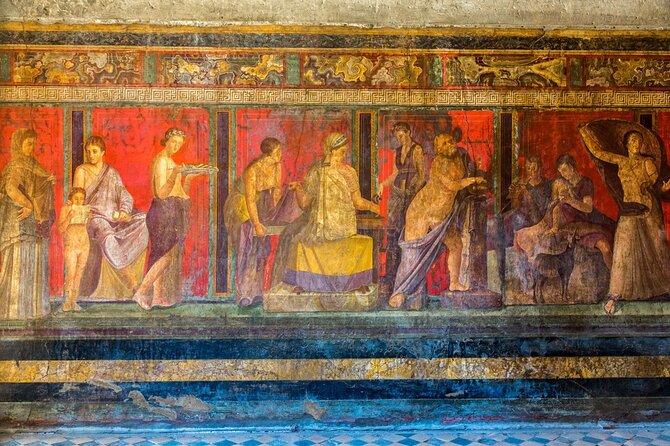
At $168.17 per person for about 2 hours 30 minutes, it’s not the cheapest way into Pompeii. But you’re not just buying entry. You’re buying:
- an expert guide who helps you interpret the ruins
- small-group attention (max 6)
- skip-the-line access
- a structured route that hits key public and domestic stops
- a Vesuvius view included in the plan
For many people, skip-the-line access alone saves enough time that the cost feels more reasonable. Then factor in the fact that Pompeii can be overwhelming without guidance. If you value getting the most out of a limited day, this pricing can feel fair.
If you’re the type who loves to wander alone and you’re comfortable reading plans and signage, you might choose a less structured option. But if you’d rather understand what you’re seeing while you’re there, the value shifts quickly.
Practical Tips for a Smoother Pompeii Day
A few things will make your tour experience better, even if you’re not a “tour person.”
- Heat matters. Pompeii can get very hot, and the tour notes that it’s an ongoing site. Bring water and sun protection. If you’re the type to forget these, set reminders before you leave.
- Expect a route tweak. Since Pompeii is still excavated, the itinerary might change based on the archaeologist’s daily duties.
- Wear shoes for uneven ground. The ruins are walkable, but the surface can be irregular.
- Ask questions at the stops. In a max-6 group, you can actually have a conversation, not just hear a lecture.
Who This Tour Suits Best
This experience fits well if you:
- want a high-impact Pompeii visit without turning it into an all-day project
- like small groups and clear explanations
- prefer seeing the key places (Forum, theatre, baths, notable houses) with context
- want flexibility on tour time, with morning or afternoon options
- may benefit from a private tour upgrade for a calmer pace
It’s less ideal if you want a self-guided, ultra-flexible roaming style, or if you need a rigid route with no adjustments whatsoever.
Should You Book This Pompeii Small-Group Tour?
I’d book it if you want Pompeii to make sense quickly. The combination of small group size, skip-the-line entry, and an expert guide who points out what matters is exactly how you get value from a place that can otherwise feel like a maze.
Choose it especially if you’ve got limited time on the ground or you’re traveling with someone who wants explanations, not just photos. If you’re traveling solo and you love structure, it can still be a good fit because the route is built to cover the big pieces of civic and domestic life.
If you’re very heat-hardy, very independent, and happiest reading signs on your own, then you might decide a self-guided approach is fine. But if you want Pompeii to feel like a city you understand, this is a strong bet.
FAQ
How long is the Pompeii guided tour?
The tour runs about 2 hours 30 minutes.
Is skip-the-line entry included?
Yes. Skip-the-line tickets are included, so you should avoid wasting time in a long queue to enter.
What group size is this tour?
It’s a small group tour with a maximum of 6 travelers.
Do I get an admission ticket included?
Yes. Admission ticket is included as part of the tour.
Can I upgrade to a private tour?
Yes, there is an option to upgrade to a private tour.
Where does the tour start and where does it end?
It starts at Via Villa dei Misteri, 80045 Pompei NA, Italy and ends back at the meeting point.
What sights are included during the tour?
The tour includes stops such as the Pompeii theatre, the Forum, a Roman bath house, and House of Sallust and House of Julia Felix, plus a Mt Vesuvius view.
Is food included?
No. Food and drinks are not included.
What languages are available?
The tour is offered in English and also French, Spanish, Portuguese, and Italian. You can specify a language other than English when booking.
Does the route ever change?
Yes. Pompeii is an ongoing excavation site, so the suggested itinerary might encounter changes depending on the archaeologist’s daily duties.